


Updated 23 January 2026. A National Parks and Wildlife Spokesperson (NPWS) has responded to the original article by Colleen Krestensen, and Colleen has responded in turn. Both these further responses are set out below the original article. NPWS has not and, as at 23.1.26, does not intend to respond to these questions from ARR.News: 1. Will lethal methods be put on hold while the remaining brumbies are rehomed? 2. if not, when will lethal methods, including aerial culling, be recommenced? 3. How many brumbies do you say have been removed by trapping and lethal methods over the last 15 months?
Colleen Krestensen, Deputy President of the Australian Brumby Alliance, and proud owner of two beautiful rehomed Snowy brumbies, January 2026.
Where are we now?
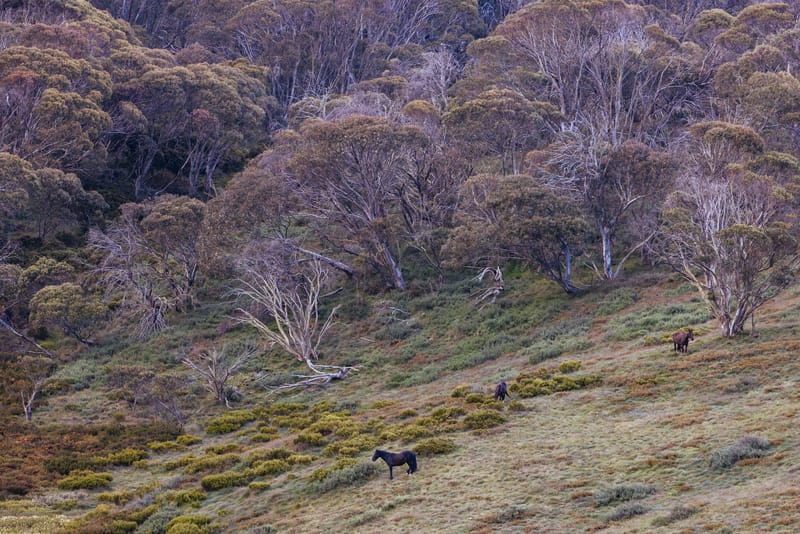
In November 2025, the NSW Parliament voted to repeal the Kosciuszko Wild Horse Heritage Act 2018 (NSW). This removed legislative recognition of the cultural and heritage value of Australia’s Snowy Mountain brumbies, which has been the basis for preserving a sustainable population of 3,000 wild horses in the mountains. Effectively this means the government can now treat wild horses as just another feral pest if they so wish. Rumours abound that as early as February 2026 the government will resume its aerial culling program, and that shooters are already being approached for this purpose. As there could now be as few as 579* brumbies remaining in Kosciuszko National Park (KNP), after removal of more than 7,000, the future of the iconic Snowy brumby is looking as bleak as a winter snowstorm.
* Ed. Cf original – 500. See discussion below.
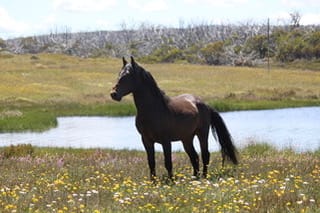
The very same week the Repeal Bill passed through NSW Parliament, drama was unfolding in the mountains. The most iconic and well known of the remaining Snowy brumbies, a magnificent stallion known widely as Poster Boy, had been trapped along with many of his herd. Thousands of Australians with a passion for these wild horses had walked the hills to see Poster Boy over the years and word of his loss of freedom spread like wildfire through social media. The upside of this story is that Poster Boy was humanely captured and removed from the Park. He was not shot from a helicopter. The stallion and several of his herd have landed on their hooves in rich pastures with a view of the mountains in the Riverina at Umbango South Brumby Sanctuary. Brumby advocates argue that with so few brumbies remaining in the national park, the government and the NSW National Parks and Wildlife Service (NPWS) must give priority to passive trapping and rehoming over lethal methods of population management in the next phase of brumby management.
The imperative to reduce brumby numbers in Kosciuszko National Park
The issue of managing the KNP brumby population has challenged many governments over the years as they have tried to strike a balance between the views of those who think they have no place in a national park and those who believe they do. There are strong emotions and philosophical arguments on both sides. Brumbies have never been a protected species or breed – however there has been an imperative to retain and preserve a population in the sub-alpine area given their unique iconic status in Australian folklore and pastoral history. In the last three years, the NSW Government has responded to lobbying from organisations such as the Invasive Species Council to make a dramatic reduction of the wild horse population in KNP a top priority. This has been driven by a concern to protect endangered species which co-exist with wild horses and other feral animals in the sub-alpine areas of the park and by high population density in some locations. A NPWS press release of 20 December 2024* announcing the Ecohealth Scorecard 2023-24 for KNP indicated that over that year 7,285 wild horses were removed from the park (most by aerial culling), compared to a cumulative total of only 1,800 other feral animals, including pigs, deer, cats and foxes.1 [Ed. See discussion regarding numbers in responses below.]
* Ed. Updated cf original. See discussion below.
The priority focus on brumbies as easy targets, rather than other introduced species in KNP, has been questioned through inquiries, particularly given the enormous damage caused by these other animals, and their vastly higher numbers. There has also been significant controversy within the community about the reintroduction of aerial culling in 2023, which allowed brumbies to be shot from helicopters. Previously passive trapping and rehoming had been the priority method of management in KNP. Aerial culling was banned in 2000 after the RSPCA took legal action over the proven cruelty of aerial culling efforts in Guy Fawkes National Park and other national parks.
How many brumbies are left in Kosciuszko National Park after the aerial culling program?
The ban on aerial culling was reversed in 2023 by the NSW Government in response to the perceived urgency to reduce wild horse numbers, estimated at the time to be as high as 23,000 horses. However, just one year later, after removing 7,285 brumbies, the Survey of the Wild Horse Population of KNP, October 2024, estimated that the remaining population was between 1,579 and 4,007.2* There could never have been more than approximately 10,000 brumbies in KNP on this basis. The 2024 survey report noted the previous estimates may have involved double counting.
* Ed. Updated cf original, 1,500 and 3,000. See discussion below.
Assuming that at least a further 1,000 brumbies have been removed by trapping and lethal measures over the last 15 months, it could be estimated that between 579 and 3,000* brumbies now remain. Brumby advocates who regularly walk the hills to photograph and see the horses, argue it is definitely towards the lower end of the range or even less. There is no longer a dense population of wild horses in the park.
* Ed. Updated cf original, 570 and 2,000. See discussion below.
Why are wild horses different to other introduced species in Kosciuszko National Park?
The Australian Brumby Alliance (ABA) points out that many Australians value Snowy brumbies for the living history they represent, for the thrill of seeing wild horses in the sub-alpine environment, and for their unique qualities as a breed. Whilst the Wild Horse Heritage Act 2018 (NSW) itself has been repealed, the 2015 Assessment which found the brumbies to be a significant attribute to the heritage assessment for the Australian Alps still stands. This found that brumbies satisfied five of the nine National Heritage List criteria to qualify as an attribute and that they are a living link to Australia’s pioneering, pastoral and military history. At a practical level, brumbies can be easily domesticated, unlike other feral species, and are valued as a breed for their unique hardiness, intelligence and trainability. Brumbies have proven their worth as show ponies, surefooted trailriding mounts, children’s ponies and in equine therapy. Around the world populations of wild horses are highly valued – the Camargue, the Mustangs, the New Forest Ponies are examples.
So what is to become of the remaining Snowy brumbies?
The Australian Brumby Alliance agrees the population should be managed, and notes to varying extents it always has been. However, the loss of a population of wild Snowy brumbies forever would be a blight on our history, loss of a unique breed and disrespect the values of many Australians, particularly in regional Australia.
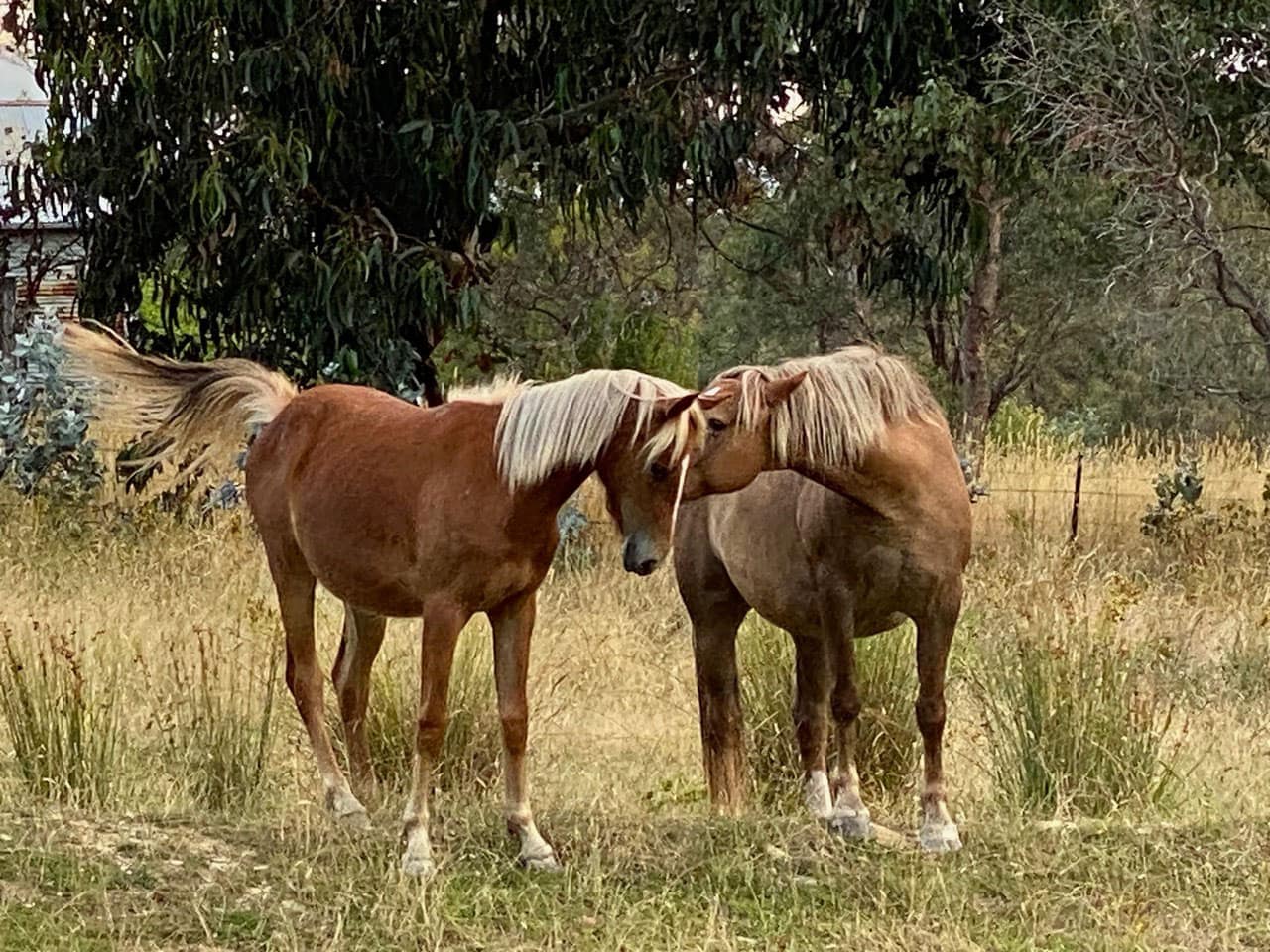
With the repeal of the Act, the ABA and brumby rehoming organisations are deeply concerned that the NSW Government and NPWS will move to quickly slaughter the remaining brumbies by aerial culling or other lethal methods. Unlike other feral species, they are easy targets. The NSW Environment Department argues that aerial culling can be humane if standard procedures are followed and conditions are optimal. The ABA points to historical evidence that it is possible, but not likely that a galloping horse will be killed humanely when shot from a helicopter. Analysis of brumby carcasses after previous and recent culls have shown many horses are likely to have died painful, lingering deaths.
The ABA strongly believes that with the brumby population in Kosciuszko National Park now as low as 579* horses, and the perceived density problem addressed, there is time to review how the remaining horses are managed and to make animal welfare an imperative. Many brumby advocates would like to see a sustainable population of brumbies remain in KNP to continue the living history this represents. However, if it is the government’s imperative to remove most or all of the brumbies, the ABA strongly believes this should take place by passive trapping and rehoming and be supported through a commitment to practical and transparent partnerships with brumby rescue and rehoming organisations.
* Ed. Updated cf original, 500. See discussion below.
The ABA opposes the continued use of aerial culling to manage the population on animal welfare grounds, noting also it cannot be supported on the basis of urgency or on economic grounds. Aerial culling efforts recently cost the NSW Government over $8.1m to shoot approximately 6,000 horses and has previously been costed at between $1,500 and $2,000 per horse. The average cost of rehoming a brumby has been reported to be between $750 and $1200 per horse.3 This could be reduced if more streamlined pathways for removing the horses from KNP could be developed through community partnerships.
How could improved rehoming partnerships be established between the community and NPWS?
It is not surprising that the formerly good relationship between brumby rehomers and NPWS has suffered through the years of aerial culling. Reinvigorating community partnerships and improving transparency of the rehoming process will assist NPWS with the removal of horses from Kosciuszko National Park and help to avert problems that have emerged in the past with the release of horses to disreputable rehomers or ill-equipped new owners.
The ABA believes that the approach to brumby trapping and rehoming at Guy Fawkes National Park offers a good partnership model for rehoming. This involves respectful communication and shared planning between NPWS and community groups to match demand to plans to remove horses from KNP. Expressions of interest are sought by rehoming organisations from community members with capacity to take on a brumby ahead of the intake of trapped horses.
The ABA would also like to see a modest injection of funds into the brumby rehoming sector to build capacity to support the brumby rescue groups which provide the initial landing point for rehomed brumbies. The ABA previously called for establishment of a small Australian Brumby Management Organisation, which could provide information, support and practical assistance to individuals taking on a rehomed brumby and offer advice and assistance to NPWS trapping and rehoming efforts.
Does brumby rehoming result in good outcomes for the horses?
Organisations seeking removal of the horses from Kosciuszko National Park have argued that rehoming efforts don’t work as brumbies are untrainable, difficult to transport, or end up in unwanted situations or abattoirs. Thousands of owners of successfully rehomed brumbies who have become show horses, children’s ponies, therapy horses or just much loved pets, can rebut these suggestions.
Like all domestic animals, some end up in situations where the owners do not have the resources, skills, or commitment to take care of them. And at times, when NPWS has surprised the rehoming community with large numbers of trapped horses to place, some property owners have taken on too many horses to protect them from slaughter. The ABA strongly opposes NPWS releasing brumbies to be sold at abattoirs or knackeries, as they have been in the past. [Ed. See discussion in responses below.]
Overall better partnerships with the community in the initial rehoming process to plan for and ensure brumbies are rehomed to appropriate situations will help to ensure positive outcomes. The development of new brumby sanctuaries in rural NSW also holds promise for the future.
Hope for the future
Meanwhile at Umbango South Brumby Sanctuary, the once wild stallion Poster Boy has quickly become accustomed to domestic fences and the joy of regular hay and appears to have settled in well with his family members. Poster Boy is one of many thousands of brumbies who have successfully made the transition to a new life outside Kosciuszko National Park. However at the sanctuary he and his herd will not be domesticated or trained but will live in circumstances which replicate their life in the wild as much as possible. The ABA hopes other brumbies removed from KNP in 2026 will also have good domestic pastures and not bullets in their future.
Related stories: Brumby
References
1. https://www.environment.nsw.gov.au/news/ecohealth-scorecard-first-kosciuszko-national-park
2. A Survey of the Wild Horse Population in Kosciuszko National Park, NSW Oct-Nov 2024, p. 31.
3. Evidence given at February 2024 Inquiry into Aerial Culling, Timothy Johnstone – former Chair KNP wild horse community advisory panel
Response from National Parks and Wildlife Services (NPWS), 22 January 2026
- Rehoming of wild horses remains an important part of an integrated approach to managing the wild horse population in the park, in line with the Kosciuszko National Park Wild Horse Heritage Management Plan.
- Since the adoption of the Management Plan in November 2021, 1,165 horses have been rehomed (current to 21 January 2026).
- NPWS undertakes rehoming in accordance with standard operating procedures (SOPs) that were developed in consultation with independent veterinary experts and RSPCA NSW.
- Those interested in becoming in rehoming horses are encouraged to find out more on the website.
Background
NSW National Parks and Wildlife Service (NPWS) undertakes rehoming in accordance with standard operating procedures (SOPs), developed in consultation with independent veterinary experts and RSPCA NSW. The SOPs include minimum criteria relating to:
- transport from the NPWS temporary holding location;
- facilities at the rehoming location, such as yards, fencing, shade and shelter;
- experience in horse management and care.
There are currently 4 approved rehomers for Kosciuszko National Park.
All registered stakeholders were reminded via email in late 2025 that NPWS rehoming applications remain open.
Wild horse control, including trapping for rehoming, was not used in the wild horse retention areas in 2025. Wild horse control, including aerial shooting, continued in the wild horse removal and prevention areas.
Request for correction of inaccuracies
- The year and number of animals removed cited from the KNP Ecohealth scorecard are incorrect, they state 2023-24 as the scorecard year with 1,800 other feral pests and 7,285 horses. Scorecard year was 2022-23 and it reports 2,350 other ferals and 1,606 horses.
- The report makes several statements around the number of horses remaining in the park. It says in the opening paragraph there are around 500 horses remaining in the park, and then later claims the 2024 survey says there are between 1,500 and 3,000 horses in the park. Based on the results of the 2024 survey, both statements are incorrect. The 2024 survey found between 1,579-4,007 horses in the park, using standard distance sampling with 95% confidence intervals. This survey methodology is comparable with previous surveys. Another technique (Mark Recapture Distance Sampling) produced an estimate between 2,131 and 5,639.
- The report states “at least a further 1,000 brumbies have been removed by trapping and lethal methods over the last 15 months”. This statement is incorrect.
- Claims that horses died painful and lingering deaths from recent aerial shooting are unfounded and unproven.
- NPWS has never sold horses from Kosciusko National Park to rehomers, abattoirs or knackeries.
Author’s response to NPWS
I confirm the figures I provided in the article for the removal of feral horses versus other feral animals from the Park in 2023-24 are correct. However the source of these figures was the press release from the NSW Department of Environment and Heritage on the release of the first Ecohealth Scorecard on 20 December 2024, not the Scorecard itself. In this press release the Department advised “NSW National Parks and Wildlife Service (NPWS) has increased the level of invasive species control in Kosciuszko National Park, with more than 9000 feral animals removed in 2023/24, including 7,285 horses and over 1,800 deer, pigs, cats, foxes and rabbits.”1
The article states clearly that it is assumed that up to 1,000 horses would have been removed from the Park since October 2024. This assumption is made in the absence of public data on the number of wild horses which have been culled or rehomed over this time. If the Department wishes to release the actual figure removed or culled since October 2024, the Australian Brumby Alliance would be happy to revise its estimate of remaining brumbies.
The article suggests that there “could now be as few as 500 brumbies remaining in the Park” based on the above assumption on the numbers recently removed and the range provided in the October 2024 Survey. Given the Department has advised the lower estimate within this 2024 Survey is 1,579 rather than 1,500, it follows that as few as 579 brumbies, not 500 brumbies currently remain.
The article did not say nor intend to imply that brumbies were sold to knackeries or abattoirs by NPWS. NPWS does not sell brumbies. NPWS has however released wild horses trapped in the Park to go to abattoirs and knackeries in the past.
It is difficult to conclusively prove whether or not all brumbies shot through aerial culling died quickly and humanely, as neither independent observers nor video cameras were on helicopters. However photographs provided by individuals who found brumby carcasses after aerial culling, strongly suggest not all horses experienced a humane or instant death.
I thank the Department for their input.
Colleen Krestensen
23 January 2026
Reference
1. https://www.environment.nsw.gov.au/news/ecohealth-scorecard-first-kosciuszko-national-park


Great article, summarises the issues very well. Even though the act may have been repealed in parliament, it is not meant to be in effect until 2027. With so few brumbies in the park, as a frequent rider up there I know how few there really are!, there is absolutely no need to inhumanely aerial shoot any more brumbies! They are part of our heritage , our culture and should be retained as the heritage assessment proved, legislation or not.
As the repeal of the act does not come in to effect until 2027 and with numbers well below the 3000 agreed upon, there should be absolutely no trapping or aerial shooting of any brumbies until 2027. I believe that the remaining brumbies, which frequent visitors to the park claim number no more than 500, should be allowed to remain in the park due to their cultural and heritage value. With so few remaining numbers could easily be managed and Australia would not see a precious icon lost for eternity. Many countries in the world maintain a herd of wild horses, countries much smaller than Australia. Surely with the 690,000 hectares in Koscuiszko National Park there is room for these remaining brumbies to live wild and free.
The Brumbies have been traumatised enough over the yrs
Lies and corruption have led to inaccurate numbers of Brumbieseft in the park
Time to leave the Brumbies alone
Stop blaming them for the environmental man made damage
The law has been broken on two fronts here the government has broken the law in the repeal act which doesn’t come into effect until 2027 and what happened to the RSPCA’s legal ban on culling has that been buried or overturned. Why aren’ our voices being heard. I’d love to march on the state parliament with a banner but I’m sure that’s against the law.
The Brumbies are not the problem. The other feral need looking into!
Being that they wanted numbers of Brumbies down to 3000 by 2027, which they have reached leaving much less than that and at this very moment are trapping more Brumbies and have already called on shooters, why would they even need to consider aerial culling at a cost of $8 million +
And funny how they have just released a new subdivision for housing in the Monaro area, follow the Money as they say