

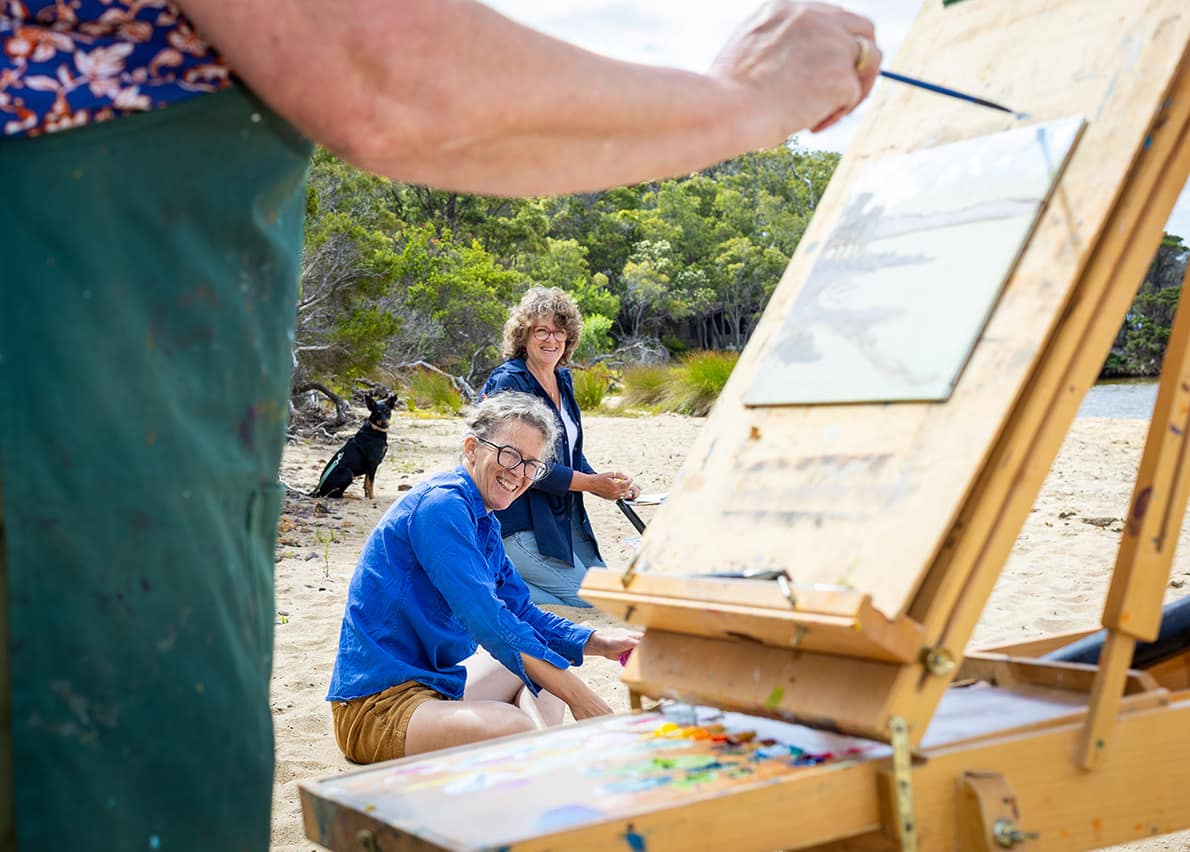
Photo: Serena Kirby.
For early-career artists, not yet constrained by deadlines and commissions, working alone in a studio can make it difficult to stay motivated as there’s no external energy to bounce off. So how do you improve your painting skills if there’s no one providing positive feedback? And how do you develop routine and rhythm to your art practice when life is a brilliant distractor?
For emerging artist, Kat Lamb, the answer came in the form of a plein air painting group.
“I thought if I organised a group, then I’d have to turn up whenever the group met. But what resulted has been so very much more than that,” Kat says.
Plein air painting is French for ‘in the open air’ and it emerged as a distinct art practice in the early 19th Century. While artists had sketched outdoors well before that, working outdoors became far more practical after the invention of portable paint tubes and lighter easels.
French painters led the charge in painting outdoors and their work focused on mood, natural light and the reality of the landscape. During that time plein air painting marked a quiet rebellion against the polished scenes favoured by academic painters, replacing them with something more immediate and grounded. That spirit of immediacy found its most famous expression a few decades later when Impressionist painters like Monet and Renoir carried their canvases into city streets, gardens and riverbanks, to capture real life moments.
The more recent resurgence of plein air painting came as a result of the pandemic as well as a growing desire to connect with nature and community.
“There’s a trifecta of interplay that happens; there’s a relationship between the painter and their practice, one between the painter and the environment as well as one between the artists working in the group.
“For some plein air painters, when they first start painting, it’s essentially a visual representation they’re creating while some painters push into really looking for the detail. Others are looking for the emotional story that comes from the landscape and that’s so different to being in a studio.”
But Kat says committing to the weekly ritual of sitting and painting outdoors has brought other benefits too.
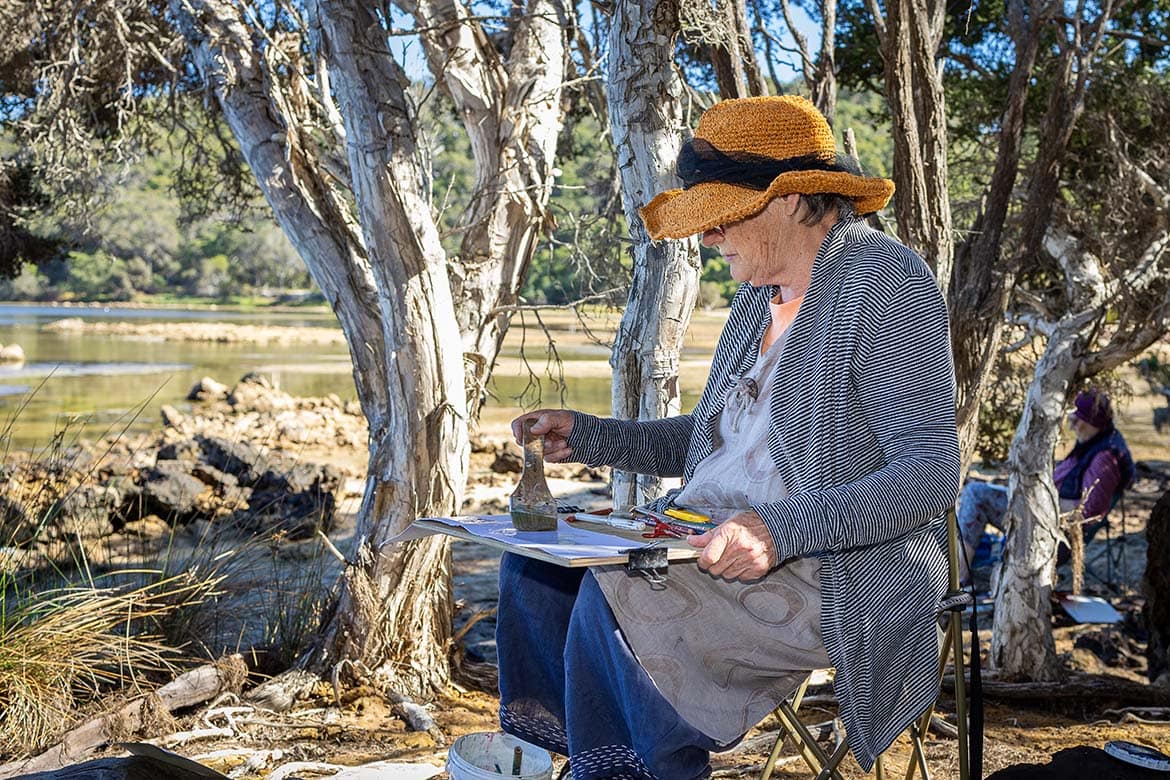
“It’s turned out to be an indescribably, magnificent, nourishing, uplifting, joyful space. Yes, we sit each week and we practice our art and practice our way of responding to the environment, but what we get from each other powerfully fills our practice in ways that I couldn’t have imagined.
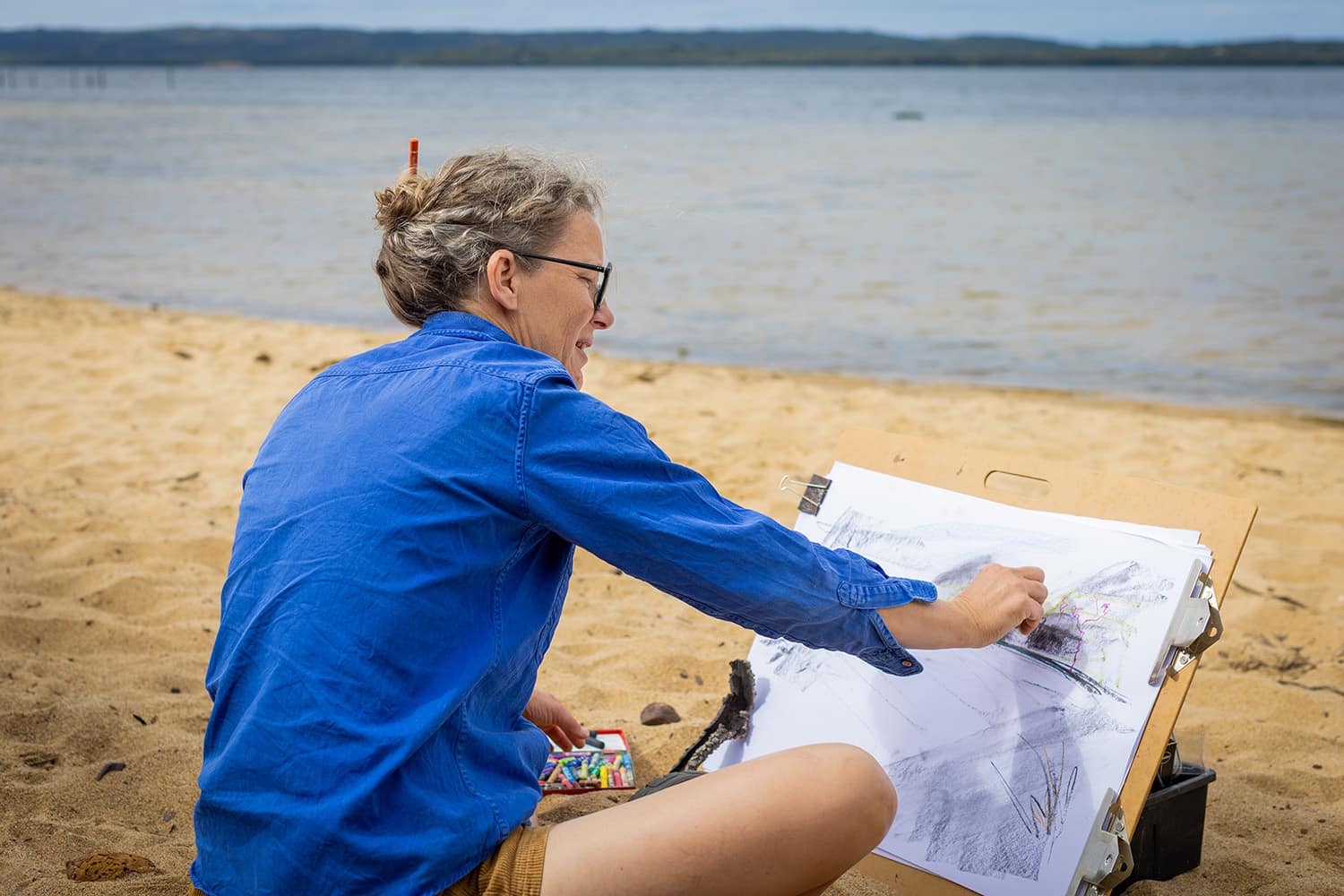
“Often, toward the end of the morning, we’ll go and have a look at each other’s work and it’s beautiful to see one landscape interpreted in so many different ways. The mediums can be vastly different too; oils, charcoal, water colours, pens or pencils or even pigment-washes made from the natural surroundings. You can draw in the sand, in a sketchbook or on a piece of fallen bark; there’s always experiment happening. The growth of everyone’s practice within the group has been absolutely remarkable.
“We have a rule that you’re not allowed to be unkind to your own work. You often find beginner-painters are so in awe and complimentary of everybody else’s work but then they’ll say, ‘Oh don’t look at mine. Mine is crap’. Remember, the hardest thing is turning up so if you’ve turned up, well done, and now allow yourself to be a beginner. That’s what the group is so excellent at, because we have everyone from the person who’s just turning up to people who’ve been doing this for decades and there’s such a diversity.”
Kat adds that the ‘turning up’ part of plein air painting doesn’t just give you a reason to paint; it also creates a reason to take a break from everyday life and the digital distractions, to sit quietly in the open air with like-minded people and in the same spot for three hours. That alone sounds like a good enough reason to get outdoors and go painting plein air.
There are many Plein Air painting groups around Australia and many ways to find one or start your own. Check out pleinairpaintersofaustralia.com.au or contact your local arts organisation to enquire about a group near you.