

The Hon. Clare Scriven, Minister for Primary Industries and Regional Development, Media Release, 21 May 2026
South Australian farmers received $4.7 million in tag discounts and rebates during the first year of mandatory electronic identification (eID) for sheep and farmed goats.
The state’s farmers continue to implement a national roll-out of individual eID tags for sheep and goats to strengthen our world-leading livestock traceability systems and support rapid responses to biosecurity threats.
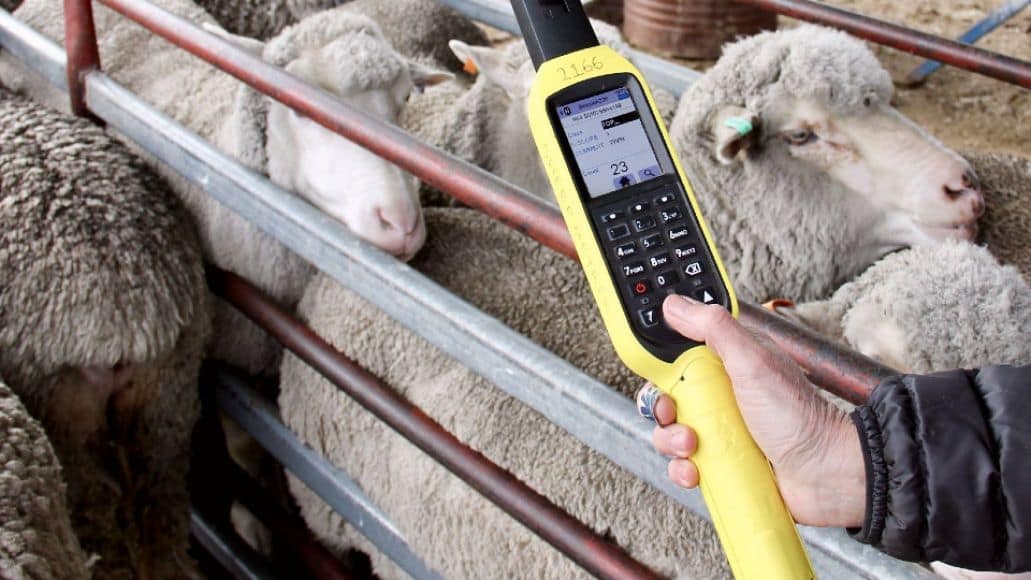
All sheep and farmed goats born on or after 1 January 2025 are required to have a National Livestock Identification System (NLIS) accredited eID tag before leaving their property of birth. Individual sheep and goats identified with eID tags must be recorded on the NLIS database when moved off-property.
The Malinauskas Government has invested more than $14 million since July 2023 to support the roll-out, including through the delivery of the eID Implementation program and eID Advantage Program.
More than 6.1 million eID tags were purchased by South Australian sheep and goat farmers in 2025, supported by $4.7 million worth of tag discounts and rebates under the eID Implementation Program.
That same year, more than 474,000 sheep with eID tags were transferred between farming properties, compared to 18,000 sheep with eID tags transferred in 2024, demonstrating a significant increase in livestock recorded on the NLIS.
The $12.8 million first stage of the eID Implementation Program ran between 2023 and 2025, backed by $9.3 million from the Malinauskas Government and $3.5 million from the Albanese Government.
As part of the statewide Drought Support Package, the Malinauskas Government invested a further $4.5 million to extend tag rebates and discounts under a second stage of the eID Implementation Program, which runs through to 30 June 2027.
The Malinauskas Government has also invested $900,000 to deliver the eID Advantage Program, which assists producers and the supply chain to increase their awareness and knowledge of the national mandatory eID rules and assist on-farm decision-making.
Other support for the roll-out since 2023 has included essential equipment and infrastructure rebates for processors, saleyards, producers and agents.
Rebates for essential equipment for schools, ag shows, events and producers are available until 30 June 2026.
For more information, visit pir.sa.gov.au/eID.
Quotes attributable to Clare Scriven
The Malinauskas Government is continuing to assist sheep and goat farmers with the roll-out of eID, which benefits the farming sector far beyond easier livestock management.
This important reform is strengthening our biosecurity efforts and will help to maintain market access.
By having sheep and farmed goats in South Australia tagged with eID, we’re ensuring that we are in the best possible position to effectively manage an emergency animal disease outbreak.
Animals tagged with eID can be individually traced back to their property of birth and every property of residence. The faster and more accurately that animals are traced, the more efficiently we can respond to and recover from the outbreak of diseases such as foot and mouth disease, should they occur.
Capturing individual animal data including movement over their lifetimes also provides valuable opportunities to improve productivity, profitability and decision-making for our farmers.