


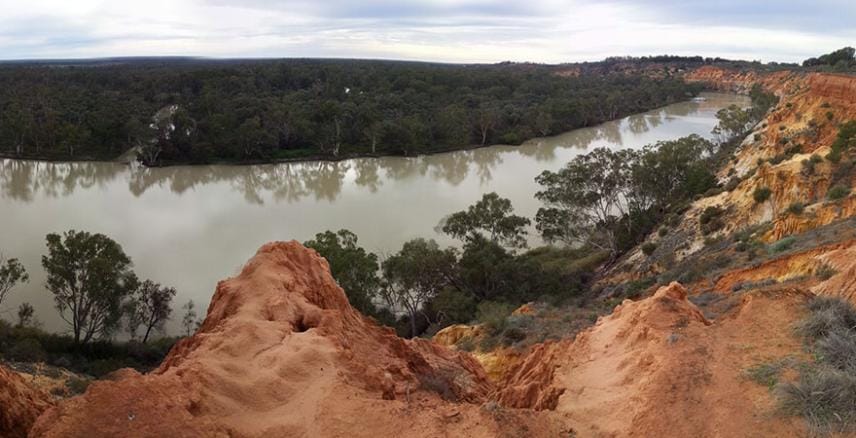
On Thursday 15 January 2026, the Minister for the Environment and Water, Murray Watt, announced the Federal Government’s decision to list the Lower Murray River System as being of Critically Endangered conservation status pursuant to the Environment Protection and Biodiversity Conservation Act 1999 (Cth). This listing encompasses the “River Murray downstream of the Darling River, and associated aquatic and floodplain systems.”
Minister Watt’s statement together with early statements from National Farmers’ Federation and the Nature Conservation Council of NSW demonstrate some of the points of difference over this contentious decision.
Lower Murray River ecosystem listed as critically endangered
Senator the Hon. Murray Watt, Minister for the Environment and Water, Senator for Queensland, Media Release, 15 January 2026′
The Minister for the Environment and Water has accepted a recommendation from Australia’s Threatened Species Scientific Committee to list the ‘River Murray downstream of the Darling River, and associated aquatic and floodplain systems’ as Critically Endangered under national environment law.
Listing this river ecosystem, including South Australia’s iconic Coorong Lagoon, as a Matter of National Environmental Significance under the Environment Protection and Biodiversity Conservation Act 1999 (EPBC Act) will help to guide ongoing actions by all levels of government and local communities to address threats such as invasive species, native vegetation degradation, loss of connectivity, salinity, erosion and climate change. It will also help to inform future Australian Government investments aimed at supporting the river ecosystem.
The decision has involved extensive contributions from States, experts, and public comments, along with hundreds of scientific papers and reports on the Murray–Darling Basin.
The recommendation from the Threatened Species Scientific Committee noted the listed area has continued to face pressure from changes in water flows and quality, invasive species, loss of native vegetation and habitat connectivity across catchments, and salt water of floodplains. These threats are exacerbated by climate change, including the increasing severity of heatwaves, fire and drought.
A 2025 evaluation showed that the Murray-Darling Basin Plan is now working to rebalance water use and restore the environment, after a decade of neglect by the former Federal Coalition Government.
The area was previously listed in August 2013 by the Rudd Labor Government after receiving independent scientific advice, but the listing was repealed just four months later by the Abbott Coalition Government.
In the following nine years the Liberals and Nationals ignored the warning signs and failed Australia’s most important river system, returning just 2GL of the promised 450GL of environmental water. The Albanese Government is now turning this around, but this listing shows more needs to be done.
Environmental protection in the area is currently fragmented with around 43 percent of it protected as Ramsar wetlands, and several threatened species and migratory birds also currently considered under the EPBC Act. Listing the ecological community will support a broader ecosystem approach to environment protection across the lower end of the River Murray and surrounding catchments.
Conservation Advice has been developed to guide future protection and restoration efforts.
Major new developments which would have a significant impact on protected matters in the listed area will still need to be referred and assessed under the EPBC Act, as is currently the case. Those projects will now need to also consider functionally important species, critical habitat areas and ecological processes identified in the Conservation Advice.
However, the listing will not change land tenure or prevent continuing uses of land and water. Only natural environments are covered for ecological communities protected under the EPBC Act.
Areas currently used for crops, plantations, exotic pastures and infrastructure, or are otherwise cleared of native vegetation are not considered part of the ecological community.
Minister for the Environment and Water Murray Watt, said the Albanese Government was taking action based on the latest scientific advice.
“A healthy river is crucial for the environment, for industry, tourism and for community,” Minister Watt said.
“South Australians, and all Australians, love this region, but its ecosystems are threatened on a range of fronts, with those threats made worse by increasingly severe droughts and floods driven by climate change.
“Impacts from upstream river management decisions taken last century, along with the devastating impacts of natural events like the Millennium Drought, have placed enormous pressure on ecological communities in this section of the southern Basin.
“Both the Albanese Government and the South Australian Government are investing significant funding in programs to help the river recover, so the River Murray can remain a viable home for plants, fish, birds and other animals for many years to come.
“Ensuring iconic Australian natural environments like this have a future is why the Albanese Government will continue to support progress on the Murray Darling Basin Plan.”
The Australian Government has also accepted a recommendation from Australia’s Threatened Species Scientific Committee to list the ecological community of the Wetlands and inner floodplains of the Macquarie Marshes in northwestern NSW, as Endangered. The site provides a critical refuge for over 70 species of waterbirds and is home to many nationally protected matters including Ramsar wetland.
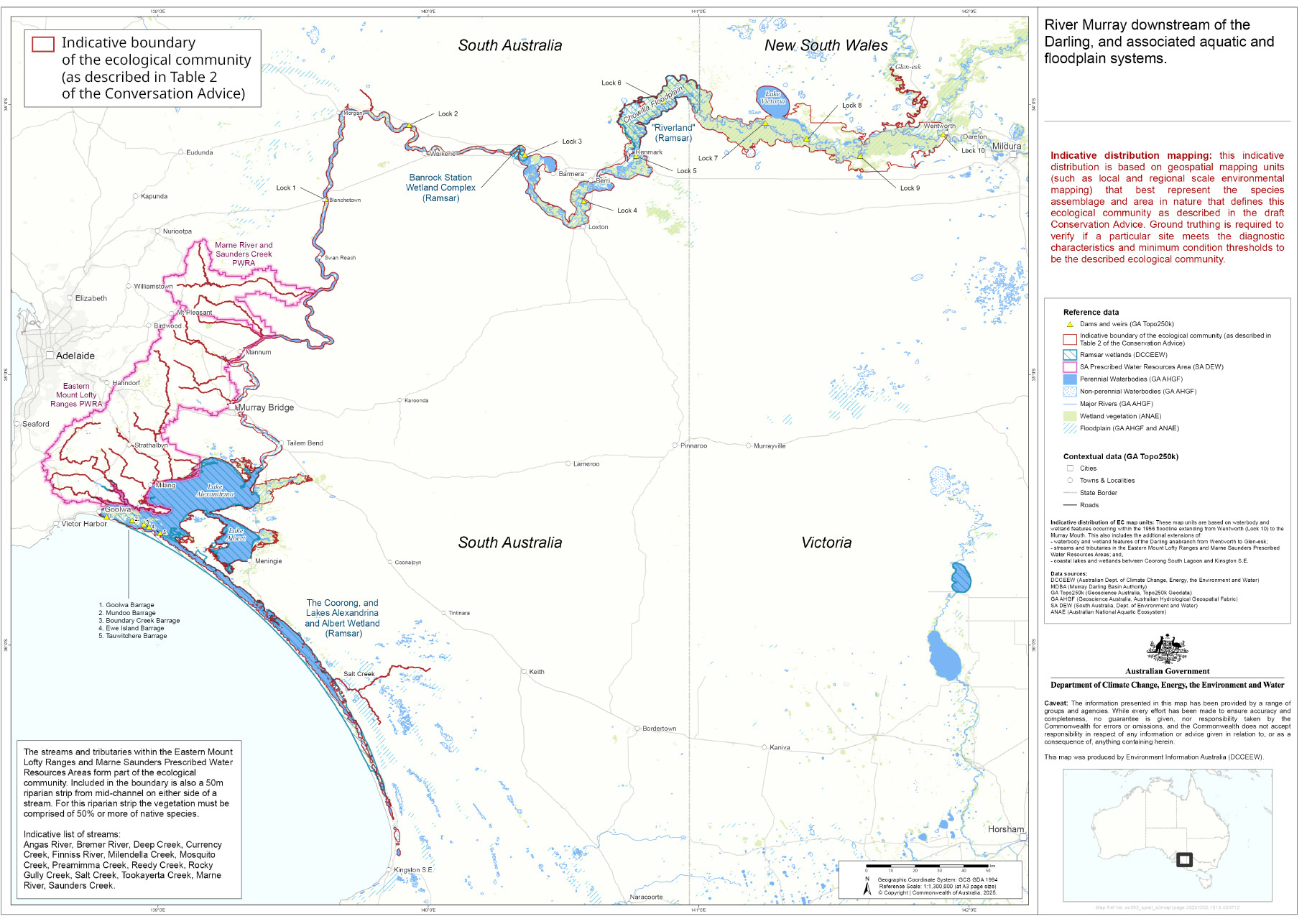
Additional information:
[View a larger map of the newly-listed area.]
The Albanese Government is already working with state governments and territories, local communities and other partners on a range of conservation and management efforts in the Murray–Darling Basin.
The 2025 Basin Plan Evaluation released last July found the Basin Plan is delivering real benefits for the rivers, wetlands and communities of the Murray–Darling Basin, with increased volumes of Commonwealth environmental water now available to support rivers and floodplains in the Murray-Darling Basin, including for the Murray River.
NFF questions need for River Murray critically endangered listing: NFF
National Farmers’ Federation (NFF), Media Release, 15 January 2025
The National Farmers’ Federation does not support the Federal Government’s decision to list the River Murray and associated systems as a Critically Endangered ecological community under the Environment Protection and Biodiversity Conservation (EPBC) Act.
NFF Water Committee Chair Malcolm Holm said the listing adds another layer of complexity to an already heavily regulated system, without clear environmental benefit.
“The Murray River corridor is already one of the most tightly regulated landscapes in the country,” Mr Holm said.
“Adding an EPBC listing on top of the Basin Plan and existing state and federal laws creates unnecessary duplicative complexity and will potentially interfere with existing water regulatory processes.
“We’re still trying to understand the detail of this decision, but right now it’s unclear why more red tape is needed when we have existing mechanisms like the Basin Plan and Commonwealth Environmental Water Holder, or if this will compromise the Basin Plan Review.”
Mr Holm said that a far better approach would be to nominate European Carp as a Key Threatening Process.
“If the Government is serious about biodiversity outcomes, it should start with the real curse in the system – carp. Declaring carp a Key Threatening Process and properly funding control and eradication would deliver far greater environmental gains than another listing.”
The NFF also warned the listing could also complicate water recovery projects under the Basin Plan.
“We have members extremely concerned about today’s announcement. We will seek further detail from the Government about this decision and its implications,” Mr Holm said.
The NFF has outlined its concerns in a detailed submission to the Government.
For more information, see the NFF submission here.
Critically endangered listing of Lower Murray River ecosystem and Macquarie Marshes is a wake up call: Nature Conservation Council of NSW
Nature Conservation Council of NSW, Media Release, 15 January 2025
The Nature Conservation Council of NSW has welcomed today’s decision by the Australian Government to list the Lower Murray River System as Critically Endangered, saying the announcement confirms what communities and scientists have warned for years.: Australia’s greatest river system is in serious trouble.
The listing covers the River Murray downstream of the Darling River and its connected aquatic floodplain systems, including the Coorong Lagoon.
The decision follows independent scientific advice from Australia’s Threatened Species Scientific Committee and a comprehensive assessment process. This will strengthen environmental protections and will strengthen federal environmental oversight for future decisions affecting the river.
This is long overdue, and an important step, but it also exposes the scale of political failure that has pushed the river to this point.
“This listing is not a victory, it is an alarm bell. A river system that sustains communities and wildlife has been formally recognised as critically endangered – this should shock every Australian,” NCC Chief Executive Officer, Jacqui Mumford, said.
The government’s own scientific advice confirms the Lower Murray faces ongoing threats from damaging water extraction, declining water quality, invasive species, habitat loss, salinity, erosion and intensifying climate impacts including droughts and heatwaves.
“Listing the ecosystem is only meaningful if governments deliver the environmental water as promised, stop approvals that worsen damage, and invest in real restoration on the ground,” Ms Mumford said.
“This listing gives Australia a second chance to do the right thing. Now governments must prove they are serious about saving the Murray.”
The Government has also agreed to list the Wetlands and inner floodplains of the Macquarie Marshes in northwestern NSW as an Endangered ecological community.
This extraordinary landscape is a vital refuge for more than 70 species of waterbirds and supports numerous nationally protected species, including areas recognised as Ramsar wetlands.
“The decision acknowledges the ecological significance of the Marshes and the urgent need to protect one of NSW’s most important inland wetland systems before further damage is locked in,” Ms Mumford said.
The Nature Conservation Council of NSW will continue working with Traditional Owners, river communities, scientists and partner organisations to demand stronger protections, fair water sharing and a healthy future for generations to come.

