


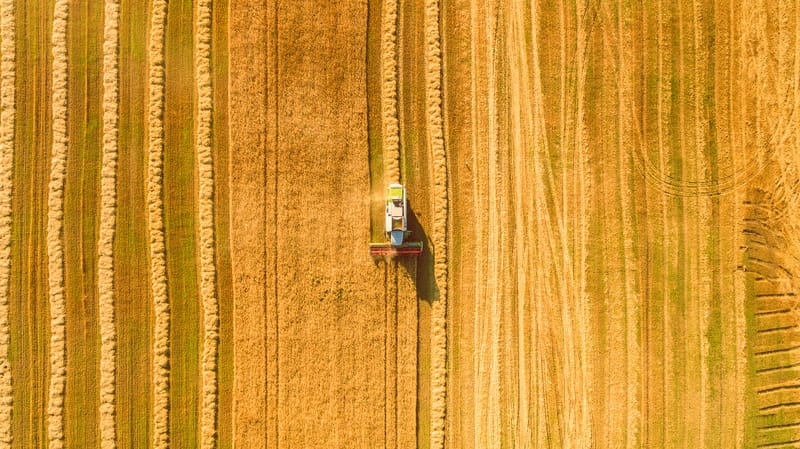
Photo: Sehil Liakhevych.
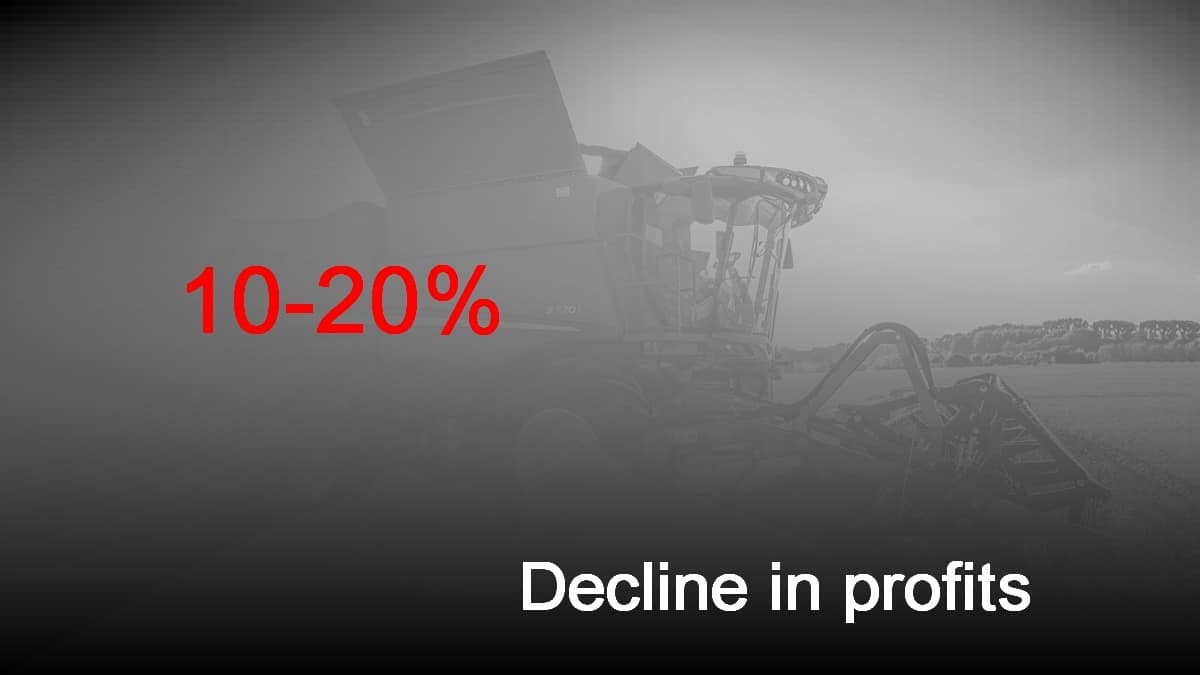
Ukrainian farmers’ incomes will decline by 10-20 per cent due to rising fuel and fertiliser prices.
It’s painful, but not fatal!
Development of the situation
Since the beginning of Operation Epic Fury in the Persian Gulf, the price of diesel fuel and gas for cars in Ukraine has increased by almost 30 per cent. The price of the cheapest gasoline has risen by almost 15 per cent. On February 23, 2026, the average national price of diesel fuel was US$1.39* per litre. On April 24, 2026, the same figure was US$2 per litre. Over the same period, the price of gas for cars increased from US$0.87 per litre to US$1.11 per litre. The price of A-92 gasoline increased from US$1.35 per litre to US$1.53 per litre.1 The cost of various fertilisers has increased even more significantly. In this case, the price increase was 34-35 per cent.2
Due to rising fuel and fertiliser prices, the spring sowing campaign has become 17-18 per cent more expensive.2 However, this is only the beginning of the problems. If the conflict doesn’t end soon, farmers’ costs this year will increase by 20 per cent3 to 60 per cent, according to various forecasts.4
What do farmers do?
Ukrainian farmers, like all other businesses in Ukraine, are forced to respond to the new economic challenge. In April, approximately 75 per cent of Ukrainian businesses had already assessed the impact of the crisis on their operations.5 What are these companies doing to survive?
The most common solution is to cut costs. This is done even at the expense of yield. Many Ukrainian farmers have sharply reduced their use of fertilisers due to increased prices. Some agricultural producers are using only 30-40 per cent of the required fertiliser level.6 The only exceptions are companies that stockpiled fertiliser in the fall. These companies have barely reduced their fertiliser consumption. However, such companies are very few.
Costs are also being reduced by changing the crops grown. Ukrainian farmers are abandoning the cultivation of highly energy-intensive corn. Due to the crisis, the cost of growing this crop increased the most, by 17 per cent.7
Costs are reduced through the more efficient use of agricultural machinery. Many farmers are plowing at a shallower depth. Previously, plowing was done at a depth of 28-30cm. However, now the plowing depth has been reduced to 20-22cm. This allows for fuel savings of up to 10 per cent without sacrificing yield. Farmers also try to avoid driving agricultural machinery on roads faster than 40km/h. For road travel, tyres are inflated with more air. During field work, tyre pressure is reduced. Excess weight is removed from agricultural machinery. Engine idling is limited. Typically, idling time is limited to 3 minutes. Farmers prefer to operate at lower engine speeds – in the maximum torque range (1300-1600rpm). This maintains power while reducing fuel consumption. Instead of warming up the engine, farmers immediately begin driving in a gentle engine mode.8
While cutting expenses, Ukrainian farmers are trying to increase their financial capacity. The traditional method is to stockpile fertiliser and fuel. The war has taught farmers this. Some companies that stockpiled resources in the fall at low prices are now in an advantageous position. But such firms are few. Most Ukrainian farmers are trying to improve their financial position through borrowing. Rising operating costs force them to take out loans. Banks offer loans for fixed assets at 7 per cent per annum. For working capital, the cost of loans is 13-17 per cent.9
Farmers also take advantage of a government support program called “Affordable loans at 5-7-9 per cent.” This is a Ukrainian government initiative to support small and medium-sized businesses. It provides preferential financing at 5, 7 or 9 per cent per annum for investment projects, working capital, or debt refinancing. Loan amounts can reach US$3 409 865 (UAH 150 million), with terms of up to 5 years.10
In addition, farmers are increasing the selling prices of their products. However, no more than 20 per cent of firms do so.5 Ukraine is in a difficult economic situation. The population is characterised by low purchasing power. Therefore, increasing the selling prices of food products has limited effectiveness….
What is the Ukrainian government doing?
Officials are trying to mitigate the effects of the crisis. However, just before the start of the Gulf War, the Ukrainian government increased excise taxes on fuel exports. Effective January 1, 2026, the rate on gasoline increased from €271.7 to €300.8 per 1,000 litres, on diesel fuel from €215.7 to €253.8 per 1,000 litres, and on liquefied gas from €193 to €271 per 1,000 litres. Excise taxes are increased annually to align rates in Ukraine and the EU. This will occur in 2028, the last time excise taxes will be raised.11 Although the decision to increase excise taxes exacerbated the crisis, officials have no intention of reversing it.
It’s worth noting that regional governments are developing special programs to compensate farmers for fuel costs. For example, such a program is being created in the Kharkiv region.12
Ukraine also has a national “Fuel Cashback” program.13 Farmers (like ordinary citizens) can take advantage of this program. The maximum compensation amount is US$22.7 (1,000 UAH) per month. Money is credited to a special card for cashless payments at participating gas stations. Under the program, the state reimburses a portion of fuel costs: up to 15 per cent for diesel, 10 per cent for gasoline, and 5 per cent for gas. Given the cost of fuel and the average fuel consumption per hectare per season of 55 litres,14 this program provides more psychological than practical support for farmers.
However, the Ukrainian government is also taking more effective measures. For example, at the beginning of the crisis, the government instructed Ukrnafta, a major state-owned trader, to sell fuel with a minimal markup. This had a significant impact. The company’s fuel sales increased by 2.4 times compared to the previous year.15 However, this did not prevent average prices across the country from rising.
Conclusions
The fuel crisis has dealt a blow to Ukrainian agriculture. However, it’s not a fatal blow. It’s a matter of reduced profits, not survival. With normal yields, a Ukrainian farmer’s income per hectare of land is US$400-800.16 And the average fuel consumption per hectare per season is 55 litres. Taking into account higher prices, the overpayment for diesel fuel will be approximately US$33 per hectare. The overpayment for autogas and A-92 gasoline will be almost the same. In other words, the fuel price increase will reduce farmers’ income by only 5-10 per cent.
Of course. Another portion of profits will be eroded by rising fertiliser prices. Fertiliser accounts for twice as much of farmers’ overall costs as fuel. For example, when growing grain and oilseed crops, fuel accounts for 9-15 per cent of all expenses. Fertilisers, however, account for 25-35 per cent of all costs. This is explained by the fact that fertiliser production requires a lot of gas, which has become significantly more expensive.7 Therefore, Ukrainian farmers are significantly reducing their fertiliser use. Given that fertiliser use is being reduced by more than half, the impact of rising fertiliser prices will not exceed the impact of rising fuel prices. In other words, the total losses Ukrainian farmers will suffer from rising fuel and fertiliser prices will be 10-20 per cent.
It’s clear that most Ukrainian farmers will survive. Unless, of course, something else happens…
*At the rate of 43.99 hryvnia per US$1
ARR.News will hope to hear from Pavel Kuliuk also about the impact of Epic Fury on yields in Ukraine.
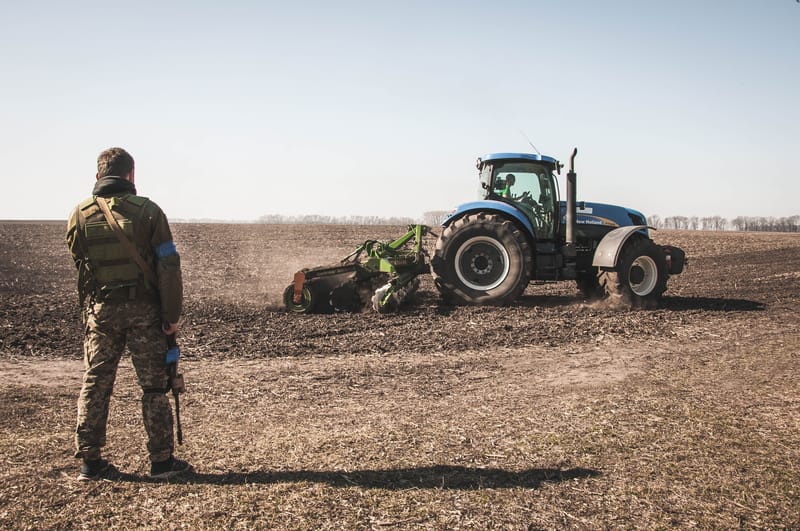
Photo: Dreamsidha.
References
1. https://index.minfin.com.ua/ua/markets/fuel/
2. https://www.proagroukraine.com/posivna-dorozhchaie-na-18-ahrarii-skorochuiut-vykorystannia-dobryv-i-palnoho/
3. https://interfax.com.ua/news/economic/1160117.html
4. https://inkorr.com/ru/zrostanna-vitrat-na-palne-ta-dobriva-ak-agrarii-ukraini-adaptuutsa-do-novih-realij-316396
5. https://forbes.ua/ru/news/globalna-palivna-kriza-ne-stane-problemoyu-dlya-ekonomiki-ukraini-za-vidsutnosti-defitsitu-palnogo-dragon-capital-17042026-38066
6. https://www.unian.net/economics/agro/stoimost-posevnoy-rastet-ekspert-otvetil-budut-li-agrarii-rabotat-v-ubytok-13352577.html
7. https://uland.ua/vpliv-globalnoyi-energeticnoyi-krizi-na-kapitalizaciyu-rinku-silskogospodarskix-zemel-v-ukrayini
8.https://24tv.ua/auto/ru/kak_sjekonomit_dizel_vosem_sovetov_dlya_fermerov_na_fone_rosta_cen_n71317
9. https://ukragroconsult.com/ru/news/iz-za-podorozhaniya-topliva-fermery-izmenyayut-finansovuyu-strategiyu/
10. https://bdf.gov.ua/programs/dostupni-kredyty-5-7-9
11.https://delo.ua/ru/news/v-ukraine-vyrosli-akcizy-na-toplivo-kak-izmenyatsya-ceny-na-azs-457648/
12. https://www.objectiv.tv/uk/objectively/2026/04/23/podorozhchannya-palnogo-na-harkivshhini-obitsyayut-kompensatsiyi-kogo-tse-stosuyetsya/
13. https://madeinukraine.gov.ua/national-cashback-palne
14. https://www.unian.net/economics/agro/ukrainskie-agrarii-ponesut-kolossalnye-poteri-iz-za-voyny-na-blizhnem-vostoke-13310868.html
15. https://epravda.com.ua/rus/weeklycharts/ceny-na-neft-brent-vyrosli-vliyanie-rekordnyh-kotirovok-na-import-topliva-v-ukrainu-819671/
16. https://epravda.com.ua/rus/biznes/naskolko-dorozhe-stala-posevnaya-iz-za-podorozhaniya-dizelya-819742/

