


Almost three months since the closure of the Straits of Hormuz, the federal government continues to issue statements couched in confident language about fuel and fertiliser “secured” and “shipments” and “cargoes” headed our way to “keep Australia moving”, “get fuel where it’s needed most”, “give our farmers greater certainty” and that they “are leaving no stone unturned”.
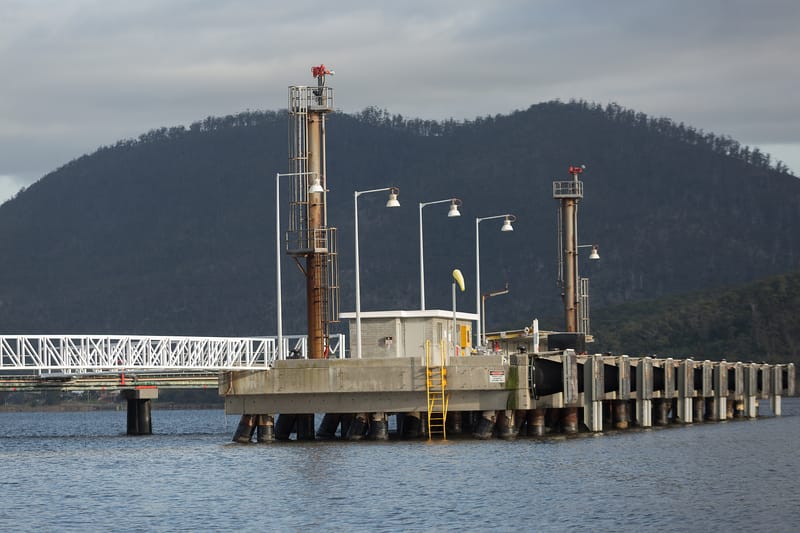
Photo: Steve Lovegrove.
This last week, the government has said it has “secured approximately 150 million litres, or 900,000 barrels, of additional diesel in three new shipments through partnerships with Ampol, Viva and regional supplier IOR.” Regarding fertiliser, the government says that “the Fuel and Fertiliser Security Facility has now helped to obtain around 125,000 tonnes of agricultural grade urea, in addition to the 250,000 tonnes of agricultural grade urea secured from Indonesia in partnership with Incitec Pivot.”
This sounds hopeful.
On paper (or rather on screen), Australia’s supply of fuel (leaving aside price) appears to be holding out overall, so far, though there are stations across the country with no supply (and even without a map, one might assume the stations without petrol are not in any capital or major regional city).
Tracking fertiliser supply and price is more difficult. If there is a publicly available source detailing the availability and price of fertiliser in Australia, please contact The Editor.
The public might reasonably ask about the outcome on the ground of all the fuel shipments secured to date – whether they have landed and made it to where they’re “needed most”, and at an affordable price – and the expected destination, arrival date and price of the latest fuel and fertiliser shipments touted.
So Australian Rural & Regional News put out some feelers to many of the Australian farmers’ associations this week, and has received a few replies that give a hint of how things are.
Your story, from on the ground out there, is wanted – comments are open below.
WAFarmers
Trevor Whittington, CEO of WAFarmers and a forthright and regular commentator on political issues, believes growers are getting fuel (without mentioning the price) but the fertiliser situation is confused, and is asking questions but not getting clear answers.
TasFarmers
TasFarmers Chief Operating Officer Neil Grose said fuel supply in Tasmania remained stable for now, but uncertainty around future diesel availability and fertiliser costs continued to create concern for farm businesses.**
“Bulk fuel prices have eased from recent peaks and availability is generally good, however the key issue for farmers is not simply price, it is confidence that fuel and fertiliser will continue to be available when they are needed most,” Mr Grose said.
“As we move through June and July, uncertainty in global energy markets and disruptions affecting crude oil movements from the Middle East continue to raise questions about longer-term diesel supply.”
Mr Grose said the Federal Government should be acknowledged for securing additional fuel shipments and supporting supply into Australia, but agriculture remained heavily reliant on reliable diesel supplies to keep farms, freight networks and food production moving.
“Diesel is not optional on a farm. It powers everything from planting and harvesting through to irrigation, transport and day-to-day operations. Any disruption to supply would be felt right across the agricultural sector.”
Mr Grose said fertiliser markets also remained volatile, with urea prices remaining elevated ahead of spring.
“One of the greatest concerns for farmers looking to establish new crops or pasture is can we get fertiliser, and what’s the price?” he said.
“It’s hard to commit to a new crop if you don’t know what your basic inputs are, so you’re not quite sure what your gross margin model will be.”
“Farmers need certainty around the cost and availability of key inputs before making production decisions. When those costs remain unpredictable, it becomes much harder to plan and invest with confidence,” Mr Grose said.
Mr Grose said rising fuel, fertiliser and freight costs continued to place significant pressure on farm margins, although some processors had stepped up to provide growers with support.
“There has been some relief provided by processors. One of the potato processors and one of the dairy processors have come to the party and provided growers with assistance.
“TasFarmers is continuing discussions with other processors about what further support may be possible as farmers continue to face escalating input costs.
“You get paid wholesale, but you buy retail and pay the freight both ways.
“Farmers are dealing with escalating costs across fuel, fertiliser, freight and other inputs, while many continue to operate under fixed-price contracts or markets where they have limited ability to recover those costs.”
“It reinforces the need for reliable supply chains and policies that support the long-term productivity and resilience of Australian agriculture.”
Victorian Farmers’ Federation
Results from March, so noting that some farmers may be finding it easier to get the fuel now, though the cost is still a big issue.
We’ve surveyed our members:
Victorian farmers reported that only 60 per cent of the time they can access fuel when required, often at higher prices, while a further 30 per cent reported experiencing delays. Most farmers (54 per cent) reported to be sourcing fuel on the spot from independent regional distributors, with 20 per cent relying on major distributors and 15 per cent accessing fuel through local independent contracts. This underscores the importance of regional supply networks in maintaining farm operations.
Fertiliser access was reported to be similarly constrained. While 48 per cent of respondents reported fertiliser was accessible, 30 per cent reported experiencing delays and 22 per cent reported being unable to secure required quantities. As a result of these combined disruptions, 62 per cent of farmers reported being forced to change farm management or business decisions.
The immediate impact is:
In response, farmers are adapting through changes to cropping strategies, more efficient input use, and greater adoption of technology. Pulse crops are playing a renewed role in rotations, fertiliser is being applied more strategically, and some producers are investing in on-farm fuel storage or exploring alternative energy options where viable.


Might pay to contact NSW Farmers Association?
Ed: NSW Farmers was contacted for comment. They did not respond. Also QFF, NT Farmers, Canegrowers and GPA. Responses were received from WAFarmers, VFF and TasFarmers, as set out in the article.