


Premier Chris Minns says it’s unthinkable that koalas are at risk of extinction. He’s spot on. Koalas are not now and never have been at risk of extinction.
In 1844 John Gould predicted their extinction because they could “rarely be detected”. By the 1880s there were koalas everywhere. They were overcrowded and suffered disease. Millions were shot for their fur until the Federation Drought frizzled leaves and their numbers crashed back to naturally low levels. But the “most significant outcome” of a Taronga Symposium on Koalas in 1976 was “unanimous agreement [amongst 43 experts] that the koala is no longer an endangered species” because they were becoming visible again.
Environment Minister Penny Sharpe says the Great Koala National Park has been a dream for more than a decade.
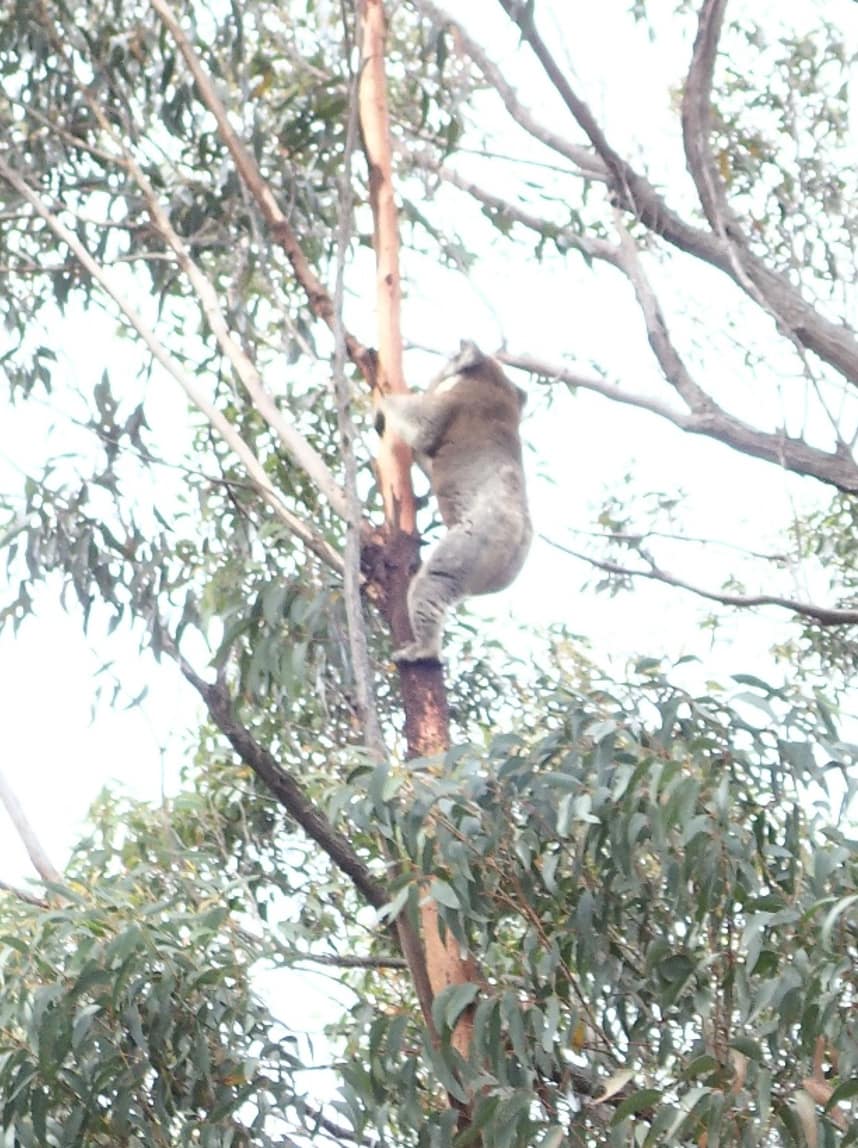
Indeed. The Great Koala Park is the culmination of a campaign by New South Wales National Parks and Wildlife Service to extend their empire. It was launched at a Koala Summit in 1988. They used a mail-out survey of koalas in 1986-87 and compared the results with all previous records going back to the first postal survey in 1949. Koalas were supposedly locally extinct where none had been recently sighted. This was/is incredible.
But NPWS used the natural invisibility of koalas to good effect. They took over regrowth forests and plantations where koalas were visible in the new Bongil Bongil National Park. They sponsored laborious and inefficient surveys in other areas, seemingly to find or not find koalas as required.
Tantawangalo was reserved as National Park to protect koalas. After that, surveys found only one koala scat which was later unidentified as koala. NPWS declared koalas extinct at Tantawangalo, even though a koala was seen there after the alleged extinction. They organised more intensive surveys at Murrah which detected much more evidence of koalas. A new national park was declared, supposedly to protect the last few koalas in the region. It was called Murrah Flora Reserves under the Forestry Act, seemingly to avoid a visible breach of the Regional Forest Agreement with the Commonwealth.
Law et al. (2018) found that koala numbers are not affected by logging intensity, time since logging or the proportion of logged and unlogged country in the vicinity. When Law et al. (2022) used sound recording surveys at Murrah, with its fire and logging regrowth forests dating from 1980, they found koalas at similar densities (0.04 male koalas per ha) to Bongil Bongil (0.05 males per ha). These are similar to the high densities reported for the whole 176,000 hectares of mainly regrowth forests in the Great Koala Park (0.07 koalas per hectare).
The Great Koala Park will make no difference to the resilience of the koala, whilst it will be socioeconomically destructive and push genuinely endangered species to the brink. Those are species such as the Hastings River mouse and broad headed snake, which rely on open, sunny and diverse ground layers rather than the homogenous scrubs created by Lock It Up and Let It Burn ‘conservation’.
Agriculture Minister Tara Moriarty says the Government is committed to a sustainable forestry industry in NSW.
I think her ministerial title gives the lie to that. Forestry is suffering death by a thousand cuts. Seemingly affable and pragmatic Chris Minns joins a line of Labour Premiers who’ve sold out honest workers in a sustainable industry for green votes: Neville Wran saved the Rainforests in 1982; Bobb Carr saved the Pilliga (where koala numbers later crashed because of the Millennium Drought) in 2005; Nathan Rees/Christina Keneally saved the Red Gum forests in 2009/2010.
Koalas, like all animals, are limited by their food. When the first live koala was brought into town in 1803, the Sydney Gazette reported that “its food consists solely of gum leaves, in the choice of which it is excessively nice”. In 1933, Blinky Bill’s mother “climbed down the tree, with Blinky following close behind, and went to another tree where they had a good meal of young leaves and tender shoots” A year later, the Director of the Australian Institute of Anatomy wrote “The sole diet of the Koala consists of the tip leaves of certain types of gum tree”.
Logging initiates fresh growth in all retained trees and edge trees, then new eucalypt regeneration provides even more food. Plantations, whether for amenity or timber, quickly provide lots of new food. Lock It Up and Let It Burn ‘management’ produces new food as chronically declining trees repeatedly reshoot new foliage. (This is called koala overbrowsing in Victoria). When high intensity fires inevitably rip through scrubby declining forests, a flush of new growth soon follows.
Dr. Law’s published data show that north coast koalas continued to increase through Black Summer. Healthy koalas living at low densities have Chlamydia but not chlamydiosis. Overabundant koalas are invading suburbia. That’s why they’re increasingly hit by cars and attacked by dogs. Housing developments are not a threat to the species but there is a real housing crisis.
Green idealogues in the koala industry are causing great suffering for people and koalas.
Vic Jurskis is the author of The great koala scam : green propaganda, junk science, government waste & cruelty to animals, Connor Court Publishing, 2020.
References
– Law et al. 2018 Passive acoustics and sound recognition provide new insights on status and resilience of an iconic endangered marsupial (koala Phascolarctos cinereus) to timber harvesting. Plos One
– Law et al. 2022 Estimating and validating koala Phascolarctos cinereus density estimates from acoustic arrays using spatial count modelling, Wildlife Research
Related stories: Great Koala National Park; koala; Open for Debate – Koalas.


Vic Jurskis once again highlights obvious overcrowding and overabundance of koalas through NSW based on proven studies and experience but will politicians ever listen when a quite little koala is great PR for the spinners that have zero real interest in sustainable forestry practices and regional jobs.