

The Hon. Matt Canavan, Leader of The Nationals; The Hon. Susan McDonald, Shadow Minister for Resources, Joint Media Release, 24 June 2026
The new One Nation MP for Farrer has blindsided families and farmers, by voting with the Teals and Greens in Parliament House against Australian regional jobs and communities.
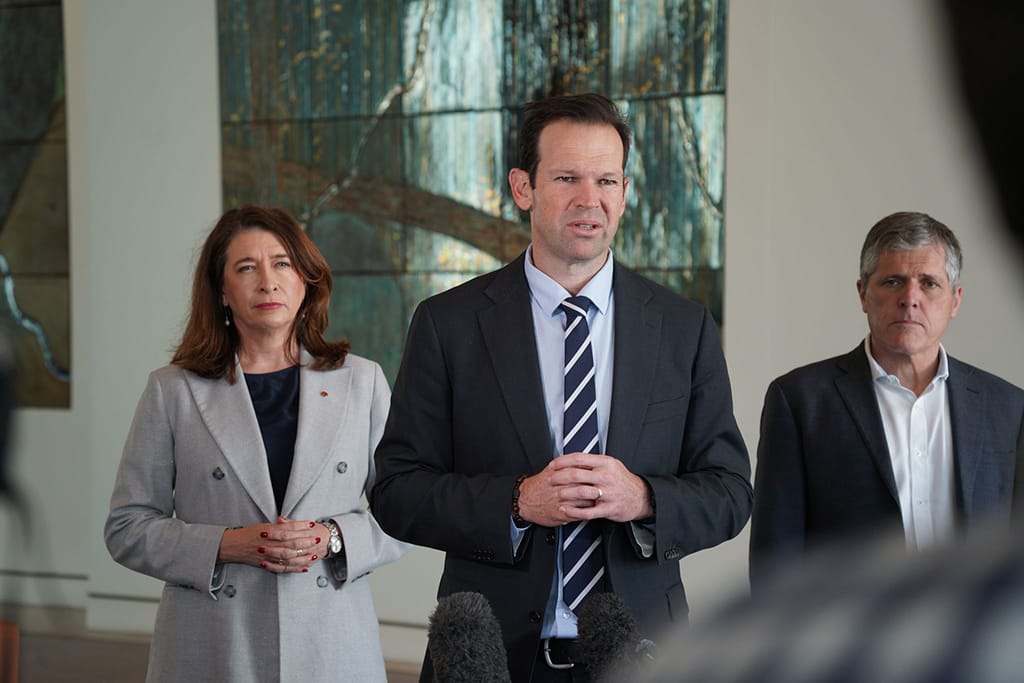
The amendment, moved by a Teal MP, demanded the Labor government cap the fuel tax credit – a scheme which allows for a rebate to businesses that use heavy machinery for the fuel tax they pay.
Leader of The Nationals Matt Canavan said Farrer families and farmers deserved to know who Mr Farley really was.
“It didn’t take long for Mr Farley’s true colours to show and they do not appear to be One Nation’s orange,” Mr Canavan said.
“Mr Farley chose to vote against regional Australia and the industries that rely on the rebate.
“Regional communities deserve to know, is Mr Farley a true One Nation representative – or just a turncoat with the Teals? If he can’t explain his decision to side with the Teals and the Greens, then One Nation Leader Pauline Hanson needs to ‘please explain’.”
The vote was to cap rebates at $50 million per year for large manufacturers, including mining companies. It also called for funds over $50 million to be used for electrification infrastructure and technology investments, and an orderly phase-out of fuels eligible.
Shadow Minister for Resources Susan McDonald said regional Australians in Farrer didn’t vote for more anti-mining activism.
“When David Farley votes with the Teals, he’s voting against the workers, families and communities that depend on our resources sector,” Senator McDonald said.
“Regional Australians know that strong mining and resources industries mean strong regional economies.
“Fuel tax credits are not a handout. They are a refund of fuel excise that businesses should never have paid in the first place.
“Farmers, miners, freight operators and regional businesses rely on diesel to keep Australia moving. Abolishing fuel tax credits means higher food prices and higher freight costs, which means families pay more at the dinner table.
“If David Farley wants theatrics, he should be on a stage, not in the Parliament of Australia. Every vote in Parliament matters, and Mr Farley will need to decide whether he is prepared to uphold the principles he was elected on.
“Mr Farley’s decision to support a vote directing more taxpayer money towards subsidised renewable energy projects that compete with productive agricultural land is completely at odds with The National Party’s position.”
CEO Minerals Council of Australia CEO Tania Constable said capping or scrapping fuel tax credits hits regional Australia first and hardest, driving up costs where there are no alternatives to diesel and pushing up prices for everyone.
“This isn’t a minor change in legislation,” Ms Constable said.
“It means higher fuel bills for farmers, freight, mining, tourism and local contractors, and those costs flow straight through to the checkout. We can’t afford to put Australia’s resources sector at risk, undermining investment, export income and the industries that keep the national economy strong.
“Taxing mining more doesn’t just hit one sector. It hits thousands of suppliers, weakens export income, and drives up the cost of living right across Australia.”
National Farmer’s Federation CEO Michael Guerin said the NFF strongly opposes any changes to the fuel tax credit scheme.
“The fuel tax credit scheme rebates the fuel tax duty for fuel used off-road for business activities, such as on privately maintained farm roads or fishing vessels,” Mr Guerin said.
“Farmers are rightly worried any restrictions placed on the scheme for other industries could set a precedent, with agriculture next in line.”
Coal Australia CEO Stuart Bocking said fuel tax is a road user charge.
“Fuel tax has always been rebated on fuel used in vehicles that do not use public roads, such as mine sites and farms,” Mr Bocking said.
“That is the logic behind this longstanding policy. It’s not a subsidy nor a handout. It’s a rebate for something you should not have been charged for. Our Parliament must focus on policies that grow the economy, not Greens and Teals policies that tax the economy, and seek to destroy the resources sector.”