

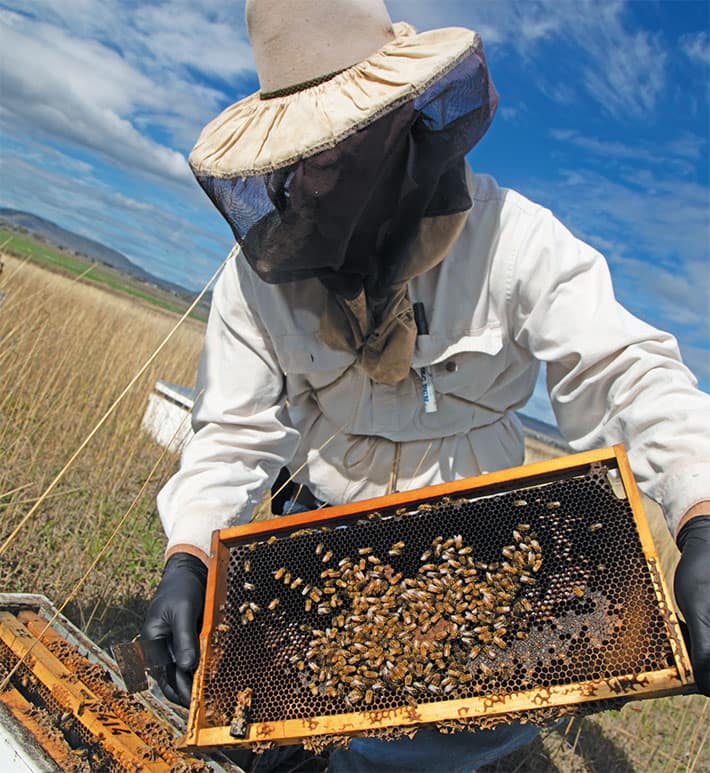
The Masters Family, owners of Dalrymple View Honey at Allora have been dealing with the Varroa Mites.
According to Sharon Masters, we’ve now got to learn to live with Varroa. For beekeepers this means testing for the mites, every couple of weeks.
One hive tested by the Masters’ son, Cameron (seen here), had no mites before he checked again after five weeks and he found 30 mites.
Beekeepers! Varroa mite is here
Last week, the Queensland Beekeepers Association held its annual conference in Bundaberg. Beekeepers in Queensland faced down an unprecedented new reality: Living with Varroa Mites. Local Beekeeping family, the Masters, attended and have been dealing with the mites and what this new reality looks like.
Australia is the last place in the world to have been infected by the mites.
When it first arrived in New South Wales in June 2022, through the port of Newcastle, all of the borders were closed and nearly 50,000 hives were euthanased in that state.
But soon enough, authorities realised this wasn’t going to work so a transition to management was applied.
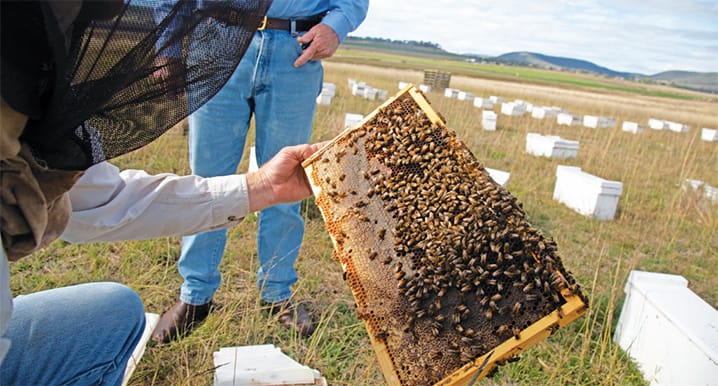
Queensland had its first reported Varroa mites in the Lockyer Valley in March 2025. The infestation is spreading very quickly.
According to Neil and Sharon Masters, it’s likely the number of feral honey bee hives around the place that have allowed Varroa, in the last 18 months, to continue its spread into Queensland.
The parasite is managed with chemical insecticides Abivar and Bayvarol. Beekeepers rotate these through to avoid the mites developing a resistance.
Varroa mites are so destructive because they feed on bee’s larvae. They eat the young, the hive can’t replenish its population, and collapses.
As Honey Bee populations collapse, our agricultural industry follows close behind.
Apples, carrots, cabbages, onion, avocado and sunflowers are some of the agricultural produce 100 per cent pollinated by European Honey Bees.
But from the time the mites have become established in Australia, a chemical resistant mite has appeared, one that needs an organic pesticide, Formic Pro to treat it.
But Formic Pro only works in certain temperatures.
“On the resistant bee, in Queensland Formic Pro can only be used between 5 and 29 degrees,” Neil Masters said, explaining why Queensland is so susceptible to the mites.
But the time it’s taken for a chemically resistant strain to develop is worrying the Masters.
“It’s just unusual. It usually takes a few years for the mite to develop the resistance but apparently there’s one that’s come in that already is resistant,” he said.
The result is an unprecedented upheaval for beekeepers.
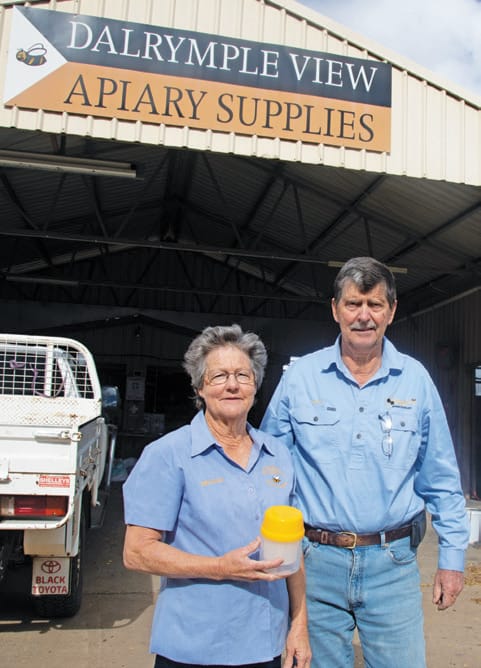
Testing kits separate the mites and the bees so producers can keep a tab on their hives’ health. Testing is the most important management tool.
“Yeah, its going to be pretty rough for the next couple of years until all the feral hives die out,” Neil said.
He hopes that when the feral hives of European Honey Bees disappear, with a comprehensive management strategy, producers will be able to get a much better handle on the parasite.
But everyone needs to be testing.
“Yep, all the backyard beekeepers, people like us, the commercial people if they aren’t doing the right thing we’re doomed.
“We know one commercial beekeeper who lost 60 hives in one go,” Neil said.
Local beekeepers should also be coordinating which chemical they’re using, to prevent the mites from further developing any genetic resistance.
The other thing that is making the situation harder for beekeepers, is the restrictions on other forms of chemical insecticides in Australia.
“We’re really trying to lobby Government to get a bit more help. To get some chemicals registered which do help and work,” Neil said.
The climate in Queensland is the issue.
In Canada, the Varroa mites will die off while its cold and the bees hibernate.
But in tropical Queensland, its not only too hot for the organic pesticide used on the resistant strain, these mites have all year to feast and breed.
As far as what beekeepers can do now, the Masters suggest they test.
“I think at the moment they’ve got to be checking every couple of weeks because you leave it a month and its too late,” they said.
Their big concern is the casual or even unregistered beekeepers, who might not even be aware that Varroa is a thing.
But for the Masters, lifetime beekeepers, their world has completely flipped on its head.
“It’s a different game,” Neil said, driving back from testing his hives.
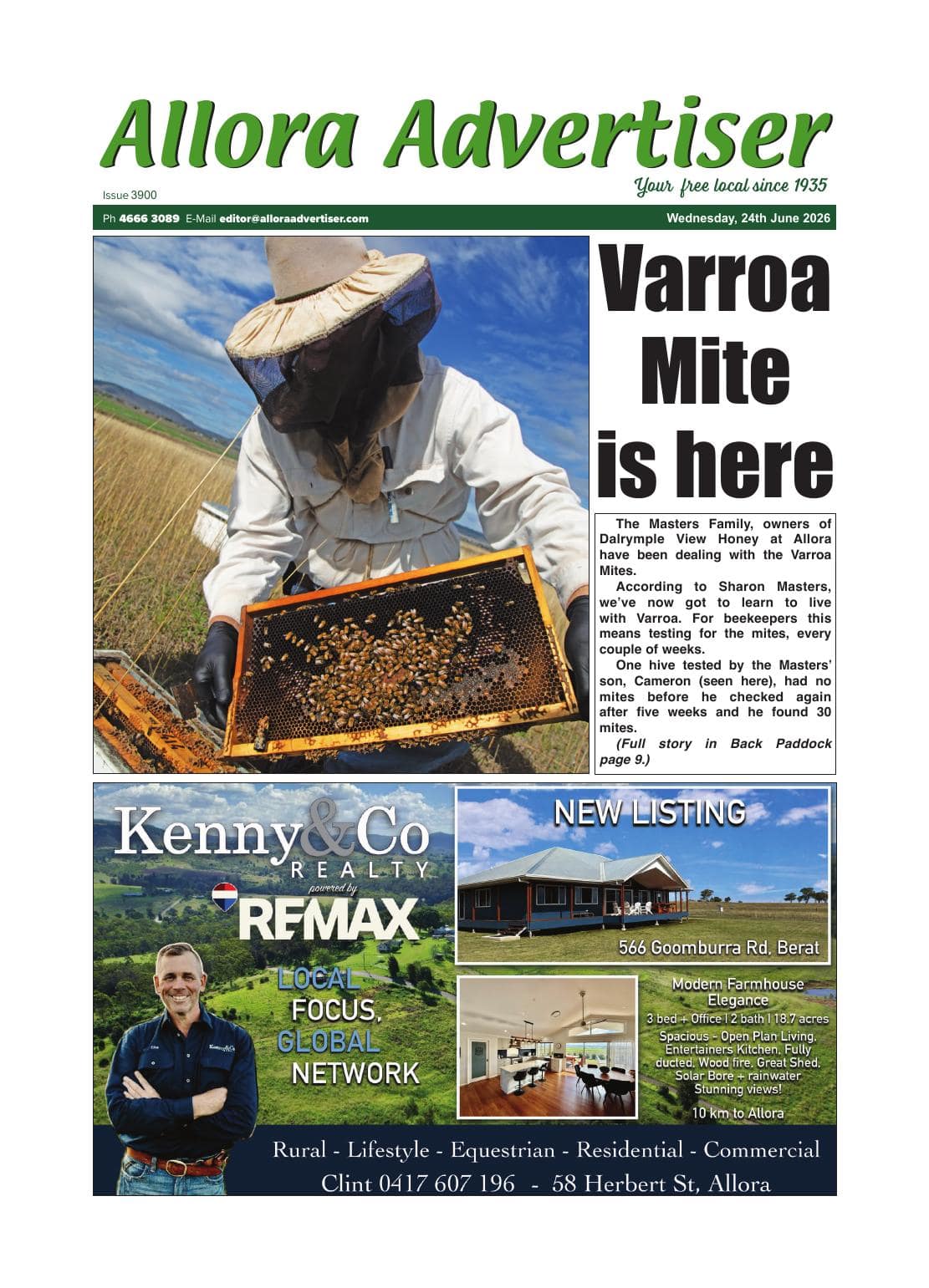
This article appeared in Allora Advertiser, 24 June 2026.

