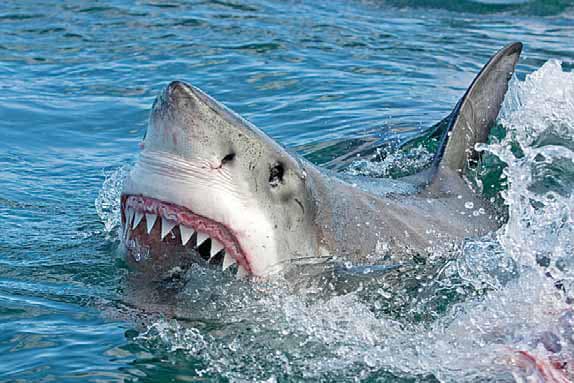
A spate of shark attacks around Australia in the first half of 2026, including four fatalities and a recent local incident has seen calls for protections on sharks to be lifted or a cull to occur.
This year the attacks began on January 18, at Sydney Harbour’s Shark Beach at Vaucluse, when a 12-year-old boy was killed by a suspected Bull shark.
Four shark bites occurred in 48 hours following this incident including three incidents at Sydney beaches and an attack at on a surfer at Point Plomer, near Crescent Head.
Then on May 16, a 38-year-old man was killed by a four-metre Great White while diving at Horseshoe Reef, off Rottnest Island, Western Australia.
Less than a week later, A 39-year-old man was killed at Hull Heads, Queensland, while spearfishing on May 24.
On May 30, Alejo Santiñaque was surfing with friends at Redcliff near Brooms Head when he was bitten on the right foot by what was suspected to be a Wobbegong Shark.
The latest incident occurred at Sydney’s Coogee Beach on June 13 when 35-year-old mother and teacher, Leah Stewart was attacked by what was suspected to be a Great White, while swimming between the flags.
After undergoing multiple surgeries for severe and life-threatening injuries, she remains in a critical but stable condition in hospital.
Due to Coogee beach being under the Sydney airport flight path, surf lifesavers weren’t permitted to operate drone surveillance for sharks, an issue Premier Chris Minns said would change after this incident.
Following the attack, the state government ruled out culling Great Whites but not Bull sharks.
The Monday after the attack Mr Minns said Bull sharks posed a real threat to people in Sydney Harbour.
“They’re not a protected species and we’re currently undertaking a head count (to see) whether there’s been an increase in the harbour as a result of a healthier harbour and more fish stocks within that tributary (and) what it means for swimming and recreating,” he said.
“But a cull of Great Whites is not going to be the answer to this and we’re not contemplating that.”
Member for Clarence Richie Williamson said he supported a “round table” discussion involving industry experts and scientists to revise shark catch quotas in NSW.
“For decades flake has been on the menu of fish and chip shops everywhere, so I see no reason why that shouldn’t be increased,” he said.
“I understand that here in the Clarence we still have shark quotas, and why shouldn’t they be increased, particularly when there seems to be a grave increase in shark attacks.
“Bull sharks I have absolutely no problem with culling.
“But I also want a round table with the experts to work out what the quotas should be and what that should look like.”
Mr Williamson said speaking to professional or recreational fishermen would likely reveal an increase in shark numbers and sightings.
“When the quota number is determined there needs to be science behind it and that where I think getting the marine experts around the table to work through that is very important,” he said.
Mr Williamson said he had discussed the shark attacks and culling with both the Nationals and the Liberal party and he expected a motion to be put forward in NSW Parliament.
The NSW Government said its Shark Smart Shark Management Program is the largest and most comprehensive of its kind in the world.
The program features 305 smart drumlines along the length of the NSW coast across 19 local government areas from the Tweed to Bega, 37 tagged shark listening stations, shark nets at 51 beaches across eight local government areas between Newcastle and Wollongong, and surf lifesaving drone patrols at up to 50 beaches during school holidays, with at least one drone in every coastal Local Government Area LGA.
In 2023, the NSW Department of Primary Industries shark tagging program recorded 17,501 detections of Great White, Tiger, and Bull sharks off beaches around Yamba, the most in NSW by almost 10,000 detections.
The Clarence Valley LGA has a drone for shark surveillance based at Yamba Surf Club, plus 15 smart drum lines and a shark listening station as part of the program.
There are more than 470 community shark bite trauma kits along the NSW coastline, including 129 kits mounted on external walls of surf clubs, and 150 kits rolled out this year at beaches including in the Clarence Valley, which were funded by the NSW Government.
The free SharkSmart app provides real-time shark alerts, information and resources for people using NSW ocean beaches.
The app for both Apple and Android devices features alerts about shark-related incidents, maps showing where you are in relation to the general location of beaches with shark mitigation gear, plus real-time information about detections of tagged sharks by the network of 37 tagged shark listening stations along the NSW coast, sharks observed by the 50 drones operated by Surf Life Saving NSW, target sharks (White, Tiger and Bull sharks) tagged and released by 305 SMART drumlines along the NSW coast, marine animal strandings, and other beach safety issues.
The app can be downloaded for free from the Apple app store or Google play.
This article appeared in the Clarence Valley Independent, 26 June 2026.
Related story: No easy solution to shark crisis