


Grains Research & Development Corporation (GRDC), Media Release, 24 June 2026
Early signs of reduced fungicide performance in barley loose smut have been detected in key grain growing regions across Australia. While there is no cause for alarm, growers are reminded to remain proactive in disease management.
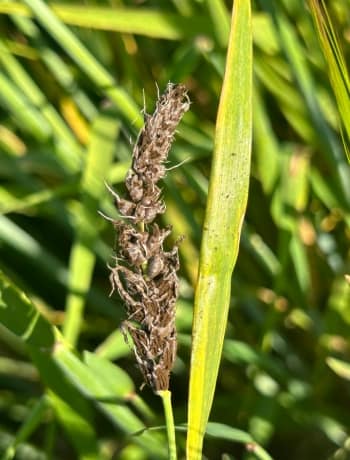
Researchers at the Centre for Crop and Disease Management (CCDM) have identified a mutation associated with reduced sensitivity to succinate dehydrogenase inhibitor (SDHI, Group 7) fungicides, based on samples collected between 2024 and 2025 across New South Wales, Queensland and Western Australia.
CCDM Associate Professor Fran Lopez-Ruiz said the detection was an early sign of change in the pathogen population, made possible through improved monitoring and diagnostics.
“This is a novel mutation, meaning it’s the first time this specific genetic change associated with reduced sensitivity to SDHI fungicides has been identified in loose smut anywhere in the world,” A/Prof Lopez-Ruiz said.
“However, it’s important to stress this is not widespread field failure.”
Samples submitted during the 2024 season from across NSW and Qld were the first to indicate reduced sensitivity to SDHI fungicides, with further analysis of 2025 samples from Wagga Wagga (NSW), Crossman and Gibson (WA), and Toowoomba and Warwick (Qld) showing high levels of this mutation.
The samples were submitted by collaborators from NSW Department of Primary Industries and Regional Development (NSW DPIRD), MCA Ag Group, Western Australian Department of Primary Industries and Regional Development (WA DPIRD), the University of Southern Queensland and the Queensland Department of Primary Industries.
Associate Professor Lopez-Ruiz said the findings matched reports from the paddock of higher disease levels despite treatment.
“If the mutation is present at a low frequency, most of the population is still sensitive and control will look normal, however if it accumulates and becomes dominant, the fungicide will no longer work as it used to,” he said.
The mutation was identified using a DNA sequencing pipeline developed within the CCDM to analyse entire target genes for both known and novel mutations, rather than just small fragments.
Used alongside in silico mutation and structure analysis methods, this enabled quick characterisation of the mutation to better understand its impact on SDHI fungicides.
Armed with this new detection tool, the CCDM team rescreened three 2021 samples from Dulacca (Qld), which also showed high levels of the mutation.
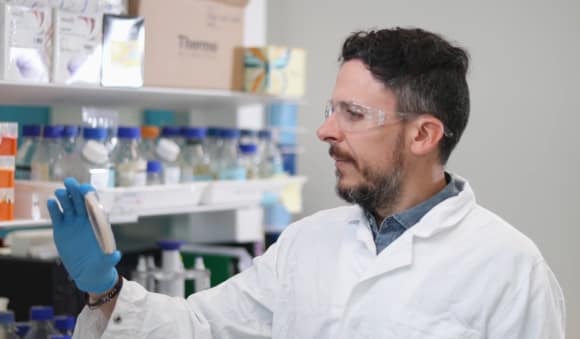
“For us, it’s very important to characterise resistance when it’s at low frequency,” A/Prof Lopez-Ruiz said.
“It means there is still time for industry to respond and put the right management strategies in place before resistance becomes widespread.”
Barley loose smut infection is usually patchy due to its seed-borne nature, but released spores can spread by wind to nearby green heads, creating carryover risk if infected seed is retained.
NSW DPIRD pathologist Brad Baxter said while clean seed reduces risk, a broader integrated management approach such as the Fungicide Resistance Five from the Australian Fungicide Resistance Extension Network (AFREN) will help slow fungicide resistance.
“This includes crop rotation, avoiding susceptible varieties, rotating or mixing fungicide modes of action, spraying or applying fungicides only when necessary, and using non-chemical control methods, including seed hygiene,” Mr Baxter said.
“Apply the correct product rate and water volume, and ensure equipment is well-calibrated, delivering a consistent, well-mixed product across a steady seed flow.”
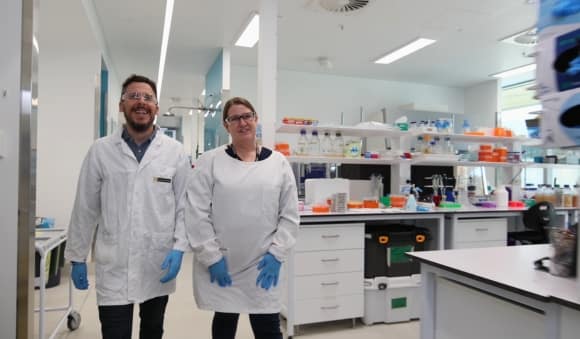
Ongoing surveillance remains critical, with sample submissions from agronomists and pathologists playing a key role in identifying emerging issues early.
CCDM Director Professor Mark Gibberd said this discovery wouldn’t have been possible without ongoing investment into research on fungicide resistance monitoring and detection.
“The new capabilities developed by the CCDM enable a far more comprehensive search for fungicide resistance,” Prof Gibberd said.
“This investment is already delivering value by allowing us to identify mutations that were previously unknown and beyond our ability to detect, giving industry time to respond before it becomes a more significant issue.
“That’s why this situation is about awareness, not alarm – we were able to detect these changes early, and the current tools to manage loose smut remain effective when used appropriately.
“It’s now about using those fungicides wisely to protect their longevity.”
CCDM is a national research centre co-supported by the Grains Research and Development Corporation (GRDC) and Curtin University.
About us: GRDC is one of 15 Rural Research and Development Corporations (RDCs) responsible for planning, investing in and overseeing research, development and extension (RD&E) for 27 leviable grain crops. Our purpose is to invest in RD&E to create enduring profitability for Australian grain growers.

