


Gippsland Farmer, June 2025
It was the drought about a decade ago that the penny finally dropped for farmers in East and Central Gippsland. The tough times had brought people together and looking forward, the question on many farmers’ mind was ‘How to boost farm production in the good times better to cope with the tough times?’
There was capacity amongst farmers in East and Central Gippsland to assess how farm systems grow, so the upshot was a meeting of about 100 farmers in Sale.
Thus in 2018-19 the Gippsland Agricultural Group was formed, with the new board blessed with key personnel having a lot of business and farm acumen, according to the group’s general manager, Jen Smith.
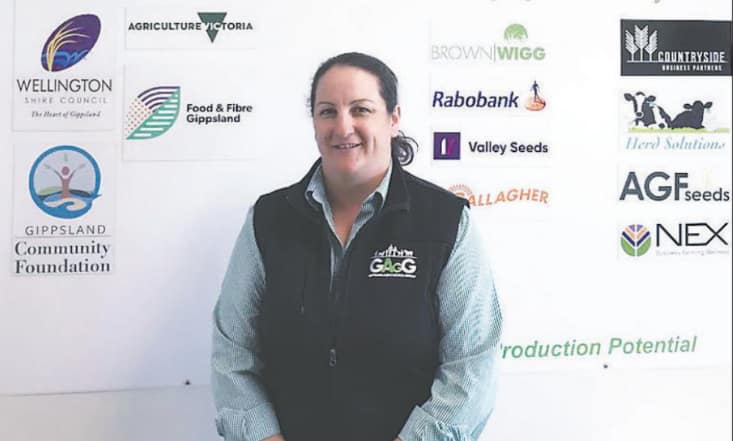
State and local grants, including one from the then Premier, Daniel Andrews, and support from Wellington and East Gippsland Shires, got the ball rolling.
“We worked with them on preparedness, we now work together on things tested and tried. Farmers engaging with Gippsland Ag can expect to learn how to many variable seasonal conditions, their livestock, soil and crops. We are production focussed – we believe production facilitate choice and profit,” Jen told Gippsland Farmer.
GAgG now has more than 400 members, who pay $99 a year, for the they attend workshops and events to hear from the industry’s best advisers.
If farmers get value, they will participate,” said Jen. “We are here not to advocate but to educate. We have many state and federal grants for projects with a focus on farm business resilience, innovation, productivity and on adaptation to climate.
“Eighty per cent of members are from East Gippsland and Wellington Shires with the remainder from South and West Gippsland. We are volunteer lead by farmers with three on the board from each of the two main shires.”
Jen, originally from Melbourne, lived in Heyfield, went to school in Maffra and then married a farmer 20 years ago. She runs Angus cattle at Tambo Crossing and prime lambs at Bengworden, having studied social science and then environmental science art university before completing an MBA at Fed Uni in Gippsland and is now is the general manager.
The GAgG team has 2.4 full-time employees; eight different professional providers have expertise on various subjects such as crops, animal health pastures and soil management.
“All staff at the group are committed to farming. Projects are steered by sub-groups, collections of people come and go a bit, for example, such as planning and putting on the Red Meat Conference,” Jen said.
Attendance was massive at this year’s Red Meat Conference in Bairnsdale, with sophisticated presentations on a variety of topics. GAgG has also hosted several projects with Melbourne University, and one with Federation University on top soils – demonstration work, not research.
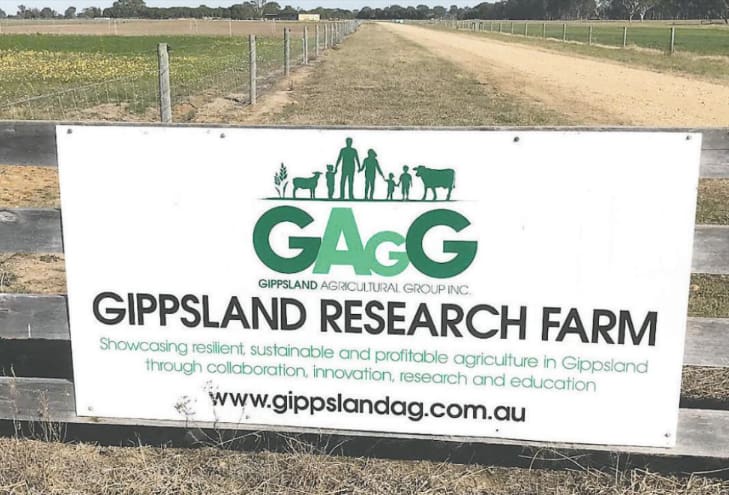
GAgG has five pillars – productive pastures, grains and fodder, soils, livestock and healthy farming communities – they operate the Gippsland Research Farm, 114 hectares outside Bairnsdale, next to the airport.
This farm hosts a myriad of projects for industry, community groups and farmers… testing and trialling many things such as new seed varieties, soil management techniques and fertiliser regimes.
A forum is held every couple of years on key questions and challenges limiting farm production potential in the region. “This gives us priorities, the team can work with to develop projects and seek funding for demonstration and education toward, unlocking the production potential in their farming system,” said Jen.
A breakthrough was receiving funding after Black Summer for the group‘s headquarters, the Gippsland Agricultural Centre, which was built with lots of help from various volunteers. “From the beginning we always envisaged a professional learning and meeting place for farmers and for industry and community to come together, Now, we have it,” said Jen.
GAgG aims to be as inclusive as possible, irrespective of whether a farm has five or 500 cows. “If they want to improve sustainability and profitability on farm, we welcome you to join us,” said Jen.
Gippsland, with its dominant dairy, beef and sheep sectors, has a surprising number of grain growers, who specialise in wheat, barley and canola.
“We run annual trails for this as well as fibre beans and other crops,” said Jen. “It’s not recorded how much grain is grown in Gippsland. Previously Gippsland was great for grain growing regions in the state. Grains are now sold direct to dairy farmers, but some canola goes to Melbourne and Geelong. Wheat and barley are mainly used for stock feed.”
GAgG has forged a partnership with Food & Fire Gippsland, which works with stakeholders and industry to develop Gippsland’s $7 billion agriculture sector.
GAgG’s also delivers a podcast each Friday, “Digging Deeper – Ag Chats with AI” via its website.
These various tools to help the industry are becoming increasingly important.
Recently GAgG delivered the Business of Farming Series of talks right across Gippsland “Prices received are OK, but farmers can’t keep up with the astronomical cost of production. We need to understand markets, build financial literacy and understand what drives bank lending,” she said.
Costs including labour, animal health consumables, fertiliser, fuel and insurance all required to produce red meat have risen 40-60 per cent over the last ten years and prices received for these commodities have only seen a 2-5 per cent increase.
“We can and are being more efficient and productive, but it’s not enough to close the gap.”
GAgG will hold a soil symposium on June 11, which will focus soil management especially on how to improve the water and nutrient holding capacity of that 10-15cm of topsoil.
“Here at GAgG we focus on what we do daily on farm and what we can control. We are great users of land and water in this region.” Jen said.
“If our food producers want to be as efficient as they can be, they have to accommodate what is best practice. If we focus on being as efficient as we can be, we should be less affected by climate and market variability. We are volunteer led, farmer driven set an agenda based on what is relevant and pressing right now.”

