

Gippsland Farmer, June 2025
In many European countries right now – Spain, France, Hungary and Poland – farmers are just putting the finishing touches on planting their sweet corn. Similar plantings occur in other parts of the world – from South Africa to Chile, Uruguay and New Zealand – at a different time of the year.
They have one key thing in common: they source their sweet corn seeds from Snowy River Seeds in Orbost.
The town in East Gippsland is a powerhouse in breeding sweet corn, which it has been doing since the mid-1990s.
What’s more, the sweet corn that Australians buy every day – frozen, canned or fresh – from shops in Australia has the same ultimate source; Snowy River Seeds supplies the seeds, and local farmers grow the product.
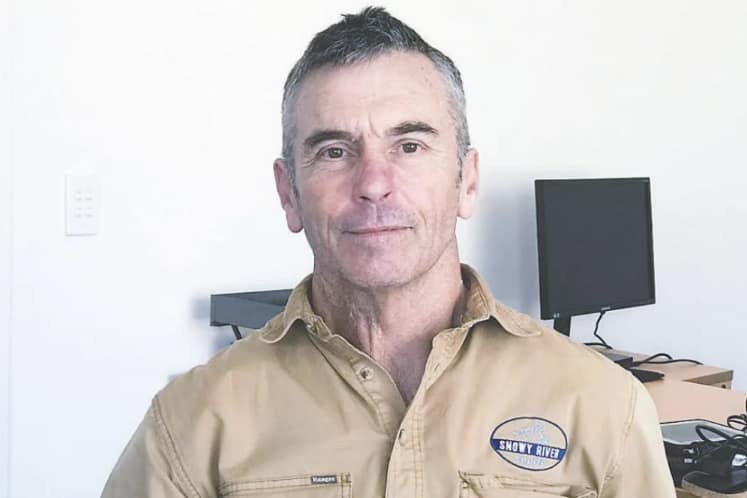
Snowy River Seeds’ plant breeder, Damien Courtier, who joined the company in 1998, estimates that Snowy River has about 95 per cent of the processed market (frozen and tinned) in Australia and 40-45 per cent of the fresh market.
“Our market share is growing in the fresh market,” he told Gippsland Farmer. There are many varieties – yellow, white, ‘yellowish’ – from old standard sweet corn through to a cream corn product.
“We also do popcorn seed in Australia, New Zealand and South Africa,” he said.
Snowy River Seeds began as a grower-owned op-operative in the 1970s, dealing in varieties such as fresh beans, later transiting to sweet corn seed production and bean seed.
In the 1990s, John Auer, a business development expert who joined in 1985, turned Snowy River into an exporter of seeds. He became chief executive officer in 1995, and changed from importing hybrids to breeding sweet corn himself in Orbost. The breeding program has been going since the 1990s.
In 1998 Damien Courtier came on board as plant breeder. A graduate in agricultural science from the University of Sydney, he worked as an assistant cotton breeder at Goondiwindi in Queensland before joining SRS, whose general manager is Leo Schoots, based in Noojee. Leo is also responsible for the management of the global distribution network as well as managing the seed production in Australia, but also in NZ, France and Hungary.
Damien said new hybrid sweet corn varieties were created by developing two different sets of parents, which were then cross-bred to form a new hybrid – ideal for accessing the hybrid vigour made available from sourcing diverse genetic backgrounds. Different seeds have different qualities.
“To cross-breed for example, it may be drought-resistant and high quality, with another variety that may be rust-resistant, creating a good quality hybrid with drought resistance,” Damien said.
This is ‘normal’ cross-breeding, not a genetically modified organism.
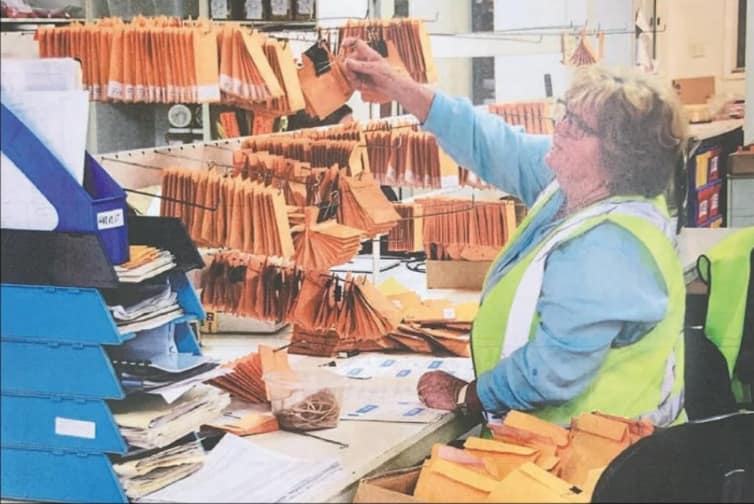
The bulk of the breeding is 99 per cent field-based, mainly on a six-hectare in Orbost, where the company employs two full-time technicians and five-to-eight casual workers through the season. The technicians, Kath Bennett and Kia Fitzgerald, are the dedicated members of the breeding team. Kath has been with the company since 1990; Kia has been full-time with SRS for a bit over 12 months.
“A new variety takes about 10 years to develop – to develop a parent and commercial variety; 98 per cent will amount to nothing. It’s a game of patience. Nothing happens in a hurry. A lot we do revolves around failure,” said Damien.
“We have about 20 successful hybrids around the world. Once you have success with a variety, they tend to have longevity. The Galaxy variety, developed in the early 2000s, had its first sales later in the decade, and it’s still a mainstay of the production business.
“We export a lot of seed. In New Zealand we have 60 per cent of the market, in Hungary 35 per cent. Key competitors are the big players – Magenta and Bayer. The sweet corn market in Australia is relatively small, so the export market is essential to justify a breeding program.”
In total, Snowy River produces 40 tonnes of seed a year.
“Processing sweet corn is a bit like a widget in a factory – the user wants a consistent product every year,” said Damien.
Snowy River merged in the 2000s with Hyland Seeds in Queensland; the merger brought sorghum, sunflowers, pop corn and maize in the mix. However, it did not work out due to the financial crisis, and Crookham and Co, a long-term sweet corn company from Caldwell in Idaho that was founded in 1911, took over, and Snowy River Seeds became a US-owned company.
With Crookham at its back, Snowy River Seeds developed from there. With hybrid sweet corn as the product, Snowy can licence from different genetic suppliers.
Field breeding means just that – spending a long time in the field. Damien said 20 acres was big enough for the nursery, as hiring more workers would push up costs. “I spend a lot of time walking through the nursery,” he said.
Snowy River also has nurseries in north Queensland – at Walkamin in the Atherton Tablelands and Bowen. Orbost is still home base. Kia is responsible for the management of these nurseries, which requires a big commitment from here as it means multiple weeks away from home.
A local company, Gippsland Seed Services at Newmerella, looks after SRS Australian seed production and logistics. “We no longer produce or seed ourselves,” he said.
Damien said Orbost was an ideal growing ground. “There are the key sweet corn diseases here that are essential for developing superior agronomic varieties,” he said.
“The key to a successful plant breeder is know the competition and environment where the corn is grown. You need to plant varieties in different locations and visit them. We have a trial system to test varieties in Australia, NZ, US, France, Hungary and Chile. We plan sweet corn trials 12 months in year.”
That means a lot of travel, at least five or six times a year, particularly to Idaho, where Damien has a tight relationship with Crookham’s research manager with whom he talks regularly. He’s just back from Florida and Chile; the strenuous trip includes long legs, such as the 17.5-hour direct flight from Dallas to Australia – leave Florida Sunday night, plane to Dallas in the morning arrive in Melbourne at 5pm, then drive the 350 kilometres to Orbost.
But it’s worth the effort. “It’s rewarding to see people growing our produce around the world and making money,” said Damien. He added: “I am very lucky to have a supportive wife and family that allows this to be achieved.”