

Peter Rutherford, Secretary, South East Timber Association, 29 March 2025
This article is in response to SETA’s claims ignore established science and economic realities: David Lindenmayer. The entire series of articles and interchanges is listed below.
This debate is closing. Australian Rural & Regional News intends to ask a few questions of each of the participants with a view to rounding out the debate.
It is difficult to know how to respond to Professor Lindenmayer’s most recent comments, when he continues to focus on areas subject to timber harvesting and appears to ignore the fact that 855,310 hectares of the iconic Greater Blue Mountains World Heritage Area was burnt by bushfires in 2019-20. This is over 16 per cent of the total area burnt in NSW in 2019-20.
Despite quoting from fire experts, with decades of fire research experience finding “no clear differences in the proportion of high or extreme fire severities between native forests in National Parks (54.5 per cent of the area burned) and those in public forests available for timber production and privately owned forests (43.2 per cent of the area burned),”1 Professor Lindenmayer claims that SETA “is making absurd comparisons” between flammability of forests in national parks and state forests.
Professor Lindenmayer also seems to ignore the evidence, that the twice burned alpine ash stands in Kosciuszko National Park (KNP) have only partially or not regenerated, since the 2019-20 fires. KNP is not unique in this regard, as large areas of both alpine and mountain ash forests in Victorian national parks and state forests, have also been burnt repeatedly by high intensity bushfires.
Fires across the Victorian high country in 2003, 2006 and 2009 burnt over 87 per cent of the distribution of alpine ash. Most of the larger fires were ignited by lightning. While stands generally regenerated after the first fire, some regenerating stands were re-burnt by later fires, causing ash stocking declines or local extinction.2
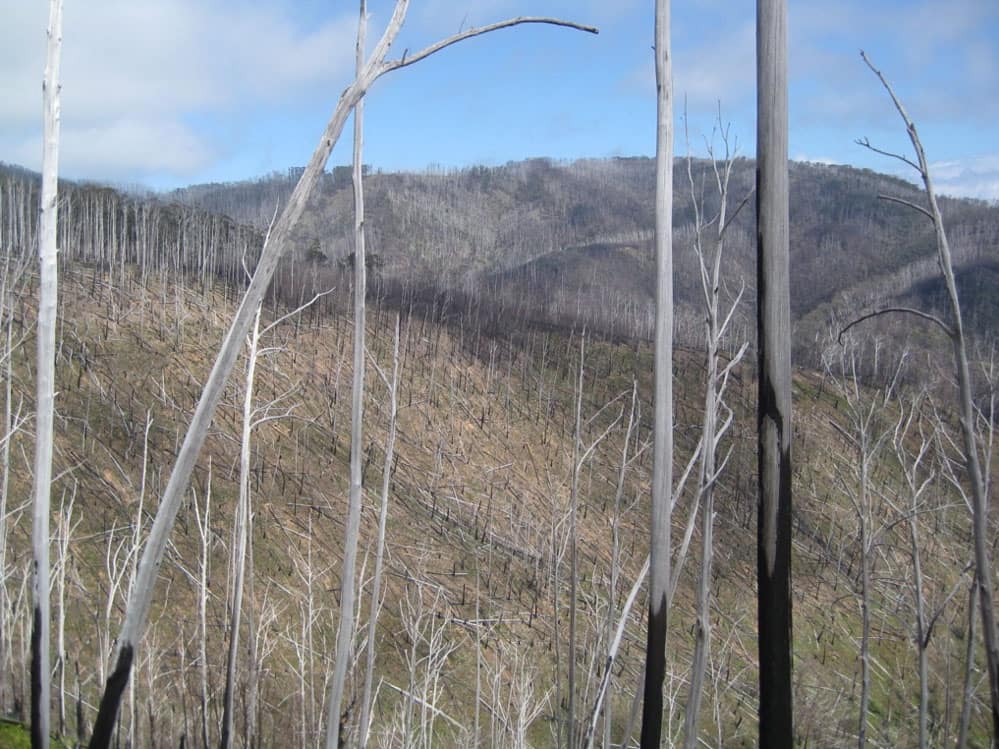
Parks Victoria has reported that in the 50,000 hectares Wilsons Promontory National Park: “Loss of eucalypt tree species at the rate we’re seeing can create potentially irreversible shifts in forest cover, landscape pattern, soil health and biodiversity.
“The long history and heightened intensity of bushfires across Victoria, dating back to European settlement, is triggering regeneration failure in areas where eucalypts once thrived. Pockets of ‘collapsed forest’ cover more than 1,200 hectares of the park.
“The first half of the 20th century saw a spate of devastating fires in close succession, most of which were caused by humans during cattle grazing operations and military training activities. After a period of reduced fire, the Prom experienced widespread devastation following the 2005-06 bushfire season and the Black Saturday fires of 2009.3
Given the facts above, I cannot understand why Professor Lindenmayer insists that SETA makes “absurd comparisons” between flammability of forests in national parks and state forests. If alternative views to Professor Lindenmayer’s are put forward, this might have people, with little understanding of fire in the landscape, look more deeply at media reporting of fire research.
The economic reality of native forest logging
Professor Lindenmayer also claims “SETA also makes false claims about the costs of ceasing native forest logging.”
The Frontier Economics and ANU 2021 report referenced by Professor Lindenmayer and promoting the benefits of closure of the southern NSW native forest industry, contained some interesting analysis and conclusions.
The report advocated for an immediate halt to all native forest harvesting on state forest in Eden and Southern Regional Forest Agreement (RFA) areas. The closure would have stripped $100 million dollars in forest product sales out of south coast economies each year. The report authors stated “when compared in today’s dollars, the incremental benefits of ceasing native forest harvesting are higher than the incremental costs by $61.96 million.”
However, the report analysis revealed that $80 million dollars paid by local millers for harvest, haul and processing costs of logs was treated as a ‘saving’. This saving is actually real money, paid by processors to produce Australian timber and other forest products.
Professor Lindenmayer details losses various forest agencies have incurred. He states that “In one year alone, losses have exceeded $245 million in NSW.” In 2024, FCNSW reported what is understood to be the largest reported loss of $29 million for the hardwood sector.
In the 2023 Frontier Economics report, Table 2 on page 11 details a number of grants to FCNSW. Adding these grants to the $29 million loss comes to just under $245 million. BUT: If this is the source of Professor Lindenmayer’s “one year alone losses,” why are these grants treated by Professor Lindenmayer as a loss?
In addition, not all the grants were spent in the 2023-24 financial year. Among other payments, Community Service Obligation payments of $17.8 million were spent in 2021-22. In 2020 funding of $46 million was made for fire recovery and Covid stimulus payments. In 2022 $60 million was made available over three years to repair flood damaged roads and infrastructure. A share of the above payments would also cover plantation operations.
Professor Lindenmayer, if the $245 million loss was incurred in an earlier year, please provide details of the relevant annual report.
The myth that native forest logging supports construction
Over the past 30 years, sawn timber markets have evolved from primarily house framing to higher value markets including cladding, wall panelling, flooring, stairways and timber furniture. These are important elements of housing construction.
Manufacturers of these products in Victoria have either closed or are importing timber from interstate or overseas. A Victorian manufacturer of mass timber beams, stairways and other home fittings is bringing materials from interstate and the US to keep a leading manufacturing business in regional Victoria.
A door manufacturer is also importing timber to keep a Victorian value adding business operating.
The scientific evidence on fire and logging
If we are to have sustainable forest management, we must view it across all land tenures and recognise the positives and negatives of management, or lack thereof, across all land tenures.
SETA members understand why Professor Lindenmayer insists that there must not be “absurd comparisons” made between flammability of forests in national parks and state forests. Many national parks are managed with minimal areas of managed low intensity burning.
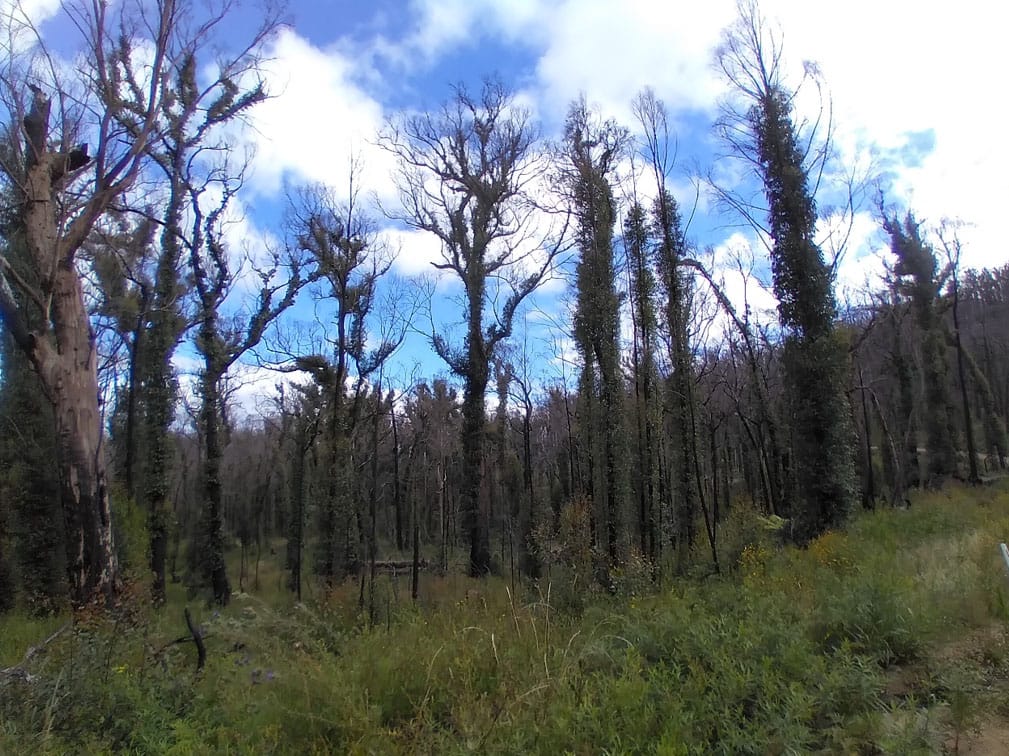
Therefore, the parks and other reserves offer a firsthand view of the implementation of Professor Lindenmayer’s vision for the future fire management of Australia’s native forests.
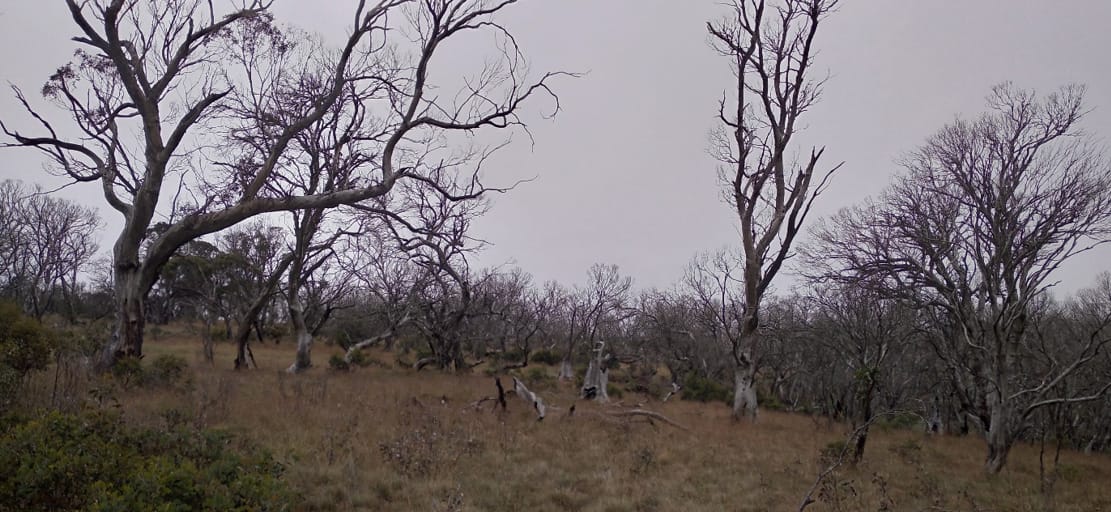
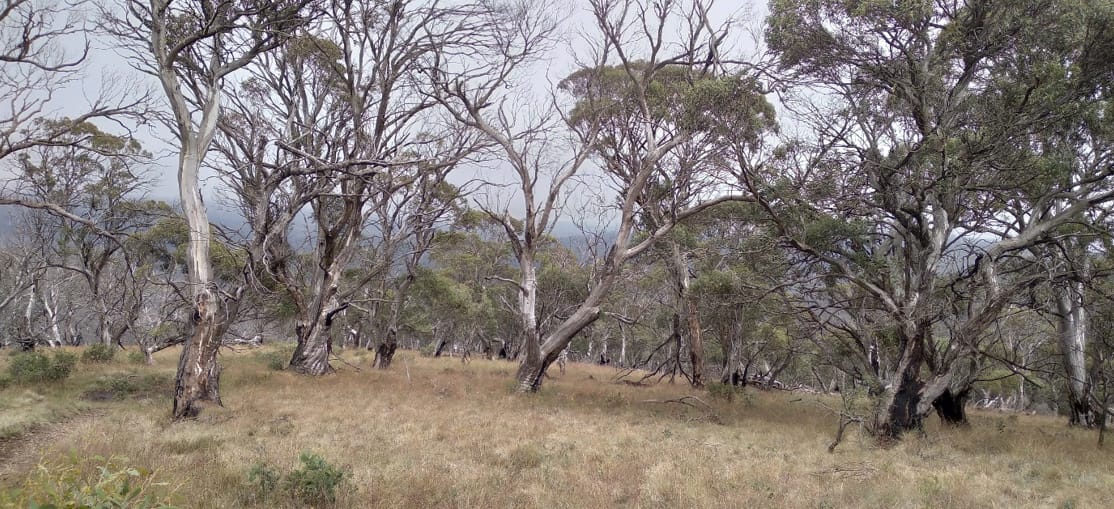
A recent publication by Forestry Australia4, the professional association of forest scientists, provides additional insights as to why SETA does not accept Professor Lindenmayer’s opinion that absurd comparisons are being made between flammability of forests in national parks and state forests.
“The views of Australian academics Professor David Lindenmayer and Associate Professor Philip Zylstra, as reproduced in recent CFA Newsletters (December 2023 and March 2024), that logging and prescribed burning are making Australian native forests more flammable are highly contested by many Australian forest scientists and fire management practitioners. These academic scientists advocate that timber harvesting in native forests should cease, prescribed burning should be confined to areas close to high value assets and that when fire is excluded for more than 40 years the native forests do not burn at high intensity, because the vertical connectivity of the forest structure is reduced through natural ecological processes.
“These propositions ignore the evidence from decades of comprehensive fire research undertaken by Australia’s peak scientific organization (CSIRO) and the State government forest land management agencies, as well as the lessons from numerous inquiries following major wildfires over the past 80 years. They are also inconsistent with the lived experience with forest fire in many parts of Australia in recent decades. Moreover, the notion that fire can be excluded from most Australian forests for more than 40 years is fanciful, given the increased frequency and extent of wildfires over the past 20 years under changing climatic conditions.”
Biodiversity
SETA (I) did not say “that logging has no impact on biodiversity.” Given the constant denigration of the native forest industry, it is important for the general public to understand there are many flora and fauna species that continue to live and breed in forests subject to long-term harvesting.
It is also important to highlight that transfer of state forests to national parks is not a conservation panacea, if active management of fire, predators and other threats to biodiversity are not managed.
References
1. Bowman et: al https://www.forestry.org.au/wp-content/uploads/2022/04/Bowman-et-al.-NEE-2022-response-to-Lindenmayer-et-al-2022.pdf
2. https://www.ecolsoc.org.au/?hottopic-entry=fire-driven-loss-of-obligate-seeder-forests-in-the-alps
3. https://www.parks.vic.gov.au/news/2023/04/11/01/26/restoring-eucalypt-forests-at-wilsons-promontory-national-park
4. https://www.forestry.org.au/wp-content/uploads/2025/03/Logging-and-Prescribed-Burning-do-not-make-Australian-Forests-More-Flammable_revised-published-version.pdf
Story series (in order of publication):
Debunking false claims about bushfire risk and native logging in Australia;
Logging does indeed increase fire risks!: David Lindenmayer;
An alternative perspective to David Lindenmayer: South East Timber Association;
Logging and bushfire risk: Robert Onfray responds to David Lindenmayer;
Bushfire risk and native forest logging: David Lindenmayer responds to South East Timber Association;
Fire severity is always greater in areas that have been logged: David Lindenmayer responds to Robert Onfray;
David Lindenmayer ignores core points and key questions: Robert Onfray’s further response;
Megafires thrive on high per hectare fine fuel loads across the forest landscape, regardless of land tenure: SETA’s further response to David Lindenmayer;
Robert Onfray’s response misses core scientific realities – logging makes forests more flammable for many decades: David Lindenmayer;
SETA’s claims ignore established science and economic realities: David Lindenmayer;
David Lindenmayer fails to engage with real-world fire dynamics: Robert Onfray;
Research outputs – Talk about logging but don’t talk about national parks: SETA.
This debate is closing. Australian Rural & Regional News intends to ask a few questions of each of the participants with a view to rounding out the debate.