

Adelaide University, Media Release, 14 May 2026
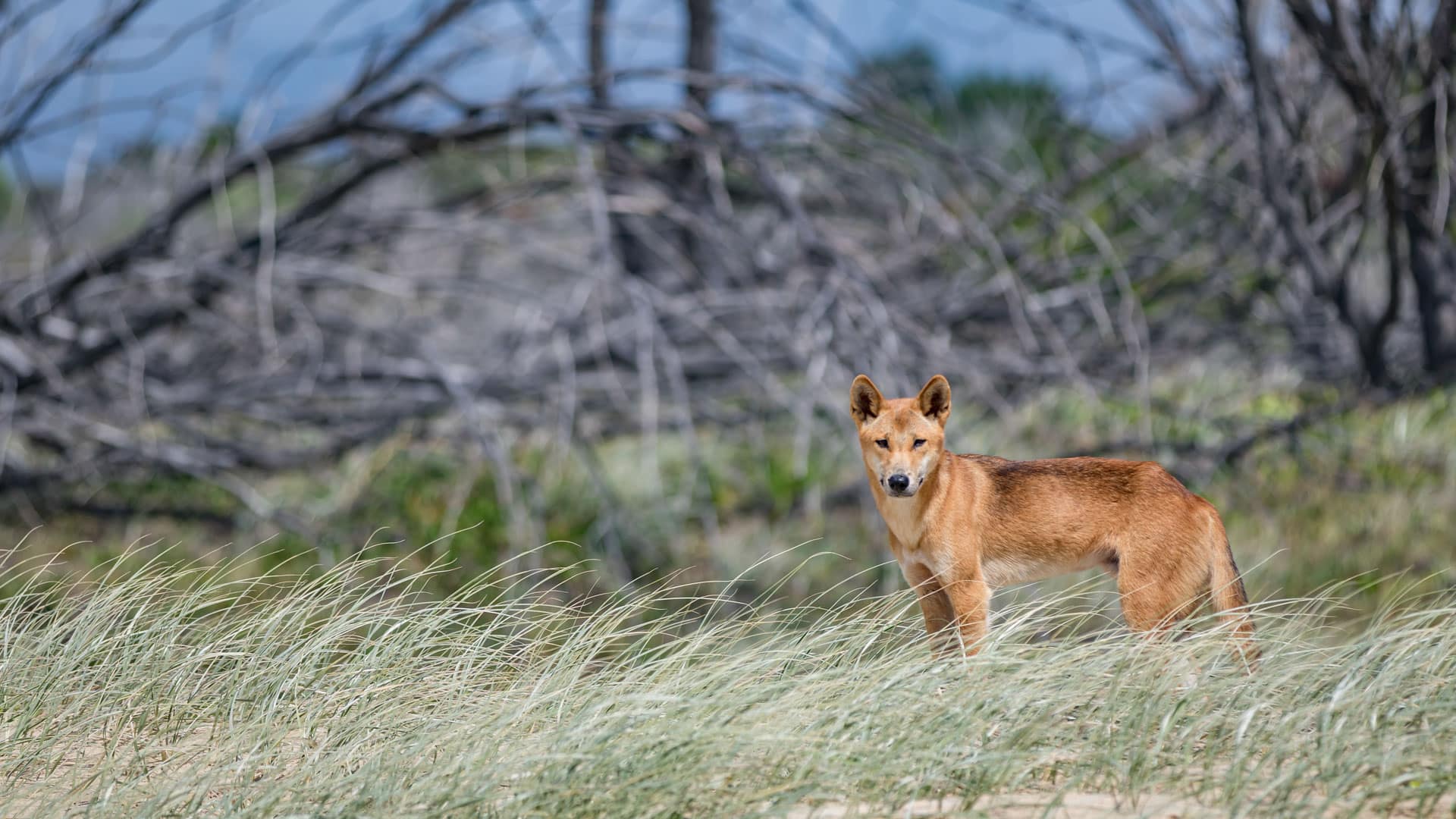
A new genetic test has revealed that most of the free-roaming canines in Australia, often labelled ‘wild dogs’, carry a significant amount of dingo ancestry.
A team of Adelaide University researchers from the Australian Centre for Ancient DNA and the Environment Institute analysed more than 300 free-roaming canines across Australia, and found that, on average, just 11.7 per cent of their DNA comes from domestic dogs.
Levels were highest in southeastern Australia, particularly Victoria and New South Wales, and much lower in the remote north and west.
“For decades, different genetic tests have given conflicting answers about how much European dog ancestry free-roaming dingoes carry,” said senior author Dr Yassine Souilmi, whose study was published in Conservation Letters.
“Our study used pre-colonial dingo DNA as a true reference to resolve that disagreement, and we have concluded the vast majority of free-roaming canines in Australia are overwhelmingly dingo.”
The finding, which was also informed by Ancient DNA records, has major implications for how the species is classified and the way the population should be managed.
“The ‘wild dog’ label hides important biological and cultural differences. A predominantly dingo individual is not the same as a stray domestic dog,” said Dr Souilmi.
“Future management should be regionally informed, and developed in close partnership with Indigenous Australian communities, for whom dingoes have been companions and kin for thousands of years.”
The new testing technique remains accurate with few DNA markers, making affordable, large-scale ancestry screening feasible for the first time.
“Because our test works reliably with so few markers, ancestry screening is finally affordable for routine use,” said co-first author Shyamsundar Ravishankar.
“Wildlife agencies no longer need a whole-genome budget to get a trustworthy answer.”
The study also resolved Australia’s dingoes into eight genetically distinct populations, including two previously undescribed groups in northern and central Australia.
After accounting for domestic dog ancestry, southeastern populations were found to be much less genetically diverse than those in the north and centre.
The Mallee (Big Desert) dingoes of northwestern Victoria stood out, with even lower ancestral diversity than the small, isolated K’gari population.
“Once we remove the domestic dog component, the picture changes,” said co-first author Nhi Chau Nguyen.
“Dog ancestry has boosted overall variation of Southeastern dingoes, but it has eroded some of what makes these dingoes genetically distinct.”
The team also confirmed earlier work showing that gene flow from European dogs into dingoes peaked in the mid-20th century, especially the 1960s, coinciding with rapid post-war population growth and farming intensification in southeastern Australia.