


The Hon. Annabelle Cleeland, Nationals Member for Euroa, Media Release, 15 May 2026
The Nationals Member for Euroa, Annabelle Cleeland MP, has announced a major shift in Victoria’s energy planning, with a proposal to roll out Urban Solar Parks across industrial and commercial precincts if elected to government in November.
The policy would transform large rooftops on warehouses, factories, shopping centres and industrial estates into energy hubs, expanding solar and battery storage on existing infrastructure rather than continuing to consume prime agricultural land across regional Victoria.
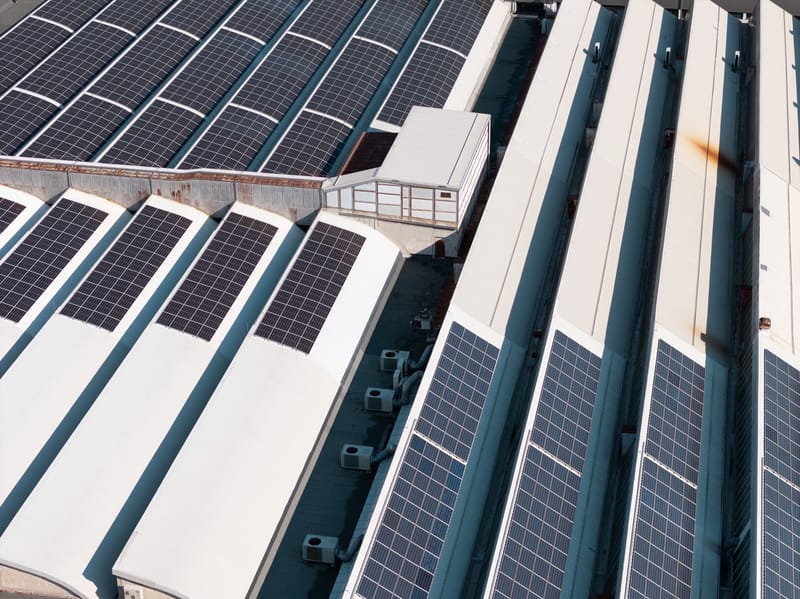
Urban Solar Parks would generate and store power close to where it is needed most, reducing pressure on regional transmission networks and allowing stored energy to be fed back into the grid during peak demand periods.
Ms Cleeland said regional communities had carried too much of the burden of Labor’s energy rollout for too long.
“For years, Labor has treated prime agricultural land as the easy option for industrial-scale energy projects,” Ms Cleeland said.
“They have bulldozed through regional communities, stripped away proper avenues for appeal by removing VCAT oversight, and ignored the voices of the very people expected to live with the long-term consequences.”
She said the policy was about shifting the focus back onto existing urban and industrial infrastructure instead of productive farmland.
“We already have massive warehouse roofs across our cities and regional centres, and many of them are only partially used for solar, if at all,” she said.
“These sites already exist or are already being built. They have enormous untapped capacity, right where energy demand is highest.”
Ms Cleeland said properly utilising rooftops would reduce pressure on farming communities and help rebuild trust in the energy transition.
“If we get serious about using rooftops properly, we reduce the need to blanket productive farmland with more solar factories and transmission corridors,” she said.
“Regional communities should not be expected to sacrifice food production, landscape and local decision-making while thousands of hectares of commercial roof space sit unused.”
She said the current approach ignored the obvious opportunity sitting above industrial estates and commercial precincts.
“It makes far more sense to generate power where people use it,” she said.
“Instead of pushing more infrastructure deeper into regional Victoria, we should be maximising the infrastructure we already have in our urban and industrial areas.”
Ms Cleeland said Victoria remained too reliant on large, centralised projects and expensive long-distance transmission rather than practical distributed energy solutions.
“We are spending billions expanding transmission networks while leaving enormous rooftop capacity sitting idle,” she said.
“That is not smart planning, and regional communities are paying the price for it.”
She said Urban Solar Parks would combine rooftop solar with battery storage so energy generated during the day could be stored and released back into the grid during evening peak demand.
“It is about capturing affordable, abundant energy when it is available and using it when families and businesses actually need it most,” she said.
Ms Cleeland said the policy would help reduce energy costs, strengthen grid reliability and ease pressure for further transmission expansion into regional areas.
“This is not about stopping renewables,” she said.
“It is about delivering them in a smarter way that respects regional communities, protects productive farmland, and actually makes use of the infrastructure Victoria already has.”

