


Gippsland Critical Minerals (GCM), Media Release, 15 May 2026
Gippsland Critical Minerals (GCM) welcomes today’s determination by the Commonwealth on the Fingerboards Project under the Environment Protection and Biodiversity Conservation Act 1999 (Cth) (EPBC Act).
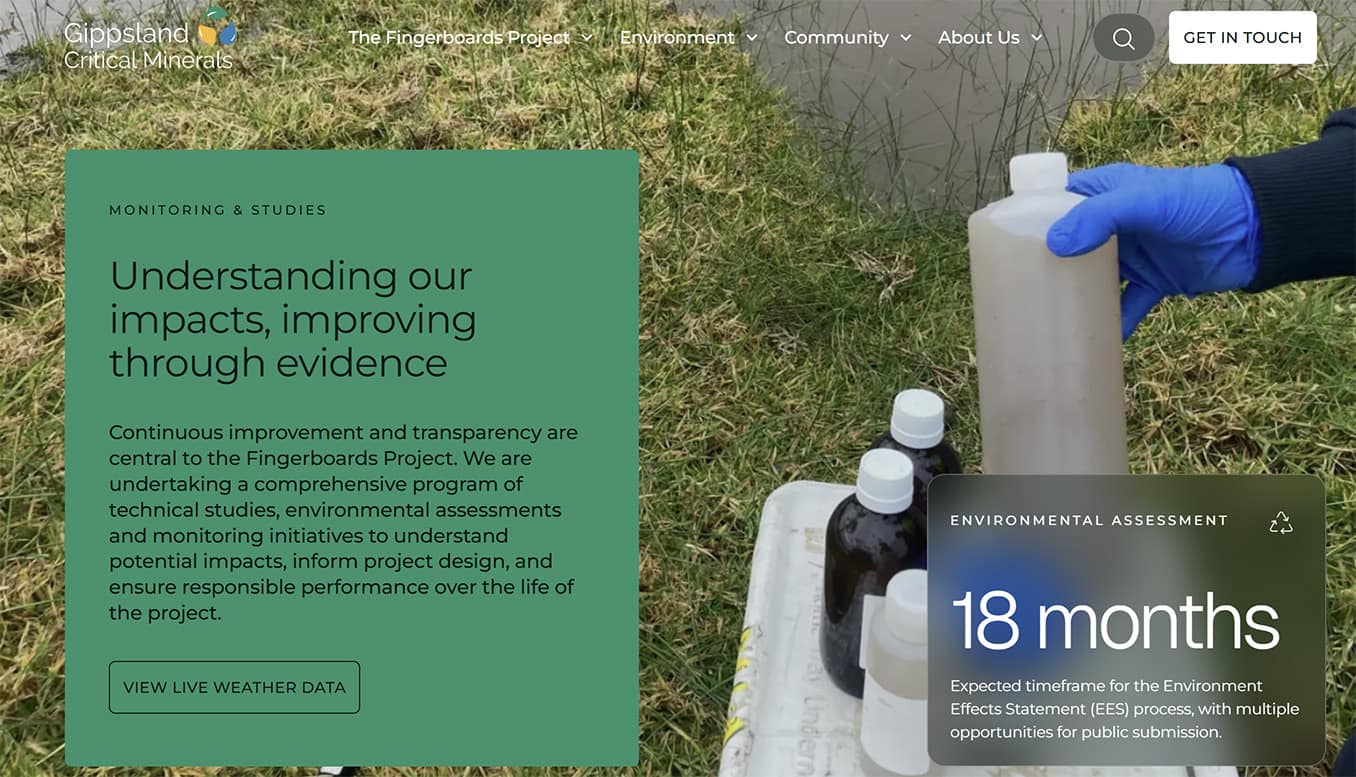
The Commonwealth has confirmed four controlling provisions, with GCM’s environmental and technical studies already underway in response to each:
- Ramsar wetlands (sections 16 and 17B): Surface Water and Water Acquisition studies
- Listed threatened species and communities (sections 18 and 18A): Ecology study
- Listed migratory species (sections 20 and 20A): Ecology study
- Nuclear actions (sections 21 and 22A): Radiation Impact study
The determination is standard and in line with GCM expectations. As such, GCM has already commenced studies in these areas as part of the state (EES) process. It is consistent with EPBC determinations for all other minerals sands projects in Australia, including Donald and VHM.
About the nuclear action trigger and the EPBC
- Reforms passed to the EPBC Act in late 2025, which come into effect in July 2026, introduce a new ‘radiological exposure action’ framework, expressly excluding mineral sands operations.
- However, the current EPBC Act applies a technical threshold for nuclear action: 1 becquerel per gram (Bq/g), a very low level. For example, a single banana has about 0.1 Bp/g of radioactivity, which averages to roughly 12 to 15 Bq in total per whole banana.
- Currently – If naturally occurring radioactive material (NORM) is present above this threshold in one part of a project, the project in entirety is captured under that provision.
- At Fingerboards, that threshold is reached only within the enclosed heavy mineral concentrate storage shed, while the material itself remains below that level throughout the project.
GCM referred the Fingerboards Project at the earliest opportunity to align with EES studies, meaning today’s determination has been made under the current legislative framework.
Controlled actions under the EPBC Act are subject to the Commonwealth’s most rigorous environmental assessment framework. Projects that cannot demonstrate they can operate safely and meet the required environmental standards are not approved.
To view the EPBC determination visit epbcpublicportal.environment.gov.au/all-referrals and to view details on GCM studies visit gippslandcriticalminerals.com/environment/monitoring-studies.
Find the series of stories relating to the Fingerboards Project including statements by Gippsland Critical Minerals and the community action group opposing the project, Mine Free Glenaladale here: Fingerboards Mineral Sands

