

Duxton Vineyards, July 2025
Among the red gums lining the Murray River, the endangered Regent Parrot is fighting to hang on. With its bright yellow plumage and unmistakable flight, it’s one of Australia’s lesser-known but most threatened species. Habitat clearing, declining food sources, and the steady loss of native mallee shrubland have pushed its population to low levels. But out in the vineyards of Euston, New South Wales, a large-scale agricultural operation is helping turn that story around.
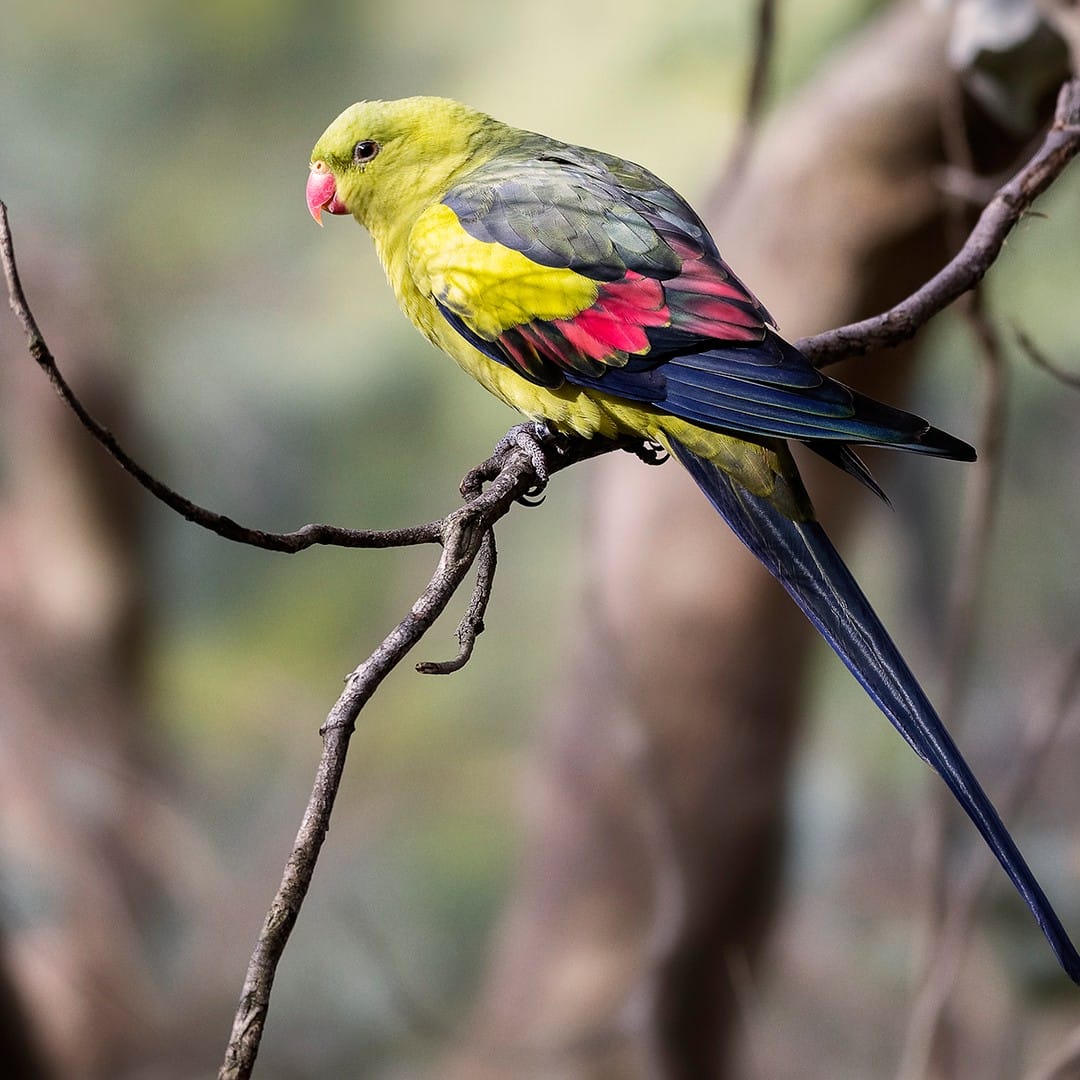
Duxton Vineyards, one of Australia’s largest vineyard holders, is working with the NSW Government’s Saving our Species (SoS) program to restore critical habitat for the Regent Parrot. This collaboration is part of a broader commitment from Duxton to regenerative land management in the Southern Murray-Darling region. It’s a partnership where each party brings something to the table. The NSW Government provides native tubestock and seeds, while Duxton Vineyards contributes the land and the long-term stewardship required to make the habitat work.
It’s a shared project, driven by aligned values rather than grants or subsidies. And it’s part of a wider story about how a global agribusiness is trying to operate with a local-first mindset.
Duxton Vineyards farms over 1,400 hectares of vineyards, producing around 40,000 tonnes of grapes annually, and contributing nearly 3 per cent of Australia’s total grape supply. Their reach is significant, not only in scale, but in influence. Brands like Rewild and Pete’s Pure are exported globally, carrying with them a message of sustainability and environmental care. In a competitive international wine market, Duxton isn’t just selling wine – it’s telling a story about responsible farming in one of the world’s most water-stressed agricultural regions.
The Murray-Darling Basin is not only one of Australia’s most important agricultural regions, it’s also one of its most ecologically fragile. Duxton’s model of integrating commercial scale with environmental responsibility offers a glimpse into what the future of farming in this region could look like. One where biodiversity, water conservation, and sustainable land use are seen as core business drivers.
The Regent Parrot depends on the Murray’s ancient river red gums to nest and on nearby mallee to forage. But decades of clearing and logging have fractured the landscape.1 If mallee shrublands are too far from the nests, male parrots (who do all the foraging while females incubate) can’t make the long daily trips,2 and chicks starve. It’s a hard ecological limit that now shapes where the species can survive.
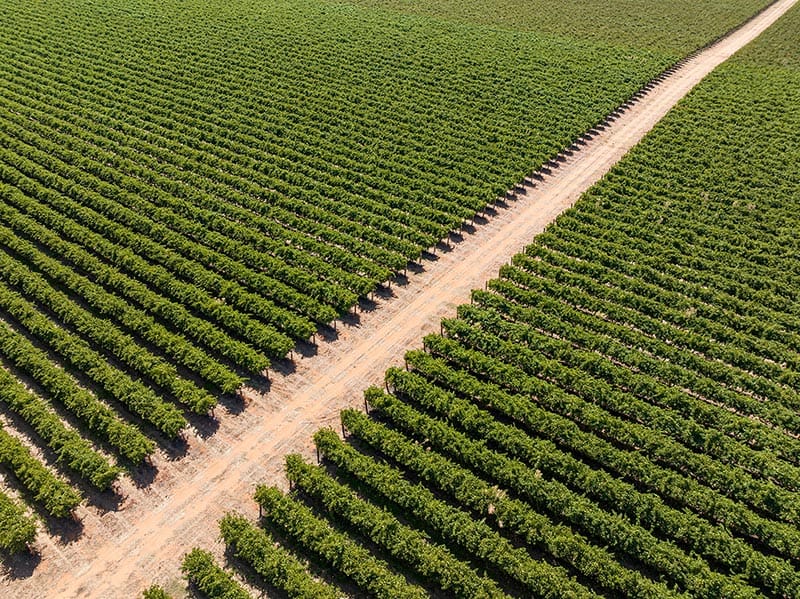
Duxton’s Euston property sits adjacent to the Peacock Creek colony – one of the last strongholds for the parrot in New South Wales. Working with ecologists and researchers, Duxton has replanted over 23 hectares of native mallee within five kilometres of these nests. It’s the kind of practical, targeted restoration that can immediately improve chick survival, while also helping to stitch together fragmented habitat corridors.
The work continues throughout 2025, with supplementary planting and monitoring planned in collaboration with the Australian National University’s Difficult Bird Research Group. If survival rates improve where revegetation has taken place, this model could be rolled out elsewhere, on vineyards, farms, or other private landholdings.
Duxton Vineyards might be a major player on the global wine stage, but its approach to land management is deeply rooted in its local surroundings. The company’s sustainability strategy is built around long-term environmental thinking: solar-powered vineyard infrastructure, native fish-friendly water pumps, and tyre recycling partnerships that turn farm waste into useful materials. It’s one of the largest certified Sustainable Winegrowing Australia members in the country and works closely with traditional custodians, including the Barkindji Maraura Elders Environment Team, to better understand and care for the land.
What’s happening at Euston is more than a side project. It’s a microcosm of what Duxton hopes to demonstrate across its business: that large-scale farming doesn’t have to come at the cost of ecological integrity. In fact, it can be part of the solution.
1. Harper M.J., (2020) Maximising Water Delivery for Regent Parrot Outcomes – Water for the Environment Program. Prepared by the South Australian Regent Parrot Recovery Team for the Commonwealth Environmental Water Office, Australian Department of Department of Agriculture, Water and the Environment.
https://www.dcceew.gov.au/sites/default/files/documents/maximising-water-delivery-regent-parrot-outcomes.pdf
2. Baker-Gabb, D. and Hurley, V.G., (2011), National Recovery Plan for the Regent Parrot (eastern subspecies) Polytelis anthopeplus monarchoides. Department of Sustainability and Environment, Melbourne. https://www.agriculture.gov.au/sites/default/files/documents/regent-parrot.pdf