


“The meaning of life is to find your gift.
The purpose of life is to give it away.”
— Pablo Picasso
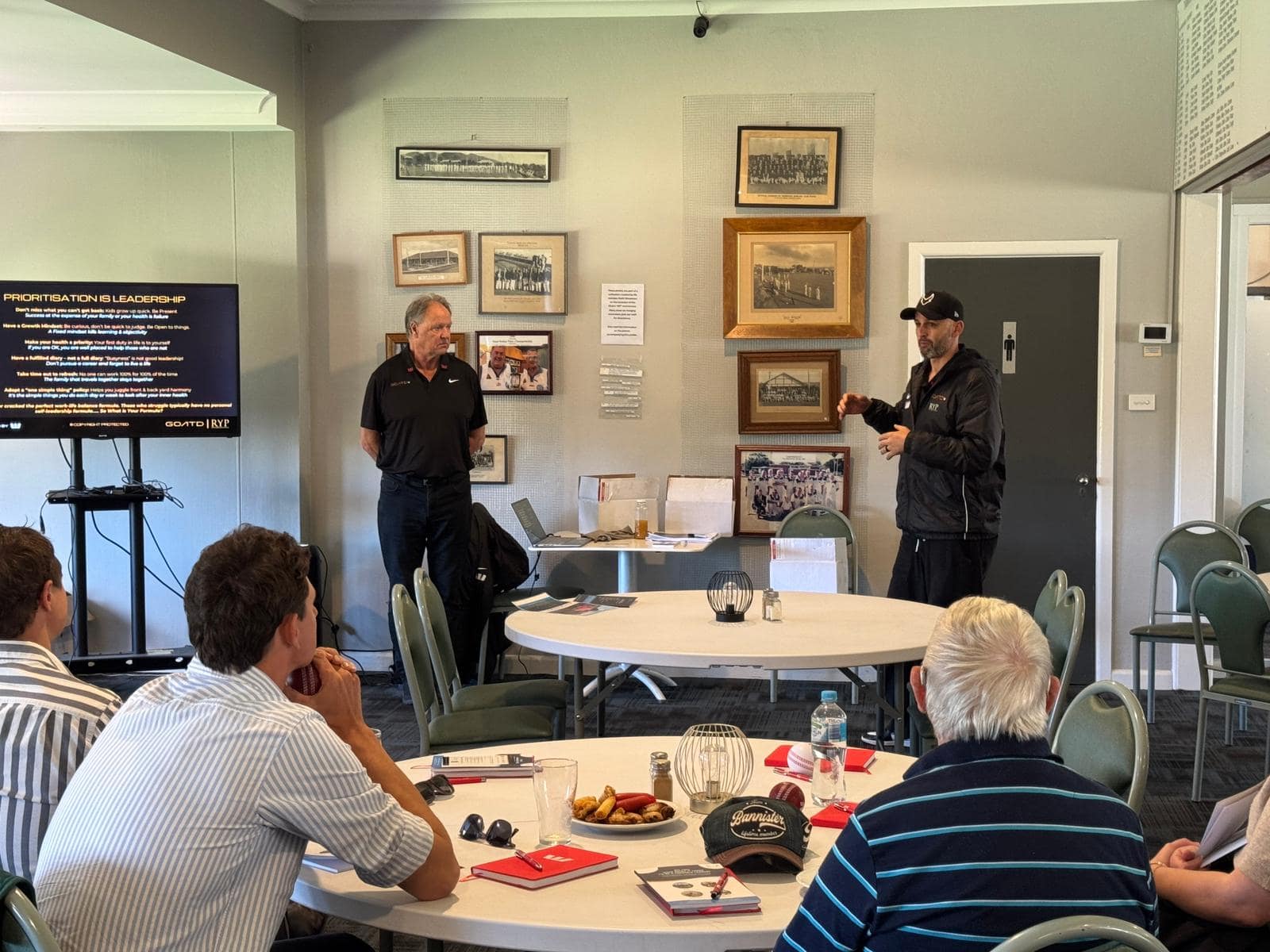
I have been travelling across regional and rural Australia alongside Australian Test cricketer Nathan Lyon as part of the GOATD “Have You Got What It Takes?” Tour. Together, we have been working with schools, sporting clubs, emerging leaders, businesses, and entire communities to explore leadership, resilience, identity, and the challenges facing young Australians today. Last week we were in Manilla, Tamworth, and Gunnedah hosting emerging leaders’ summits for school leavers. One of the most fascinating observations from these sessions was how many participants had never truly considered the concept of self-leadership.
When asked what leadership meant, most responses centred around titles, authority, positions, management roles, or competency skills. We had to myth bust that thinking very quickly. Leadership starts long before you ever lead others. Leadership begins with how you lead yourself. Your habits. Your standards. Your choices. Your resilience. Your attitude. Your ability to handle setbacks. Your willingness to grow. Your sense of purpose. Your ability to stay true to your values when life becomes difficult. Self-leadership is the foundation upon which every fulfilled life is built.
For school leavers entering adulthood, this matters enormously. Every year across Australia, thousands of school leavers receive their VCE, HSC or ATAR results. For many, those numbers feel like a final judgment. Some celebrate. Others feel disappointment, uncertainty, or even fear. Yet one of the most important leadership lessons in life is this: Your score may open a door, but it does not define your destiny.
Too many young people chase success before they even understand themselves. They are encouraged to pursue status, tertiary courses, money, prestige, titles, or careers that look impressive to others. But there is a major difference between being successful and being fulfilled.
- Success is something others judge.
- Fulfilment is something you feel.
One is external. The other is internal. And if you live your life trying to impress others, you may eventually discover you built a life that looked successful from the outside but felt empty on the inside. A fulfilled life is different. It is built around purpose, growth, relationships, contribution, curiosity, and meaning. Fulfilment fuels motivation, protects mental health, and creates resilience because it gives people a reason to keep moving forward during difficult times. This is particularly important for school leavers entering adulthood. Life is not a straight line. It is a series of stages.
Psychologists suggest there are four stages of life
0–18 Years: Learn what you are: Your first stage of life is about learning. You discover your personality, interests, strengths, values, and natural abilities. School, sport, friendships, family, and hobbies all help shape your identity. At this age, many people believe they need to already know exactly what they want to become. The truth is, very few do. And that is okay. The teenage years are not meant to provide all the answers. They are meant to provide experiences that help you start asking better questions.
19–30 Years: Explore what you are: This may be the most important developmental stage of your life.These are your exploration years.You may study. Work casual jobs. Start a business. Travel overseas. Move towns. Change courses. Change careers. Fall in love. Experience heartbreak. Meet new people. Discover passions you never knew existed. You will almost certainly make mistakes. Some pathways will become dead ends. But this is not failure, this is formation. The people who build fulfilling lives are not the people who avoid wrong turns. They are the people who learn from them. This stage builds resilience, confidence, adaptability, and identity. It teaches you what energises you and what drains you. It helps you understand what matters most. Importantly, this stage is not only about building a career. It is about building a life.
Too many young people spend their twenties obsessed with building their “front yard” (their resume, income, career, qualifications, and social status). But your “back yard” matters equally (your relationships, health, hobbies, character, faith, friendships, family, travel, lifestyle habits, emotional wellbeing). If you neglect your back yard while building your front yard, you may eventually own an impressive house with nowhere peaceful to sit.
Success at the expense of your health
or your family is failure
That quote may sound bold, but many older Australians would quietly admit it is true. A fulfilled life requires both yards to grow together.
30–55 Years: Apply what you are. This is the application phase. For many people, these are the years of career progression, mortgages, marriage, parenting, leadership, business ownership, and major responsibilities. Ideally, by this stage you have developed enough self-awareness from your exploration years to pursue work and relationships that align with your values and purpose. This phase is demanding. Life becomes busy. Pressure increases. But people who understand their purpose often navigate these years with greater resilience because they know why they are doing what they do. Purpose acts like a compass during storms.
55+ Years: Pursue contentment: Many people think retirement means stopping. The best leaders understand something different. Leaders with purpose never truly retire. They may rewire. They may stop working full-time. They may mentor others, volunteer, travel, teach, write, coach, support family, or contribute to community organisations. But they never completely “check out” of life. Purpose keeps people engaged. Curious. Growing. Contributing. And contribution creates contentment.
Why fulfilment matters
Modern society often celebrates achievement while ignoring wellbeing. Young people are constantly exposed to social media highlight reels showing wealth, fame, luxury, appearance, and status. It can create the illusion that success alone equals happiness. But many highly successful people are deeply unhappy. Fulfilment matters because it creates alignment between who you are and how you live.
When people pursue fulfilment:
- motivation becomes more sustainable;
- mental health often improves;
- relationships become stronger;
- setbacks become easier to overcome;
- work feels more meaningful; and
- life gains direction and purpose.
Fulfilment does not mean life becomes easy. It means life becomes meaningful. And meaningful people tend to be more resilient people.
Try not to become a person of success
but rather try to become a person of value
– Albert Einstein
Practical tips for school leavers
to explore their 19–30 exploration years
Here are some important principles for young adults entering their exploration years:
- Try more things: Do not be afraid to experiment with study, jobs, travel, sport, volunteering, or creative pursuits. Exposure creates clarity.
- Give yourself permission to pivot: Changing direction is not weakness. Sometimes the wrong pathway teaches you exactly where you belong.
- Travel if you can: Travel broadens perspective, builds independence, and teaches adaptability. Even exploring different parts of Australia can reshape your thinking. Travel is the best cure for ignorance of others.
- Build relationships carefully: The people around you influence your habits, mindset, standards, and confidence. Choose relationships that help you grow.
- Invest in your back yard: Protect your health. Develop hobbies. Spend time with family and friends. Learn how to rest. Create lifelong habits early.
- Don’t compare timelines: Some people discover purpose early. Others later. Life is not a race. The key is to keep exploring your life.
- Learn resilience: Dead ends, rejection, and setbacks are part of growth. Confidence is built by surviving challenges, not avoiding them.
- Stay curious: Read widely. Ask questions. Meet different people. Curiosity keeps your world expanding.
- Define fulfilment for yourself: Do not allow society, social media, or peer pressure to write your definition of a meaningful life. We are all trying to figure out this thing called life. Live it in your terms.
- Remember that life is bigger than a score: A VCE, HSC or ATAR result matters, but it is only one chapter in a very long story.
Leadership Lesson
Many young people today are under immense pressure to appear successful before they have even had the opportunity to properly discover who they are. That is why this conversation matters. Not because success is unimportant, but because fulfilment is far more sustainable.
Self-leadership matters.
Facta Non Verba – Deeds Not Words

