

TasFarmers, Media Release, 27 May 2026
The peak body for Tasmanian farmers has today released its Rushy Lagoon Land Use North-East Community Impact Survey.
TasFarmers said it had received concerns from numerous members regarding the proposed sale of Rushy Lagoon, and federal government support allowing a foreign-owned entity to purchase the property and convert it to a pine plantation.
TasFarmers CEO Nathan Calman said there is a broad community view that the proposal would have a significant impact on the local area, following eight months of investigation and consultation.
“TasFarmers has done extensive advocacy work on this issue, and there are deep concerns about taxpayer funds being used to support a foreign-owned entity to convert prime agricultural land into plantation forestry,” Mr Calman said.
“We’ve engaged with local, state and federal politicians, sought meetings with the Foreign Investment Review Board, consulted regional real estate experts, and spoken with potential buyers.
“In a further escalation of the issue, several federal parliamentarians from various committees are this week seeking to engage directly with farmers and the community via virtual meetings to examine the proposal in greater detail.”
Mr Calman said TasFarmers undertook the survey to provide evidence and substance to its advocacy efforts and will present its findings to the federal delegates.
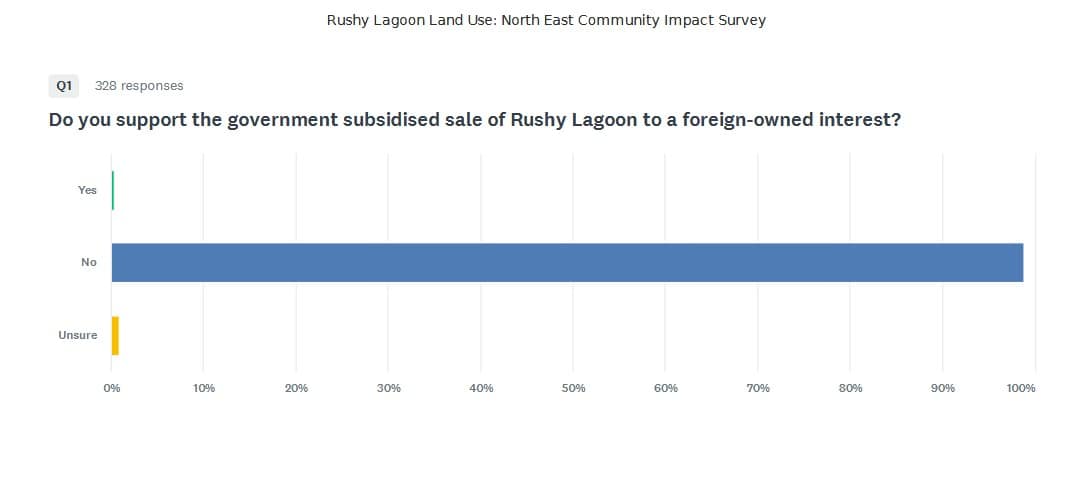
“We ran a seven-day survey and received 329 responses, which has reinforced our view that there is no social licence for the sale of Rushy, and land-use change.
“The feedback was significant and shows overwhelming opposition to the subsidised sale and conversion of the property. People in the region reject what they see as a government-backed distortion of the market that could shift productive land away from food production, livestock, jobs and regional economic activity.
“The mandate is clear. More than 99 per cent of respondents oppose a government-subsidised sale to a foreign-owned corporation.
“Nearly 98 per cent oppose public funds being used to support the purchase or conversion of productive agricultural land into plantation forestry.”
Mr Calman said the results demonstrated the depth of community concern and strengthened calls for greater transparency.
“The message from respondents is clear. People are concerned about productive agricultural land being removed from food and fibre production, and they want greater transparency around the role of public funding in the transaction,” Mr Calman said.
The survey also found more than 82 per cent of respondents wanted the property to remain in dairy and grazing production, while 81 per cent believed conversion to plantation forestry would have a negative impact on local communities, employment, businesses and services.
Mr Calman said respondents had sent a clear message to the government, rejecting plans that would put regional jobs and agricultural production at risk through foreign ownership and land-use change.
“Rushy Lagoon is one of Tasmania’s most significant agricultural properties, and people recognise the contribution productive farmland makes. The community has effectively closed the door on government-backed plans for Rushy Lagoon.
“Regardless of where people stand on the ultimate ownership outcome, and let’s be clear, TasFarmers support foreign investment done the right way, but there is a clear expectation that decisions involving large-scale land-use change and public funding should be transparent and subject to proper scrutiny.”
TasFarmers continues to call for greater clarity regarding the funding arrangements associated with the proposed acquisition, the role of any government-backed finance, and the broader implications for Tasmania’s agricultural future.
About TasFarmers:
TasFarmers (formerly known as Tasmanian Farmers and Graziers Association) is the leading advocacy organisation for the agricultural industry in Tasmania. With a strong commitment to representing farmers’ interests, TasFarmers works tirelessly to foster sustainable growth and development.
Related story: TasFarmers raises red flags as Rushy Lagoon decision delayed again