


Senator the Hon. Murray Watt, Minister for the Environment and Water, Media Release, 27 May 2026
The Albanese Government has given environmental approval to another renewable energy project in Queensland, boosting the state’s energy security.
Finalised in just 19 days, Blackbutt’s Tumuruu solar farm and battery energy storage system (BESS) has also been approved by the South Burnett Regional Council.
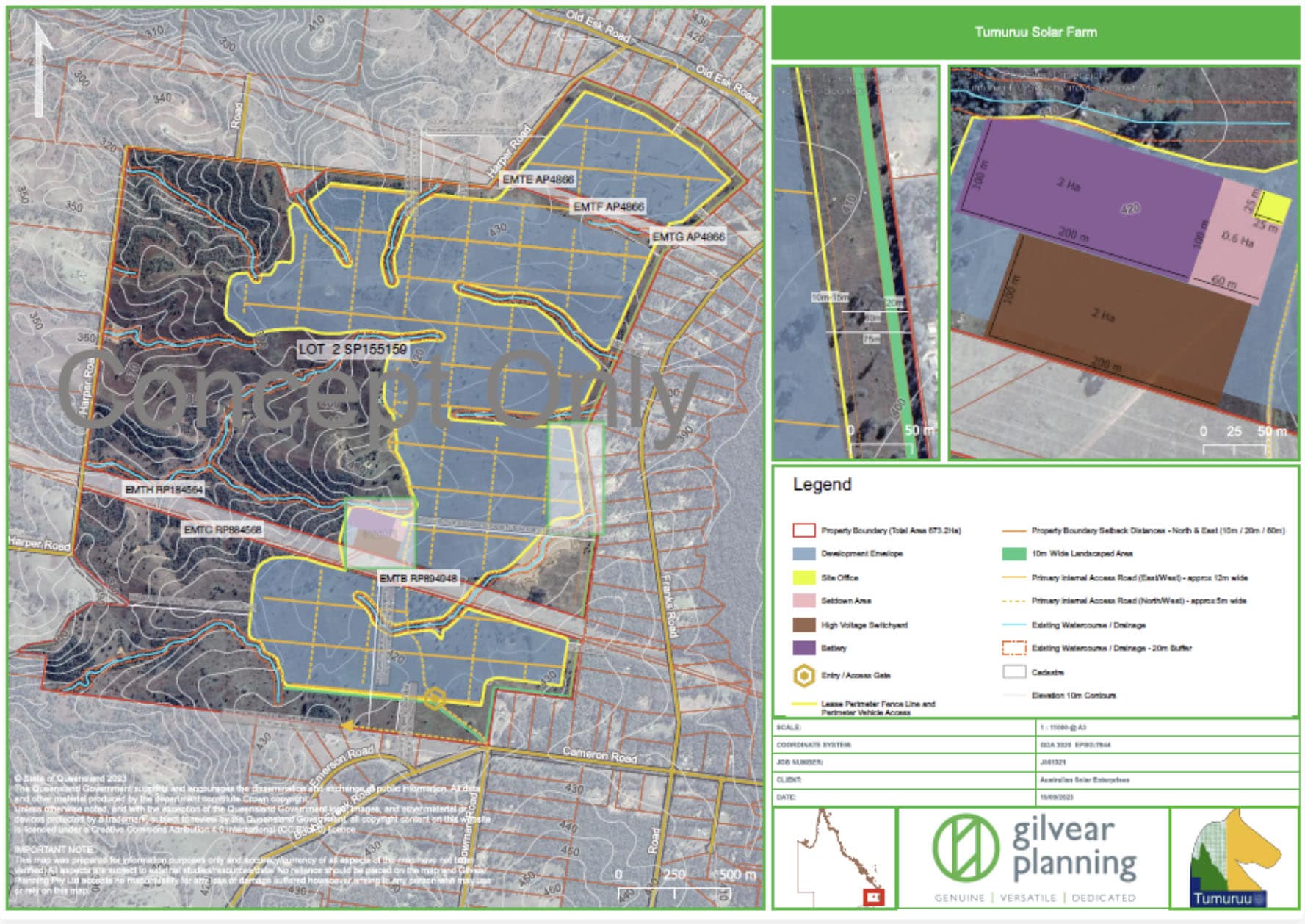
The 400-megawatt (MW) solar farm will produce enough electricity to power over 160,000 homes per year and will connect by underground cable to the Queensland SuperGrid. The 100MW BESS will have a 2 gigawatt-hour (GWh) capacity.
The project will reduce greenhouse gas emissions by up to 870,000 CO2-e tonnes per annum, equivalent to taking around 325,000 passenger cars off the road annually.
Minister for the Environment and Water, Murray Watt said the project increases energy and economic security in regional Queensland with minimal environmental impacts.
“This solar farm and BESS will produce enough electricity to power almost 10 times the number of homes in Queensland’s South Burnett region,” Minister Watt said.
“It will also create good quality jobs in the South Burnett region including 100 construction jobs, up to 17 operational jobs and a community liaison role.
“This is the 140th renewable energy project to be approved by the Albanese Government under national environmental law, and it was able to be assessed quickly because it was designed to be low-impact on the natural environment and will be located on predominately cleared land.
“Our national environmental law reforms – passed by the Parliament late last year, and rolling out throughout 2026 – will continue to build on this principle that proponents who can provide sufficient information upfront and design their proposals in line with new tests and standards, will see meaningful reductions in EPBC Act assessment timeframes. This is great news for Australia’s productivity.”

