

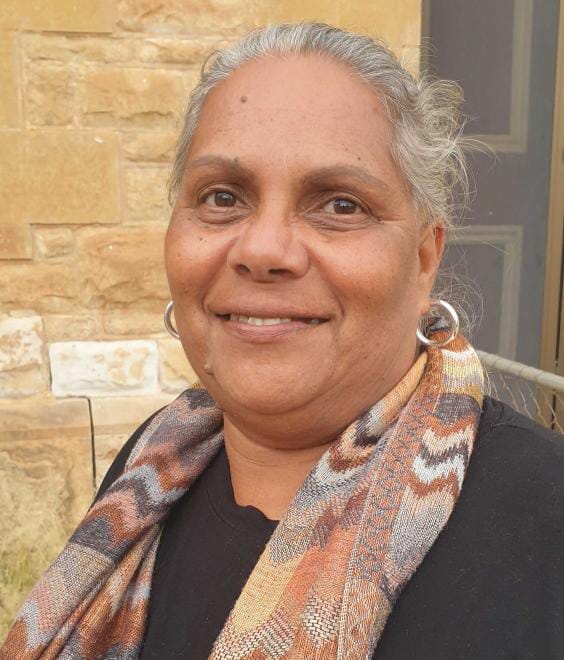
Milly Hooper, Wilcannia News
My name is Milly Hooper. I’m a Ngiyampaa, Murrawarri woman. My connection here to Wilcannia is my mum who was Selina Burke and I think, well I was here when I was a little kid. And then I ended up going with my dad and living with him.
I’ve been commissioned to come along on this trip to take photos of the housing, ‘cause the project is in partnership with a few different organisations. I’m taking photos of the housing as part of updating from what was here years ago. And obviously connecting with families that were around at that time and the next generation’s who can help with some of these old images that are here.
I started my photography up in Alice in 2016. For me, there were plenty of mainstream photographers, but I didn’t see too many mob behind the camera. So, I took that step outside the box. I’ve always loved photography. I know how important photos are and so I just started taking photos. Starting initially as a self-taught photographer, the opportunities that I now have, are absolutely amazing. It’s beautiful to look back on where I was back then and my growth in something I’m absolutely passionate about.
About the opportunities, Milly says.. …I’ve been fortunate to travel around. I travelled out to Doomadgee when I was living in Alice Springs, I travelled over there twice. Also been a part of Mimal Land Management in Darwin, so travelled up for their Strong Women for Healthy Countries forum and I’ve done that twice. It was a week long forum of 250 Aboriginal women rangers from around the Northern Territory, sitting down, talking about caring for Country. That was a blessing, just to able sit and listen to the yarns. To be able to be a part of that whole event and taking photos. The women were talking, the ones living on the water and the ones living in the desert, and there was just so much difference in how they care for Country. And even sitting around and talking in lingo. That’s something special.
My partner’s an Arrernte man from Alice Springs so I lived in Alice for 8 years, now we’re back in Newcastle.
I love sports photography as well.
Last weekend I worked with Coota Girls Aboriginal Corporation and covered their Sorry Day event in Sydney, same as last year, I did that as well. I’ve had some really great opportunities and I think the important part about my photography is that I’m just an Aboriginal woman that took a chance and I’m fortunate to make connections with people. The beautiful people you meet, the beautiful towns and communities you go to as part of this.
I have a full time job so I’m doing that. But being able to now pick which organisations I want to work with, ones that I’m happy to have my name against. Some of the stuff I get to do, I wouldn’t have heard about their project or what their organisation does, so I’ve been really blessed. And I don’t take it for granted.
I think the importance for me is that it’s so important for Black mob to tell Black mob’s stories. And you can tell the difference, I think, when I look at photos. There’s that importance of having our own autonomy in who tells our stories. If I can be a part of that process for our mob, then I’m all for it.
I guess it’s just because I love taking photos. Even as a teenager…those disposable cameras, I’d always have them and I’d take them to the local store for the film to get sent away. But I think for me, my biggest thing is that I didn’t grow up with my mum, so I left when I was about 2 or 3, I’m nearly 50, and I had 4 photos of my mum. So for me, photos have always been important. And now I’ve reconnected with a family that used to look after my mum and her siblings when they were growing up. They used to be part of the Harold Blair Aboriginal Children’s Holiday project. They used to go down to Melbourne for 6 weeks over that Christmas break when they were kids. I actually got to meet the woman who looked after them. My son and I went and had lunch with her and her kids. She come out at the table with this photo album. And it’s full of photos of my mum. And there’s photos of me as a baby. So I’ve got more photos now. And there’s even a photo of my mum when she was pregnant with me. For me, photos are so important because they’re all you have when your loved ones pass.
I’m really fortunate because my partner’s a really amazing man and really supportive. We’ve got 4 kids and he’s home with the kids while I’m out doing something I absolutely love. I wouldn’t be able to do it without him.
I’m doing a workshop with the Aboriginal Education Consultancy Group (AECG) in a couple of weeks. I’ve done one previously where I’m talking to Koorie kids from year 7 to year 9 about photography. That’s pretty cool cause it’s giving back. And the importance of what I do…if they can’t see it, they can’t be it. To see a Blackfella be able have some really amazing opportunities and do some really deadly things, and they can see that and they can think ‘that’s possible. I can do that too.’
And my eldest son, he actually comes and is my assistant photographer sometimes. So how good is that? He studied it at school. I’m really lucky that I can share that stuff with him as well.
Nathan, the First Nations curator with Powerhouse Museum, he was pushing to make sure there was Aboriginal photographers as part of this project. And it’s so important because I can sit and have a yarn with someone I don’t even know but cause I’m Black, they’ll open up a little bit more. Overtime, with my photography, I’ve learnt how to ease people into being in front of my camera. And the candid shots are the best. Tim and Campbell are so invested in this and so genuine in getting the right information and getting the names of the people that are in the photos. I can sit back and just tell how passionate they are about this project. It’s pretty cool to be a part of.
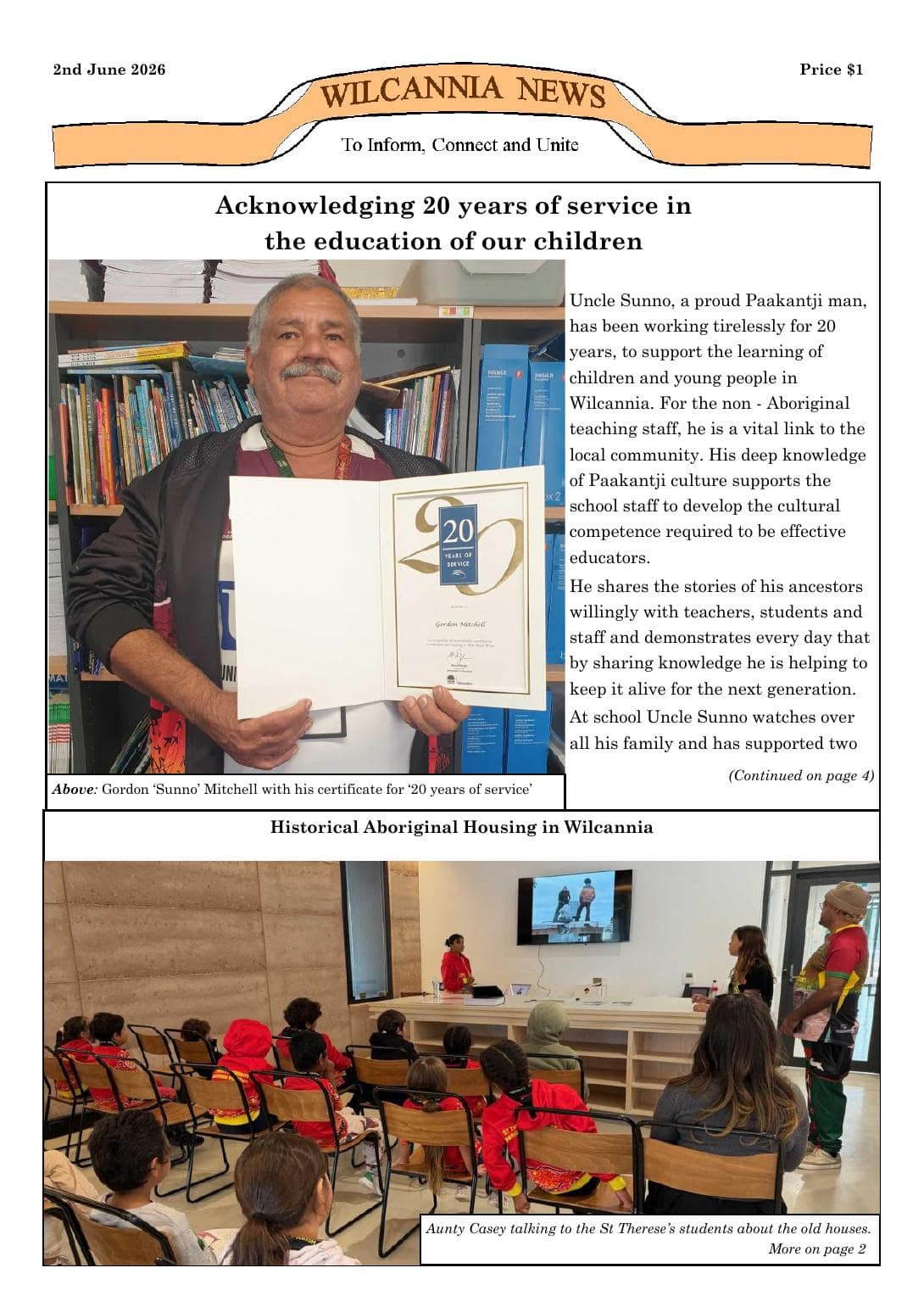
This article appeared in Wilcannia News, 2 June 2026.

