

Ned Thomas, Yorke Peninsula Country Times
For decades, much of Nharangga warra Narungga language existed in fragments.
Today, those fragments are being put back together.
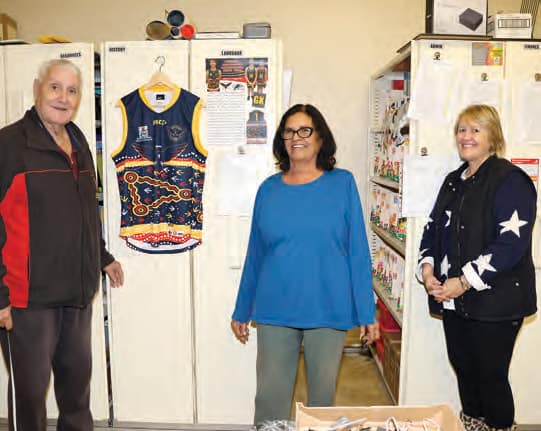
Across three generations of the Wanganeen family, the language is being recovered, taught and spoken once again, with a growing focus on returning it to everyday life.
Uncle Michael and Auntie Lesley Wanganeen helped recover and document the language.
Their daughter, Tania Wanganeen, has spent years rebuilding it for classrooms, communities and future generations.
Alongside her, Tania’s daughter Jemika Wanganeen is helping carry that work forward.
As National Reconciliation Week (May 27 to June 3) shines a spotlight on language and culture, the family’s work is increasingly focused on creating new speakers.
“Nharangga’s never been a dead language,” Tania said.
“It was sleeping. It was in hibernation.”
The journey to wake it up has taken decades.
Language survived through family knowledge and community memory, but many pieces had become scattered through archives, historical records and collections around the world.
Some of the most significant discoveries were eventually traced to Germany, where Moravian missionaries documented Nharangga words, translations and observations more than a century ago.
Those historical records, written in old German, first had to be passed through to modern German and then English before language specialists such as Tania could begin the task of rebuilding the Nharangga language.
“We just had to find it and bring it back,” Uncle Michael said.
The work eventually produced dictionaries, grammar resources, teaching materials and learning tools that continue to underpin language revitalisation efforts today.
Tania said her own journey was shaped by respected Aboriginal linguist Dr Travers Eira, whose mentorship helped language workers rebuild language from historical records while keeping it grounded in culture, community and Country. But, she said, language cannot survive only in books and resources.
“You can have all the resources under the sun but it doesn’t mean anything if nobody’s speaking it,” Tania said.
That philosophy now drives the next chapter of the revival.
Nharangga language is being piloted as a subject at Kadina Memorial School, Minlaton District School and Point Pearce, while a formal curriculum is being developed through the Department for Education.
The Narungga Progress Association is also seeking state and federal government support to strengthen and expand the foundations of Nharangga warra Narungga language. For Tania, the goal extends beyond the classroom.
“I want them to be first language speakers and English is their second language,” she said.
Nharangga language and connection to Country
For Tania Wanganeen, the success of Nharangga warra Narungga language revitalisation will not be measured by dictionaries or teaching resources.
It will be measured by people speaking it.
Across Yorke Peninsula, signs of that change are already emerging as children take language home, parents ask questions and grandparents learn alongside grandchildren.
Indeed, Tania’s niece now insists Happy Birthday is sung in Nharangga before English.
For thousands of years, Nharangga people lived in close connection with land, sea and sky, moving seasonally across Country and passing language, knowledge and culture through generations.
Like many Aboriginal languages, Nharangga language was never completely uniform across Country.
The Nharangga Nation is made up of four clan groups and three recognised language variations.
While people could understand one another, different regions developed their own pronunciations, expressions and ways of speaking.
Modern language revitalisation has sought to honour those distinctions while rebuilding a shared foundation that can be taught across community and schools.
“Language is more than a word,” Tania said.
“It’s a concept.”
For Tania, the work is also deeply personal.
“I’m now teaching every generation before and after me,” she said.
“I have to teach the older generation how to speak something that should have been their birthright because it was removed.”
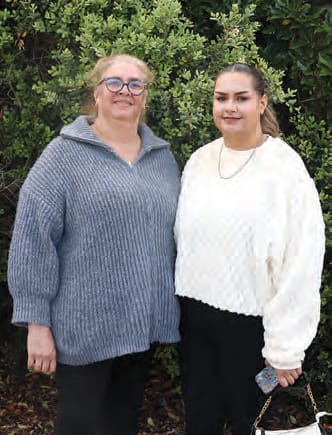
Her daughter, Jemika Wanganeen, is among those helping carry the work forward.
Growing up alongside the language movement, she now works with her mother to strengthen and expand Nharangga language for future generations. Together with Uncle Michael and Auntie Lesley Wanganeen, Tania’s parents, the family represents different chapters of the same story — recovery, revitalisation and renewal.
Auntie Lesley said language recovery was a long-term process.
“When a language has been unspoken for so long, it’s going to take as many generations to actually get it back to full strength,” she said.
After more than two decades of work, she believes the foundations are now in place.
“We see our work as the first building block,” Auntie Lesley said.
“A really important one.”
Across Yorke Peninsula, place names such as Guubawi, Garrdimalga, Minladan, Wiruga and Waraldi continue to carry Nharangga stories and connections to Country.
For many residents they are familiar names on a map. For the Wanganeen family, they are reminders the language has always been here.
What was once sleeping is now being spoken again.
Related stories: Indigenous language
This article appeared in Yorke Peninsula Country Times, 2 June 2026.

