

The Carp Herpes Virus (scientifically known as Cyprinid herpesvirus 3 or KHV) is a biological control agent proposed by the Australian government to combat the invasive common carp.
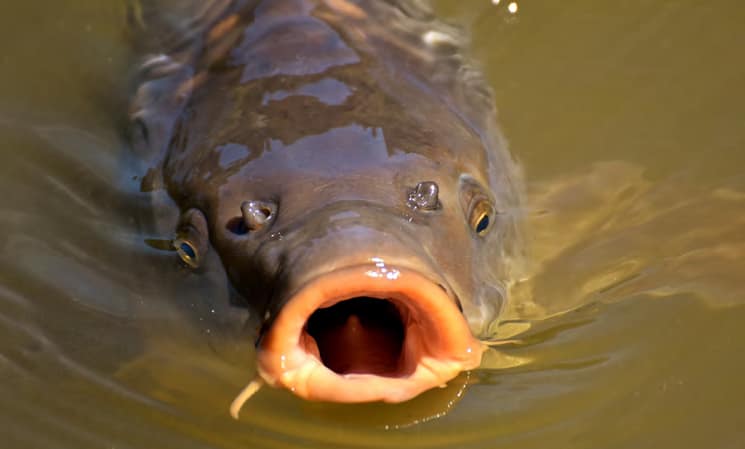
Since its introduction in the 1800s, carp have decimated Australia’s freshwater ecosystems, with experts estimating they make up 80 to 90 per cent of the fish biomass in the Murray-Darling Basin.
The virus is a highly contagious disease that specifically targets common carp and its ornamental variety, koi, by attacking the fish’s gills, kidneys, and liver, causing them to suffocate or suffer organ failure.
It can kill 70 to 95 per cent of exposed carp within a short period.
The virus was first identified in the late 1990s following massive carp die-offs in Israel and the USA. It is already present in over 30 countries, but has never reached Australia.
CSIRO research indicates the virus does not jump to humans, other mammals, or native Australian fish like Murray Cod or Silver Perch.
Originally proposed for release in 2018, the project has faced nearly a decade of delays. As of early 2026, a controlled trial is being designed, with experiments expected to run through to 2027.
One delay is the logistical nightmare of what to do with millions of tonnes of rotting fish.
If left in the water, the decaying biomass would strip oxygen from the rivers, causing blackwater events that would kill the very native fish the plan is meant to save.
Another is the adaptability of carp. New international studies suggest carp can evolve resistance quickly. Critics argue that after an initial massive kill, the population might bounce back within a few years, rendering the irreversible release a failure.
The virus also only activates between 16°C and 28°C. If the water is too cold or too hot, the virus goes dormant, allowing refuge populations of carp to survive and repopulate.
The Federal Department of Agriculture, Fisheries and Forestry (DAFF) has already invested over $15 million into the National Carp Control Plan (NCCP).
Former Deputy PM Barnaby Joyce was a vocal, high-profile proponent, famously declaring, “We don’t want to share our rivers with these disgusting mud-sucking creatures.”
Member for Murray Helen Dalton calls carp the “rabbits of the river” and has campaigned for the release of the virus and more focus on eradicating the pest.
In early 2026, Dalton took aim at Federal Water Minister Tanya Plibersek’s what she calls the Minister’s “just add water” approach to the river, delivering a staggering mental image:
“There are over 145 carp for each person amongst the 2.4 million people who live along the Murray River system… Tanya Plibersek hasn’t proposed a solution. This isn’t leadership – it’s negligence.”
Ms Dalton has claimed carp to be Australia’s biggest environmental threat to our country, even claiming that people should “forget net zero” and focus on the fish.
The Invasive Species Council and various recreational fishing alliances see the virus as the only instrument capable of restoring native habitats.
Opponents to the virus’ release area varied.
Researchers from the UK and Europe have dubbed the plan “madness,” citing risks to global food security (carp is a major food source globally) and the likelihood of the virus mutating.
Some Traditional Owners and First Nations groups have expressed concerns about the lack of consultation and the potential death of the river during the mass-kill phase.
The RSPCA has raised concerns regarding the humaneness of the virus, as it causes a slow and potentially painful death by asphyxiation.
While the government hasn’t pinpointed exact locations for trials of the release of the virus, the Victorian Fisheries Authority (VFA) is currently leading the charge for the first controlled trials.
The first trials are planned for isolated, enclosed lakes or billabongs in Victoria. This allows scientists to contain the virus and the resulting biomass (the dead fish) in a manageable area before any river-linkage occurs.
The Lachlan River Catchment in NSW has been a primary site for CSIRO’s epidemiological modelling. It is considered a high-priority area because it is a major breeding ground for carp but has sections that can be more easily monitored than the main stem of the Murray River.
Specific wetlands in the lower Murray (South Australia) and the Sunraysia region (around Mildura/Wentworth) are also being mapped. These are spawning areas where juvenile carp congregate. The plan is to hit them while they are young and concentrated, making cleanup easier.
One reason the government says they are being cautious about naming every specific trial billabong is the fear of illegal translocations.
If a member of the public takes an infected fish from a trial site and drops it into a major river system prematurely, it could trigger a massive, unmanaged fish kill that the cleanup crews aren’t ready for.
Disposing of what scientists call “the biomass” is the single greatest challenge of the project. Experts estimate there are up to 357 million carp in Australian waters during wet years.
If even 70 per cent of them die at once, that is hundreds of thousands of tonnes of rotting fish flesh.
In high-risk areas like town water supplies, irrigation pumps, and popular recreational lakes, the government plans to use professional crews to net and remove carcasses immediately.
Using trash booms (similar to those used for oil spills) to catch dead fish floating downstream so they can be vacuumed or netted out at a single collection point is also being considered.
In shallow wetlands, excavators may be used to clear banks.
To avoid a massive, unmanageable explosion of dead fish, scientists plan to release the virus in Spring, when water temperatures are perfect for the virus (18°C–25°C) but before the extreme heat of Summer, which accelerates decomposition and sucks oxygen out of the water faster.
By releasing the virus where carp congregate to breed, scientists also hope they can contain the initial kill to a smaller, more predictable geographic area.
The Government says the plan is to turn the pest into commercial products to offset the massive costs of eradication.
Large-scale carp compost facilities are being considered to turn the carcasses into agricultural liquid fertiliser (similar to the commercial brand Charlie Carp).
The idea for Charlie Carp was born in the early 1990s by Bob McFarland, a grazier from Oxley, NSW.
Frustrated by how the Lachlan River was becoming a “muddy soup” due to carp, Bob realised that instead of just killing the fish and throwing them away, they could be used.
Bob famously appeared on TV in a bathtub of muddy Lachlan River water, to show city viewers the damage he claimed carp were making.
From there, the company was formally established in June 1998 by a group of passionate locals from the Hay and Deniliquin districts who wanted to create a commercial incentive to remove carp from the Murray-Darling Basin.
The company is headquartered and its production facility is located in Deniliquin.
The business relies on a network of commercial fishers across the Murray-Darling Basin, Gippsland Lakes, and parts of South Australia.
Fishers use nets and traps to pull hundreds of tonnes of carp from the water annually, before the fish are transported to the Deniliquin plant, where they are liquefied through a process that breaks down the proteins without destroying the nutrients.
Looking forward, processing plants could also convert the fish killed by the virus into protein meal for aquaculture or pet food, but in remote areas where transport is impossible, deep-pit burial away from the water table is the last-resort option.
The ultimate fear is that the cleanup won’t be fast enough. When fish rot, they consume oxygen. If oxygen levels drop too low, it creates blackwater, which kills everything in the river – shrimp, crayfish, and native fish.
Because of this, the 2026 trials are focusing heavily on re-oxygenation technology, such as massive aerators, to keep the water healthy while the cleanup crews work.

This article appeared in The Riverine Grazier, 4 March 2026.

