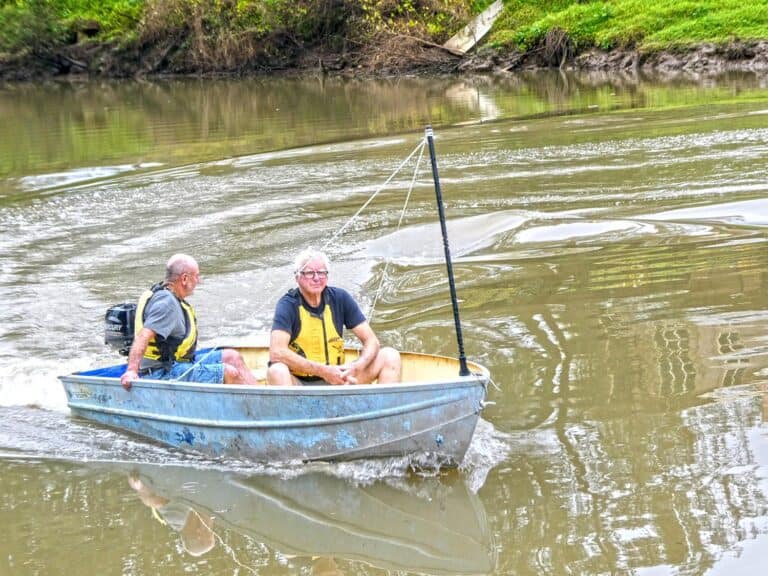
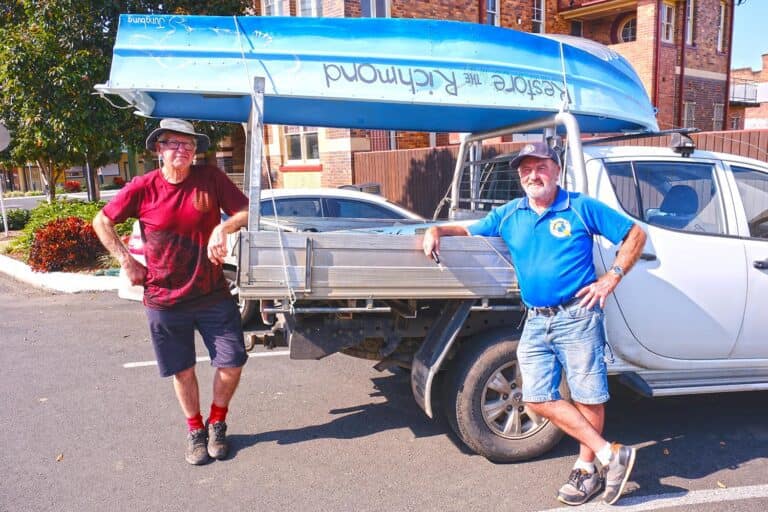
Tinnie Men group, indyNR.com.
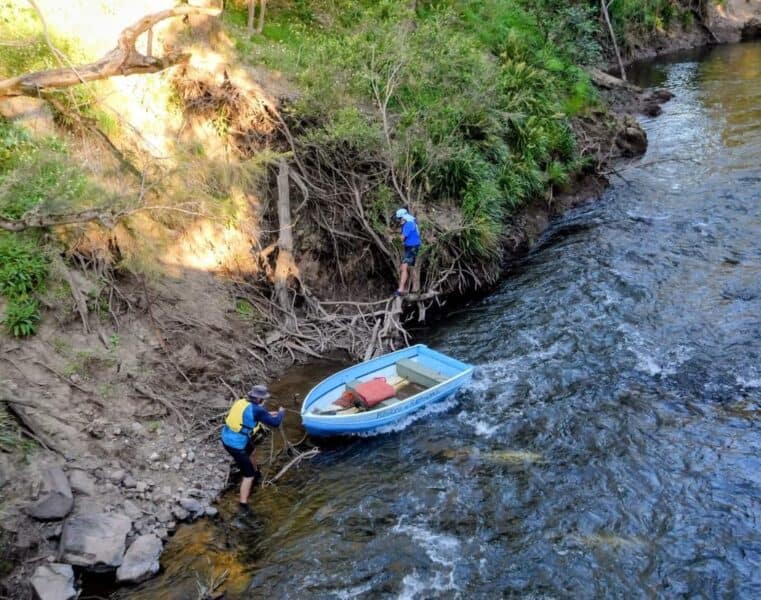
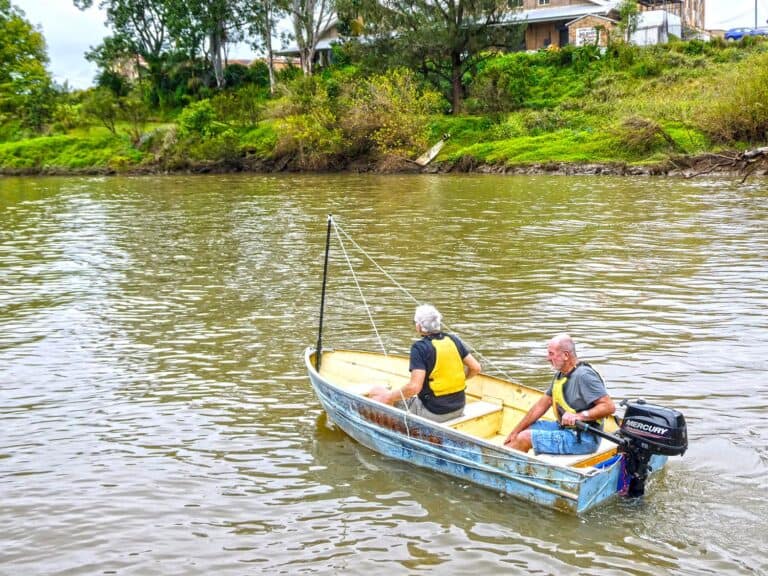
In September this year, Steve Posselt and Graeme Gibson set off from Ballina in a tinnie to travel upstream towards Kyogle.
Read about their journey here.
The Tinnie Trip was part of the Riverfest and its aim was to highlight the state of the Richmond River.
What did they see and learn on their tinnie trip?
Steve Posselt explains:
“During the Tinnie Trip and community forums held later in Kyogle and Casino, concerned citizens reported widespread understanding that the dire state of the Richmond River is destroying health, recreational enjoyment, livelihoods and property values, with support for the notion of a swimmable, drinkable, fishable river.
“This community engagement and support was encouraging, but more needed to be done. A meeting was organised to ask the simple question — What next?”
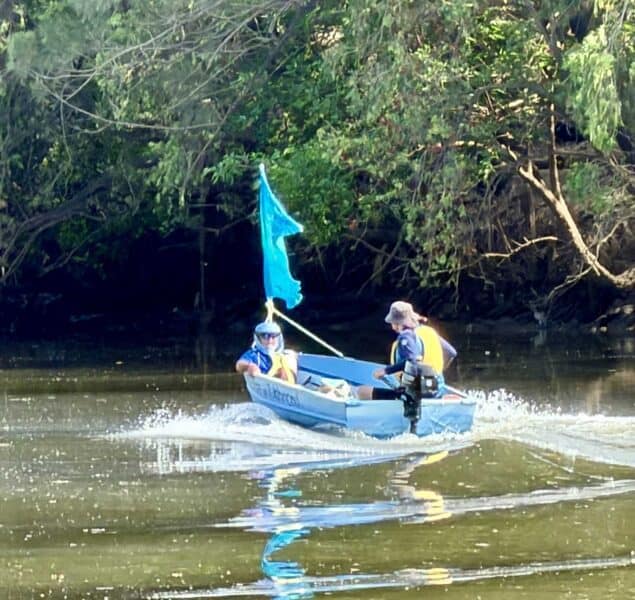
On Saturday, December 6, 18 residents from the Richmond River area gathered at Swan Bay to discuss what actions could be taken to restore the health of the Richmond River.
“The group was made up of farmers, fishers, elected officials, directors of national, state and local non-government organisations, medical professionals, educators and retirees,” Steve said.
“The personal stories included memories of healthy rivers and abundant fish, shellfish and clear water running over gravel and sand.
“It was generally acknowledged that the decline of the river has taken place over more than a century and that many people now have little to no experience or knowledge of the river in its hey-day.”
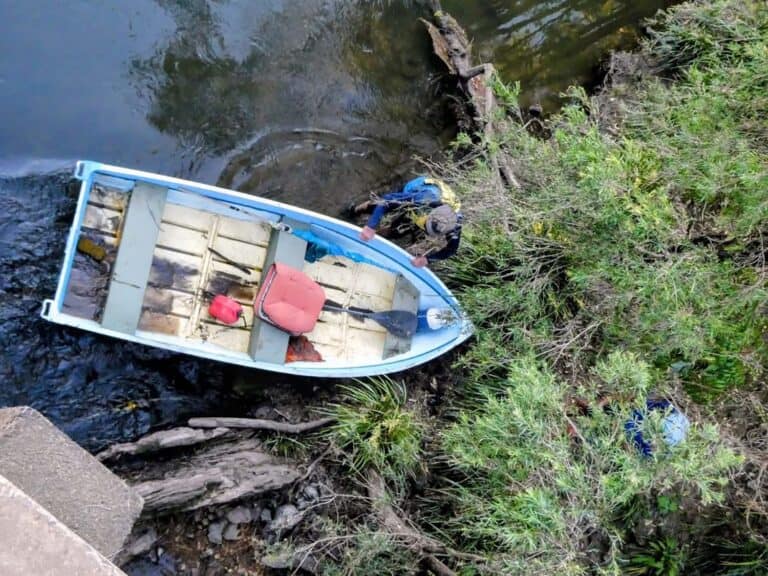
“A third-generation fisherman stated that he used to regularly catch 500kg of mullet on a good day at a point in the river and is now regularly catching 10kg or less.
“More worrying is that when he pulls his nets up in some areas his hands burn from the toxic sludge on the net.”
Steve said the fisherman was at the point of giving up on the job that has fed his family since his grandfather arrived a century ago.
“Some wetlands identified as a major source of acidification have been damaged by the permanent closure of floodgates originally put in place to protect humans living on them from major flood events,” Steve said.
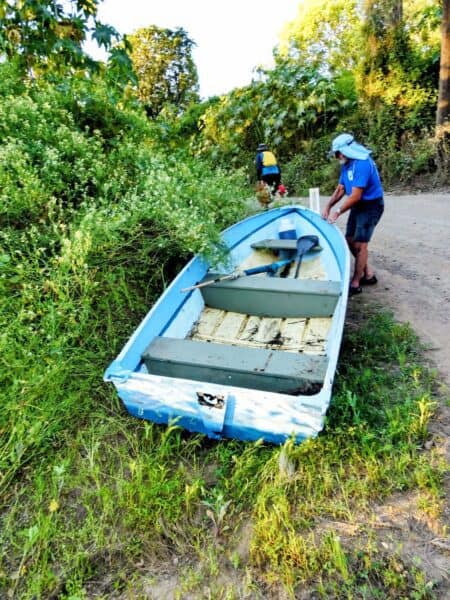
“Among the complications this has caused are farms and vegetation that have adapted to the artificial conditions. There was widespread enthusiasm for a range of approaches to restoring the natural functions of these wetlands by opening the flood gates. The slogan Open the Gates was adopted to promote this approach.”
Steve said from the beginning of the concept for the Tinnie Trip, the idea of a single authority with responsibility for the health of the catchment was regularly raised.
“The recent resolution by Ballina Council to appoint a river commissioner was both pleasing and widely supported, despite recognition that serious action will only take place if there is public support for specific projects that deliver significant improvements,” he said.
“It was resolved to encourage other local governments and organisations to pass similar resolutions and to work together to have it implemented.
“The meeting agreed to support any councils considering opportunities to take over low lying land at minimal cost to ratepayers to heal the river.”
Despite the focus on the floodplain, land management in the upper catchment is responsible for many of the problems experienced downstream,” he said.
“Some individuals are focused on the restoration of riparian vegetation to prevent erosion and other damage to the upper catchment and to help restore the natural functioning of the wetlands on the floodplains.
“A long-term part of this process is changing legislation to keep animals out of the river and to focus on off stream watering which increases on farm productivity, animal and river health.”
Others in the group are focused on education initiatives.
“Decision makers need to understand the widespread implications and importance of groundwater, river health and its relationship to human health and society,” Steve said.
“Practitioners need help to farm and work more effectively without harming the river.”
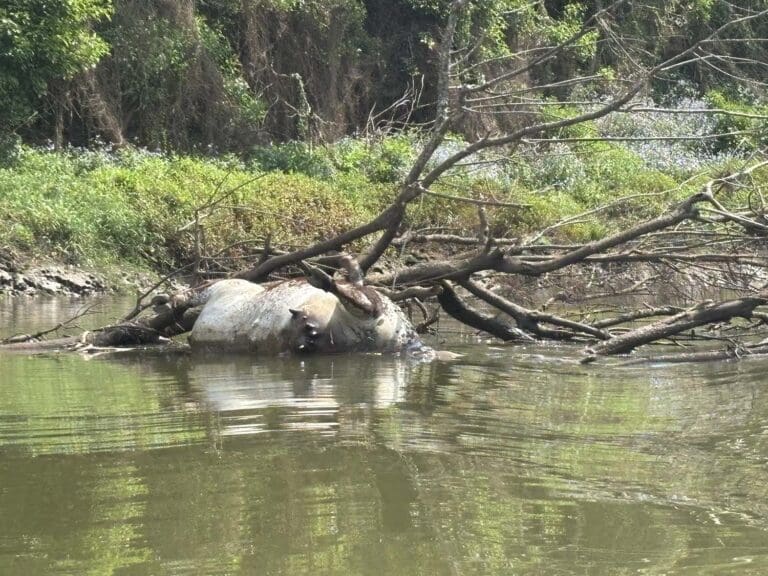
Steve said recent fish kills that have brought to public attention the findings of scientific reports that much of the river bed is dead, having not recovered after the 2022 floods.
“An acidic jelly smothers some of the bed of the river near the Bagotville Barrage.
“At times the water contains almost no oxygen and nothing can grow in the soil dredged from drains and tributaries of the river without significant remediation.”
A 2023 report for the NSW Department of Primary Industries identified that changes to land management in five sub-catchments could remove 85 per cent of the black water risk to the estuary.
Attendees at the meeting shared personal stories about the damage in those areas. “They pointed out that land use in the upper catchment is responsible for many of the problems experienced on the flood plain which are exacerbated by the acid sulphate soils created by draining the floodplain and exposing ancient chemicals to oxygen,” Steve said.
“No cane farmers were present at the meeting, but recent correspondence and personal experience identified that cane farmers feel besieged by such approaches because they farm this low lying land and are being asked to change their land management practices with negative impact on their profit and land values.
“Some who make a living from the river or the floodplain noted that one group is currently profiting at the expense of others. A fishermen said, ‘It’s a balance. Cane farmers have a right to make a living but should not profit at my expense.’”
Steve said that it was not currently illegal to pollute the river or damage the vegetation that protects it and that there are few controls on pesticide use.
“There was general agreement that a basic charter of rights should underpin such laws, but that environmental rights is part of a long-term project outside the current scope of this group,” he said.
The Tinnie Men group wants to highlight the importance of political power in driving such change.
“It was agreed that legislation is required to control development and activities that adversely affect the river,” Steve said.
“This seems to be working for the Great Barrier Reef but on the Richmond even if an industry group recommends that a certain area is not suitable for an activity, they have no power to enforce it. There needs to be assistance provided for better practices but ultimately penalties are required as well to achieve the necessary outcome, so although it is very difficult, legislation is critical.”
This article appeared on indyNR.com on 22 December 2025.