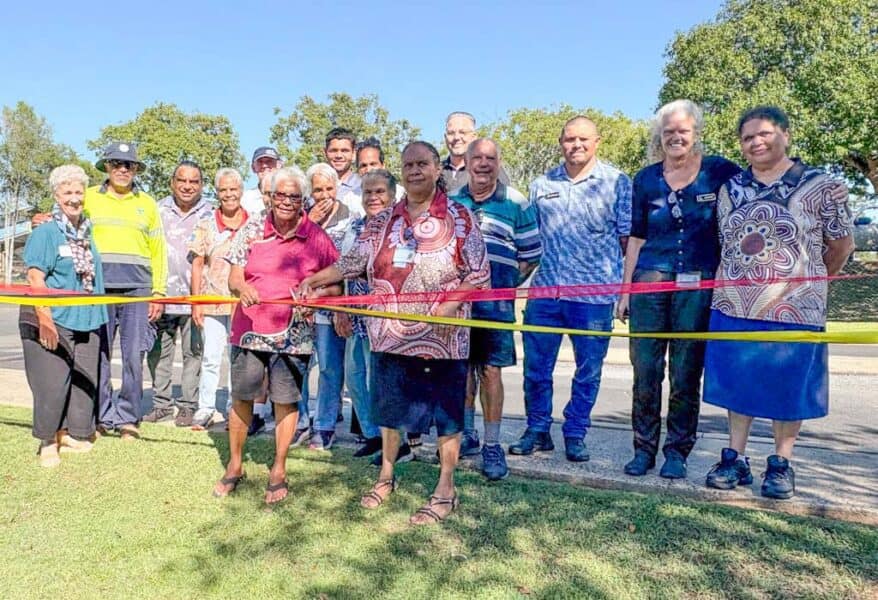
The six totem poles that line the driveway to the Casino & District Memorial Hospital were officially unveiled today, Thursday, March 26.
Hand painted by residents at Balund-a, each totem pole design represents elements of the natural world, including animals, bush foods, and water.
Northern NSW Local Health District acting director of Aboriginal Health Cameron Johnson congratulated Casino Hospital’s Aboriginal liaison officer Gloria Torrens for working with the community to bring this project to life.
Executive director of Nursing Sandra Vidler said Aboriginal people make up a significant portion of the patient population at Casino Hospital with 21 per cent of people presenting to the Emergency Department this financial year identifying as Aboriginal and or Torres Strait Islander.
“When Aboriginal people feel safe and respected, they seek healthcare sooner, speak more openly and receive the care they deserve. This is crucial as we work towards closing the gap in healthcare for Indigenous people,” Ms Vidler said.
“We hope these totem poles signal our commitment to surrounding Aboriginal communities and help provide reassurance they are always welcome here.”

Ms Torrens said a hospital is a place of healing, and it is important Aboriginal people feel welcome and safe when they access healthcare.
“This has been a whole of community effort, and I would like to sincerely thank everyone who has given their time and support to help make this dream a reality,” Ms Torrens said.
She thanked DTM Timber, Casino Boolangle Local Aboriginal Land Council, Richmond Valley Council, Balund-a and the Aboriginal Health team at Northern NSW Local Health District.

“These organisations helped with everything from the donation of the timber poles to transportation, painting equipment, artwork and installation,” Ms Torrens said.
Casino & District Memorial Hospital is situated on the traditional lands of the Bundjalung Nation, one of the largest Aboriginal Nations in NSW, the town of Casino is known to Aboriginal people as Djanangmum and sits on land traditionally cared for by the Galibul people.
This information was provided by the NNSWLHD.

This article appeared on indyNR.com on 27 March 2026.