


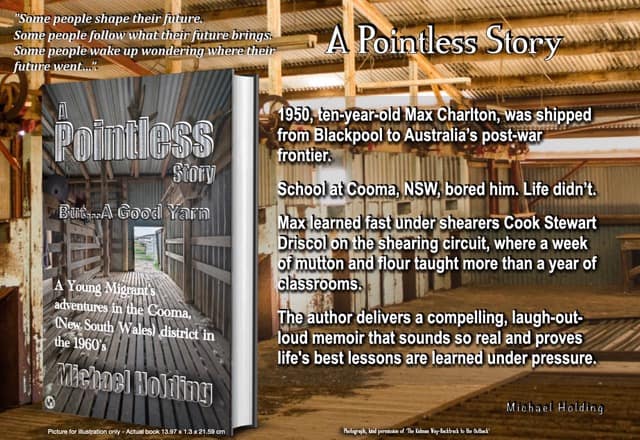
Excerpt from A Pointless Story, by Michael Holding
“Goodnight!” Calls out Stew from his bunk across the room. “Big day tomorrow, Charlton.”
In the shearing world of the 1950s and 1960s, the shearer’s cook wasn’t just a bloke with a frying pan, he was the quiet general running a one-man campaign three times a day. Many of them had never seen the inside of a cooking school, didn’t have a single piece of paper to wave at an employer, and wouldn’t have known what “culinary qualifications” meant if you’d asked them. But their work demanded a set of skills that would leave many modern chefs whimpering into their stainless-steel benches.
A good shearer’s cook needed to be everything at once:
- Slaughterman and butcher – sheep had to be killed, and often cattle on cold frosty nights, dressed, hung, and broken down to feed the team. This meant handling a rifle or a knife, knowing exactly how to drop a sheep cleanly, bleed it out, and joint it with speed and precision.
- Baker and confectioner – every morning meant hot bread, scones, dampers, pies, and cakes turned out from temperamental wood-fired ovens. He needed to know how to coax heat from green timber on a wet day and keep dough from collapsing in a draughty shed kitchen.
- Master cook – three full meals a day for up to twenty hungry men, plus crib (smoko) that had to be carted to the shed mid-morning and mid-afternoon. He planned menus, kept supplies from spoiling in summer heat, and managed portion sizes to stretch the stores until the next supply run.
The hours were punishing: up at four, fire lit before first light, breakfast ready by five-thirty sharp, eggs, chops, porridge, tea, toast stacked high. Once breakfast was done, he washed up, scrubbed down, then rolled straight into crib preparation, sandwiches, cake, tea boiled and packed for the morning run to the shed. If there was meat to be killed, he’d do that in the lull before lunch prep.
Lunch and dinner were full meals, not snacks, because shearers worked like machinery and needed fuelling like machinery. And after the evening meal was served, plates washed, floors swept, and kitchen ready for the next morning, the cook might finally sit down with his own cup of tea around eight o’clock.
In return for this relentless cycle, a top cook earned around £30 to £40 per week, as much as the best shearers, but unlike the shearer, his money was steady whether the weather shut the shed down or not. He was paid collectively by the men, via the contractor or the pastoralist, with roughly ten per cent of each shearer’s pay packet ending up in his. The cook was effectively self-employed: if the team was big enough, he could hire his own offsider, someone to peel spuds, wash pots, and run crib to the shed.
But the pay wasn’t the main thing, the cook’s reputation was his real currency. A good cook, one who could keep shearers well-fed, cheerful, and working, was worth his weight in gold. A bad cook could drive a team to strike, mutiny, or simply walk off a job.
In short, a shearer’s cook was a professional of the highest order, butcher, baker, and bush psychologist rolled into one. He kept the whole show running, and if he did it well, he earned the respect of hard men who didn’t hand out respect lightly.
3:55 a.m., No alarm clock. Just Stew’s voice booming through the hut like a gospel preacher announcing Judgement Day. “On your feet, Charlton!” There’s a special kind of pain that comes from rolling out of a warm swag into sub-zero air, dragging on yesterday’s stiff clothes, and stumbling into a kitchen where the fire is nothing but a few sulky coals.
My first job is wood. Always bloody wood. Fill the box, get the range roaring like a steam train. By the time I’ve got the kettles boiling, my eyebrows smell like smoke and my hands are black.
4:30 a.m., Stew is now fully awake and operating like a one-man military campaign. Three cast-iron frypans hit the range with a clang that could wake the dead. Fat first, spitting like gunfire. Then meat, enough to feed a small nation: sausages, rissoles, chops, bacon, onions, all cooking at once, the air so thick with smoke it feels like I’m breathing through a sock. I’m buttering toast so fast I swear I could qualify for the Olympics.
5:30 a.m., The shearers shuffle in, half men, half ghosts. No talking, just eating. They inhale food like industrial vacuums, mugs of tea steaming in their fists. Then they leave just as silently, back to the shed, leaving behind plates that look like a crime scene.
6:00 a.m., The aftermath. Piles of dishes taller than me, pans that need a crowbar to get the fat off, a floor that looks like a dogfight took place. Stew barks orders and I scrub until my fingernails feel like they’ve dissolved. By 8:00 a.m. we have it looking decent again, which is a cruel joke because it’ll be wrecked again in twelve hours.
8:30 a.m., Sandwich production line. Loaves of bread by the dozen, enough butter to block a cardiologist’s arteries, cold mutton, pickles, jam. We stack them high, wrap them in wet hessian, and haul them across to the shed. The smell of sheep piss hits before I’m halfway there. Drop the food, get back, pray for a rest.
Midday, Rest is over before it begins. If the farmer has lambs penned, this is when we deal with them. Stew hands me the knife like a priest handing over communion. No words. Just a nod. I swallow, kneel, and do the job. Quick, clean, merciful, but the smell sticks in my nose for the rest of the day. We hang the carcasses, wash down, and get ready to do it all again tomorrow.
2:30 p.m., Dinner prep. Peel spuds, shell peas, slice pumpkin, chop onions until I cry for real this time. Stew keeps the range hotter than hell. Meat roasts, gravy simmers, pudding waits its turn.
5:30 p.m., The shearers return, transformed. Now they talk, joke, and abuse each other with the sort of creativity that would get you arrested in a town. They heap their plates, go back for seconds, wipe us out of everything.
7:00 p.m., Wash-up, round two. By now my arms feel like they belong to someone else. Stew is still going strong, whistling through his teeth like this is a holiday.
8:30 p.m., Collapse into the bunk. My feet are wrecked, my hands are raw, my back is a question mark. Stew rolls a smoke, squints through the smoke at me, and says, “Big day tomorrow, Charlton.”
No kidding, Stew. No bloody kidding.

