


Australia and New Zealand Banking Group Limited (ANZ), Media Release, 3 September 2025
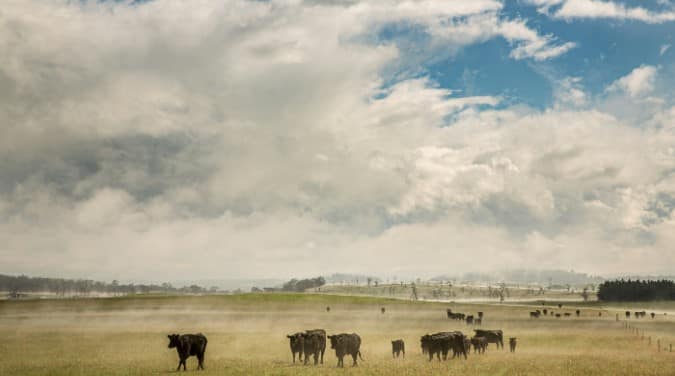
Cattle prices have risen solidly across all categories, supported by recent rainfall across southern Australia and strong demand from northern lot feeders.
ANZ’s latest Agri InFocus report highlights the Female Slaughter Rate (FSR) as a key indicator of destocking activity over the past year, and the resulting surge in restocker demand.
In Victoria, 76 per cent of cattle slaughtered year-to-date have been females, compared to just 34 per cent in Queensland. This contrast reflects the impact of challenging seasonal conditions in the south, where producers are now actively rebuilding herds.
Restocker prices have seen the most significant year-on-year growth, currently sitting approximately 35 per cent above levels seen this time last year. Improved seasonal conditions in southern New South Wales and parts of Victoria have enabled producers who previously offloaded progeny or reduced breeding stock to re-enter the market, driving demand to levels not seen for some time.
ANZ Associate Director of Agribusiness Insights, Alanna Barrett, says producers are entering Spring with confidence.
“Fully stocked cattle producers have every reason to be optimistic. With price increases across both heavy and lighter categories, the outlook for the industry is very positive,” Ms Barrett said.
Global trade dynamics are also influencing the market. The recent imposition of a 76.4 per cent tariff on Brazilian beef entering the United States has drawn significant attention.
To date, Australia has held an average 24 per cent share of US beef imports for the year to June, while Brazil has accounted for around 18 per cent and growing. The redirection of Brazilian beef is expected to increase competition in China, where Brazil’s lower price point may challenge Australian exports.
“In this environment, Australia’s reputation for quality, consistency, and safety will be critical in maintaining consumer preference and market share. We expect trade redirection rather than a net increase in demand, with Brazilian beef shifting toward China and the U.S. potentially increasing its reliance on Australian supply,” Ms Barrett said.
Locally, strong demand from lot feeders continues to support the market. Australia’s feedlot capacity now sits at 1.5 million head, with larger operations continuing to expand – driving sustained demand for feeder cattle.
Further insights are available in the 2025 Spring edition of ANZ’s Agri InFocus Commodity Insights report.

