


Dr Siri Gamage, Regional Rail Advocate; Former Vice President, Trains North Inc., August 2025
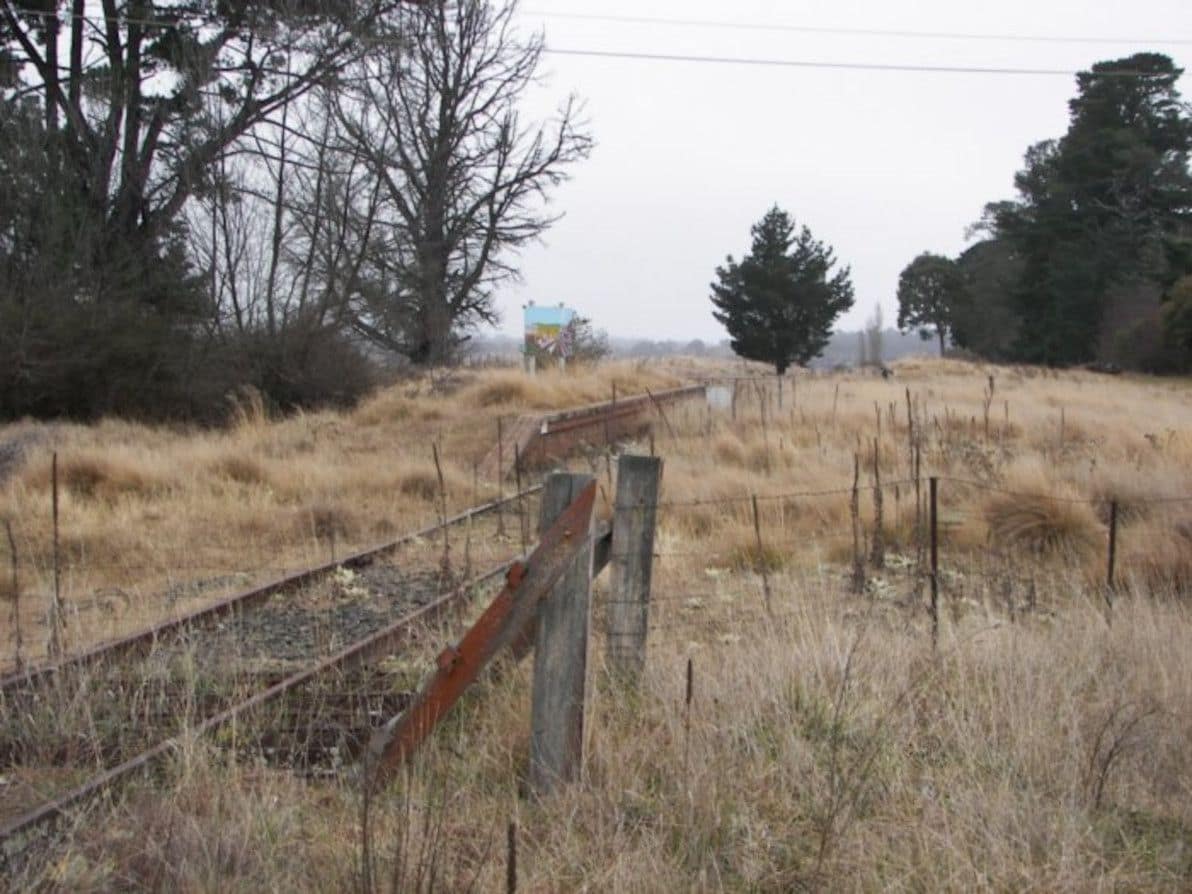
It’s been over three decades since trains last ran north of Armidale toward the Queensland border. But the question is no longer why the Northern Railway Line should be reopened—it’s why not, and when.
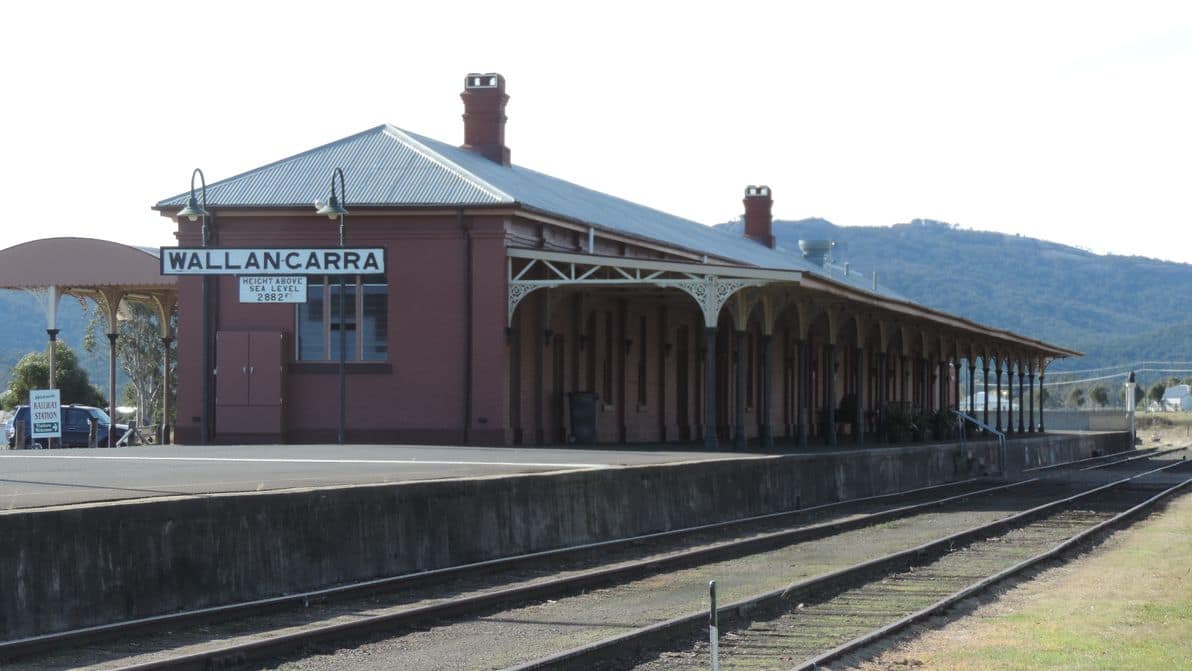
Across Northern NSW, particularly the towns of Guyra, Glen Innes, Deepwater, Tenterfield and Jennings/Wallangarra, the absence of rail services has become a daily burden. Residents lack reliable public transport options, while freight has been forced entirely onto congested roads like the New England Highway. For a region that contributes significantly to agriculture, education, tourism and now renewable energy, this is not just a transport gap—it’s a strategic failure.
But there is a chance to change that. Reactivating the disused railway line—stretching from Armidale to the Queensland border and ultimately to Toowoomba—could deliver enormous benefits for both NSW and Queensland. The infrastructure may be old, but the opportunity is very current.
A case rooted in reality
There are five compelling reasons to revive this corridor.
First, the region sits at the heart of the New England Renewable Energy Zone (REZ)—a state-significant project involving over 30 large-scale wind, solar and hydro projects. Rail infrastructure is essential for moving turbines, solar components, transmission materials and workers in an efficient and lower-emission way.
Second, while the federal Inland Rail project is moving slowly—with its critical section between the NSW–Queensland border and Brisbane unlikely to be completed for another 10–15 years—this existing corridor provides an immediate, cost-effective, and flood-resilient inland route that could serve as an interim freight backbone.
Third, the line offers high-value tourism potential. A scenic and culturally rich corridor through the Northern Tablelands and the Granite Belt could attract heritage train journeys and boost visitor economies in struggling towns.
Fourth, it enhances national resilience. As Australia faces more climate disruptions, bushfires, and emergencies, having an inland rail corridor capable of supporting defence logistics and supply chain continuity is increasingly vital.
And finally, there’s the matter of equity. People in regional areas deserve fair access to transport—just as those in urban centres do.
Local councils must step up
Last year, a petition with over 10,700 signatures calling for the reactivation of this line was tabled in the NSW Parliament. It was debated in early 2024, but the NSW Government has made clear that a full business case is required for serious consideration. Unfortunately, community groups cannot fund such work on their own.
This is where local councils must take the lead. Whether it’s Armidale Regional Council, Glen Innes Severn, Tenterfield Shire, or even Toowoomba and Southern Downs across the border—regional local governments have a unique platform to champion long-term connectivity.
Councils can act as conveners, co-funders, and advocates—engaging with state agencies, the private sector, and community organisations to turn vision into viability. They can also push for the kind of cross-border cooperation required to get Infrastructure Australia and the federal government on board.
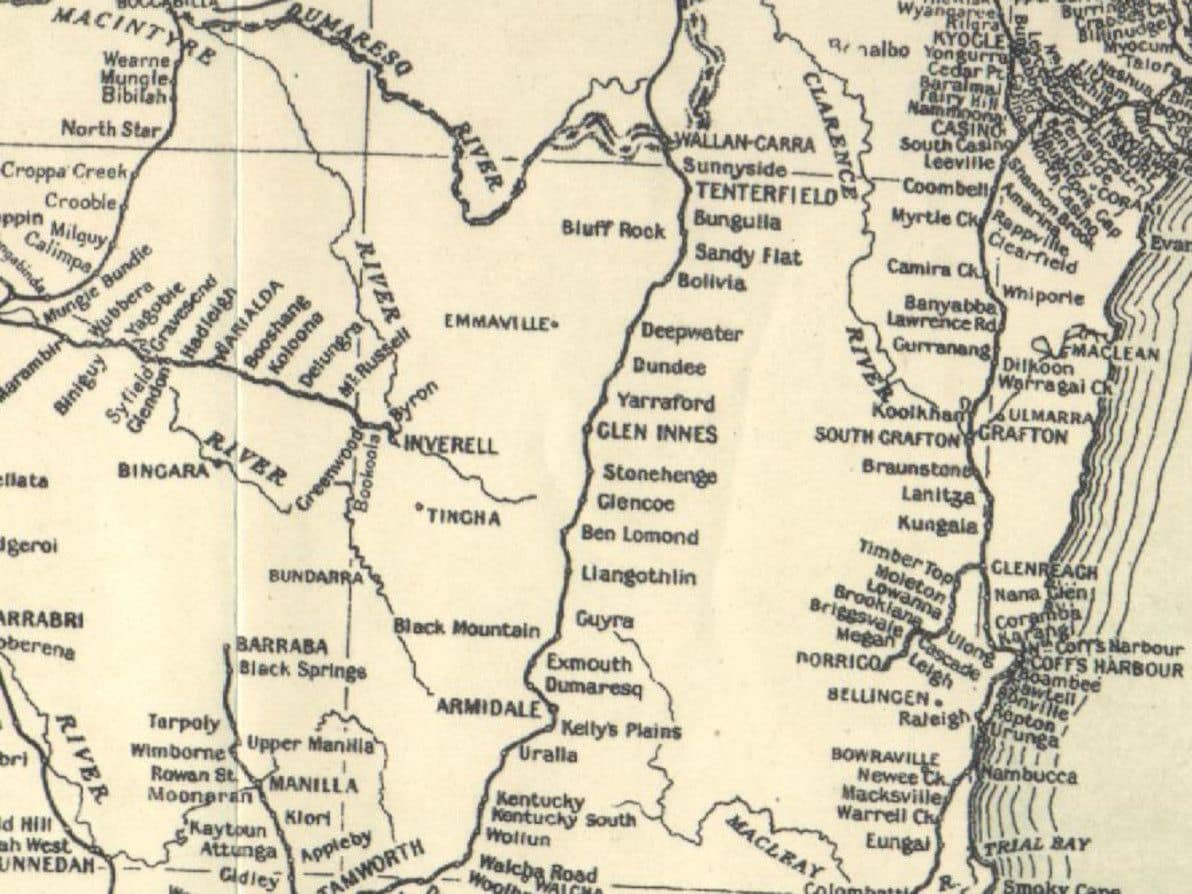
Photo: NSWrail.net
A national project in regional hands
This isn’t just a local transport project. It’s a national infrastructure opportunity. It connects inland NSW with South-East Queensland; supports clean energy and decarbonisation; enables regional development; and offers real returns on investment.
For that to happen, we need unity of purpose. That means councils stepping forward as advocates, community voices being heard, and the state and federal governments being reminded that not all priority projects are on the city fringe.
The Northern Railway Line is a corridor with a future—not just a memory. Now is the time to put it back on the map.


On 9th July 2024, a Presentation Package from the Glen Innes Trains North Group was given to NSW Minister for Transport Jenny Aitchison & later Regional Minister Tara Moriarty, containing a copy of the our Community Rail Survey of Glen Innes & District (ongoing) which has been conducted by local Trains North Members at their own expense & distributed to mail boxes at Glen Innes as well as the villages of Glencoe, Wellingrove, Deepwater, Dundee, Ben Lomond, Glen Elgin & other surrounding areas.
Collated Statistics demonstated at that time that 96% believed that the railway line should be used for freight to make it more economically attractive & that our region would benefit if regular passenger train services to & from Sydney & Brisbane were reinstated. 93% agreed that having regular train services to Glen Innes will increase tourism within the district. 95% stated that being able to travel by train would benefit them economically. 96% thought that our region deserves a regular, effective, integrated public transport system, including a reactivated Main North Rail Line, in order to prosper and thrive.
There are so many benefits to struggling rural towns, councils should be advocating for their local population and businesses. Rail tourism can boost local economies and freight alternatives are proving more and more necessary. Councils are stretched and must work together to demand infrastructure investment.
Local government has an advocacy role which extends beyond its core “roads rates and rubbish mandate” to the things that are critical needs for its residents. At the moment restoration of regional railway services that were used to build regional communities is essential for their survival. That is why it is absolutely key piece of advocacy for local government to champion the resumption of regional railway services (freight, tourism and passenger). To simply accept a faulty state government agenda that is failing regional
Australians by focussing infrastructure funding on decongesting choked up and unaffordable coastal cities is a fundamental failure by inland regional councils.
Deni McKenzie.
The Graymouth to Christchurch line is a great example of combining passenger (and freight) with tourism. The voice of a guide quietly points out places/topography of interest.
The line from Armidale to Wallangarra is full of fascinating points of interest, from topographical (ancient volcanos) to Standing Stones. Ben Lomand station is the highest railway station in Australia. Imagine if every station had its own Aboriginal mural! What a display! How unique!
A rejuvenation of this line ticks so many boxes from: *opening up this route for freight, giving elderly passengers access to medical appointments/treatments, access for fire fighting equipment, military movements, rail travel options for UNE and school students, opening opportunities for businesses, new houses…relieving pressure in Sydney’s overcrowding, faster delivery of goods lead to a lower cost to the consumer, to the opportunity for rail travel to the ‘32 Games in Brisbane from south of Tamworth upwards.
*This latter point needs is important as Armidale has already been given the tick of approval for ‘high Altitude training’ . Many venues have already been approved.
*Glen Innes, with its altitude, makes it the perfect venue for equestrian events in Summer… Tamworth is not only too hot, but is oversubscribed.
*There are a few selfish, wealthy people, with enough $$$ to buy e-bikes (+ bike racks, all-weather gear…not cheap) who are strong enough to lift their bikes onto their specially-built bike racks) who are riding rough-shod over those who desperately need to travel, except by car. Man’s inhumanity to man gobsmacks me every time.
Unfortunately all councils claim that they are “broke”. They are not maintaining roads, pavement or other basic infrastructure they have been created to provide.
Council funds to enable the needed support for government to consider reestablishment, obviously will not be available for the public benefit.
Looking at the Glen Innes airport documents shows clearly that a “rail trail” was the plan many years before it was announced. That infrastructure for the region is where change needs to begin. That needs amending.
For government to pass the request for re connection of a basic service should not be passed down to local councils for approval.
Isolating towns seems to be the normal practice rather than building regional areas.
The delays for approval seems to be a tactic rather than real attention to fixing the glaring issues of extremely poor transport availability and infrastructure between Armidale and the Queensland border.
Ablolutely councils must ,lead the way.
Mudgee council did in 1998 to reopen the Mudgee line successfully.
2004 a new council lost interest
The line was closed again.i