


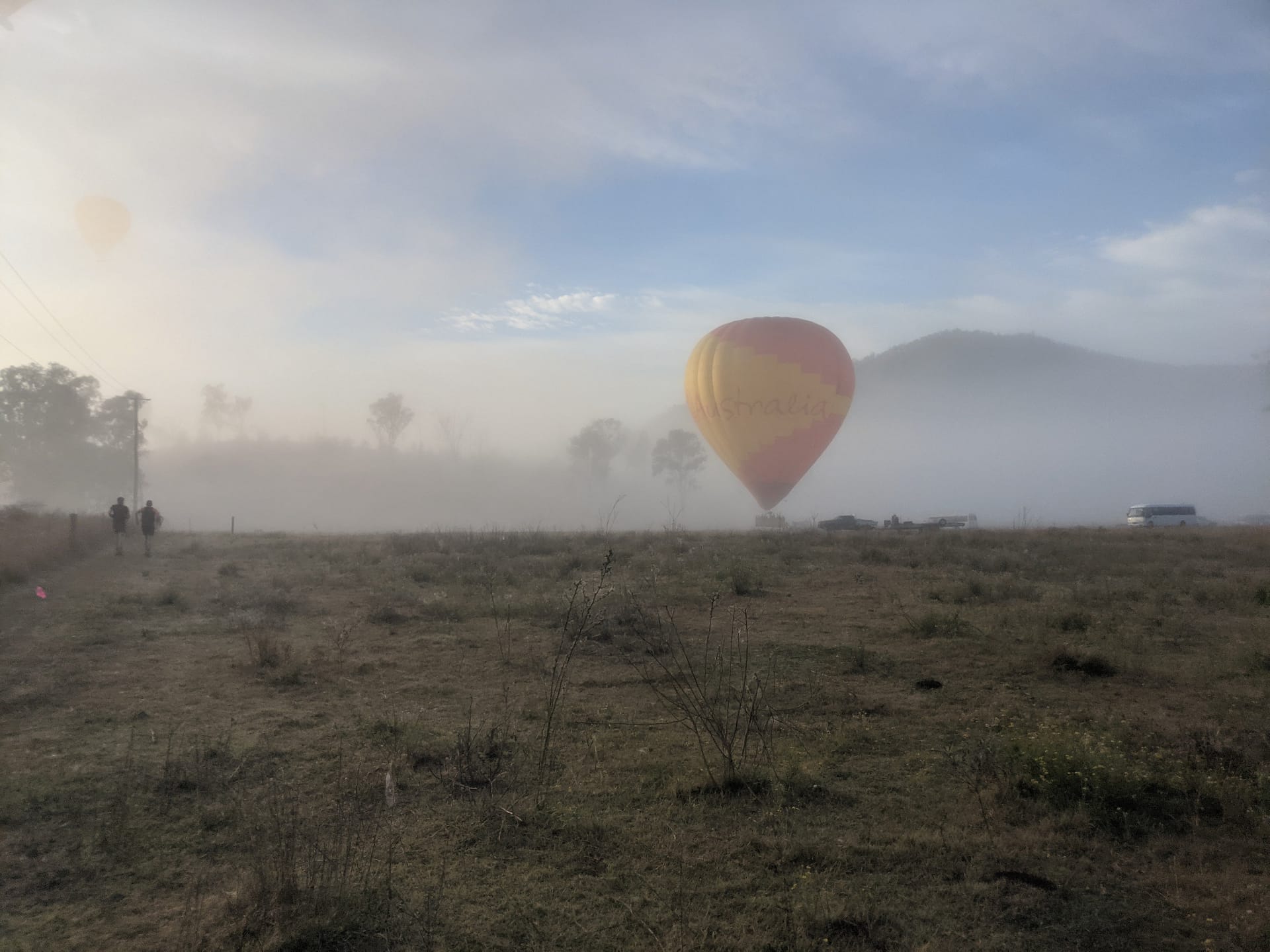
In a misty regional Queensland valley dotted with hot air balloons, Tamyka Bell had one of those moments that defines why she keeps returning to the Scenic Rim Ultra year after year.
“It was a beautiful, cold, misty morning,” recalls Bell, a Tarragindi-based doctor who has conquered some of the world’s toughest ultramarathons. “We ran through the paddock near the start and all these hot air balloons were taking off, drifting through the valley. There were photos of all of us running across the paddock with the mist everywhere, sunrise colours and the hot air balloons. Pretty spectacular.”
It’s moments like these that have made the Scenic Rim Ultra, now in its seventh year, one of Australia’s most respected and challenging ultramarathons. What started as a grassroots event has grown to attract international runners from Japan, New Caledonia, Canada, France, England, and New Zealand – yet it maintains the heart and soul of a community-driven race.
This year’s event on Saturday 9 August promises to deliver the same brutal beauty that has earned the race its reputation. Starting from Lilybrook Recreation Area at Wyaralong Dam, runners can choose from distances ranging from 10km to the full 105km ultra.
A world-class runner’s perspective
Bell brings a unique perspective to the Scenic Rim Ultra. Having completed Western States – arguably America’s most prestigious 100-mile trail race – three times, and tackled brutal European mountain races like Italy’s 330-kilometre Tor des Géants, she knows what separates good races from great ones.
“I’ve run races all over the world,” said Bell, “but the Scenic Rim Ultra holds something special.”
What makes it special isn’t just the terrain – though the 3,600 metres of elevation gain across multiple mountain peaks certainly provides a challenge. It’s the exclusive access to private property that creates trails runners can’t experience anywhere else.

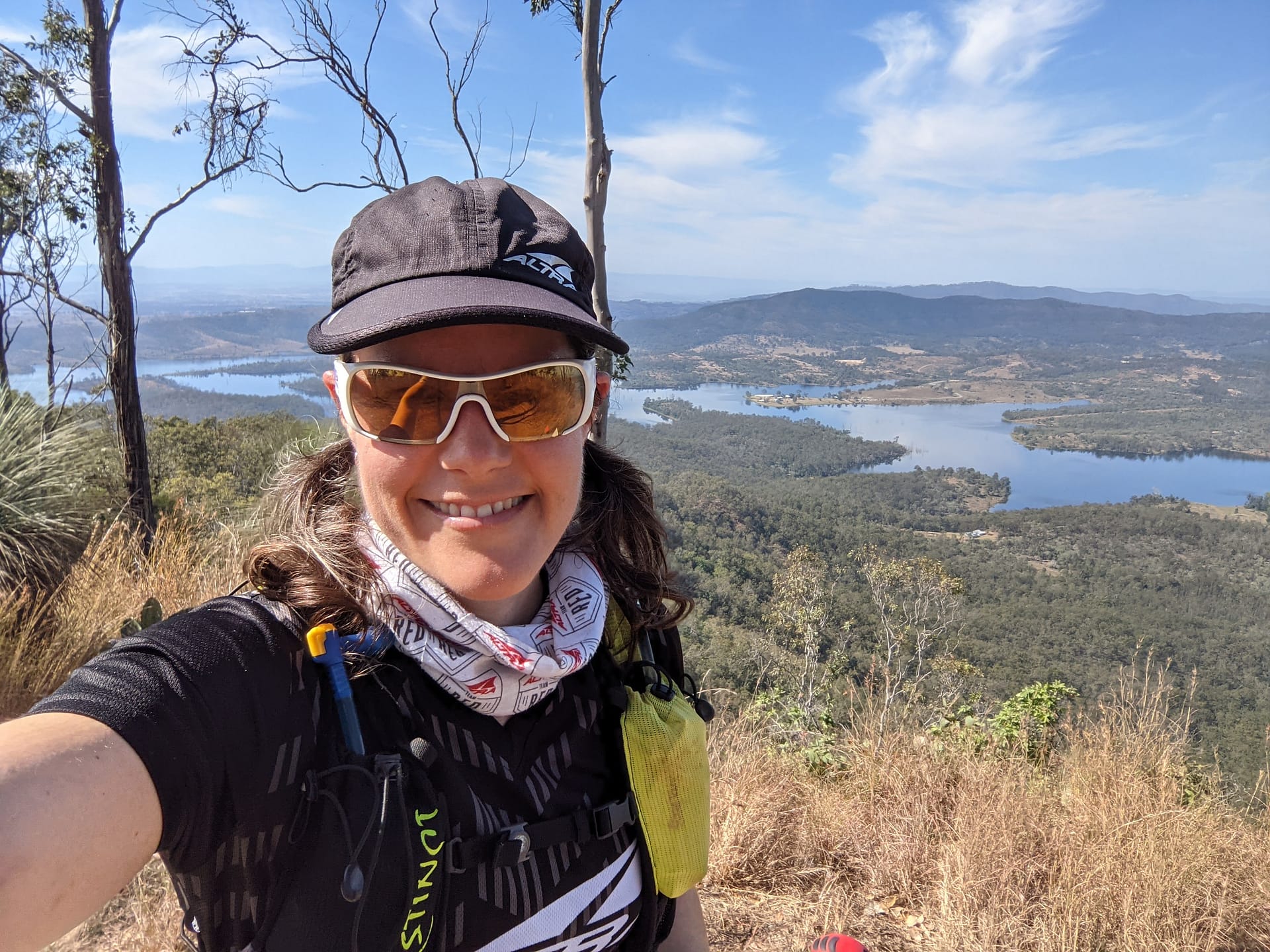
“There’s this razorback ridgeline over Mount Jubbara with views over Lake Wyaralong and across to Mount Joyce,” Bell explains. “It’s on private property that you can’t access any other time. It has a gnarly ascent and descent on both ends – it’s the sweet spot of trail running.”
From competitor to community member
Bell’s journey with the Scenic Rim Ultra began in an unexpected way – as a volunteer. “I think it’s really important to give back to the community,” she says. “I hadn’t entered the race because I didn’t know it existed until they were looking for volunteers.”
That first volunteer experience sold her on the event’s unique character. “They put on such a lovely event. The checkpoints were so well stocked with food and drink, and lovely people manning the sites to assist and serve them in a paddock in the middle of nowhere. I’m running across private property, come out in this little paddock, and there’s people dressed up as cows. It feels like such a party.”
Since then, Bell has completed the race multiple times and will return this year as a volunteer sweeper – coming full circle from her first involvement.
What sets it apart
Having raced internationally, Bell can compare the Scenic Rim Ultra to events worldwide. What strikes her most is the level of support compared to other technical Australian races.
“We have lots of really quite difficult technical races in Australia, but the recurring theme is that you tend to have to go a long distance with not many checkpoints,” she explains. “At the Scenic Rim Ultra, for the most part, you’ve got a checkpoint every 10 kilometres or so. You can take a jumper off and put it in a bag and pick it up later. My pack is so much lighter than for some of the other races.”

This accessibility extends to crew support, with most checkpoints accessible to support teams – unusual for such a remote-feeling course.
“You feel really remote, but you’re not that far from the main road,” Bell notes. “That’s really good from a safety perspective.”
Technical challenges and rewards
Don’t mistake the strong support network for an easy race. Bell describes the course as “very technical” and weather-dependent, with steep sections that can challenge even experienced trail runners.
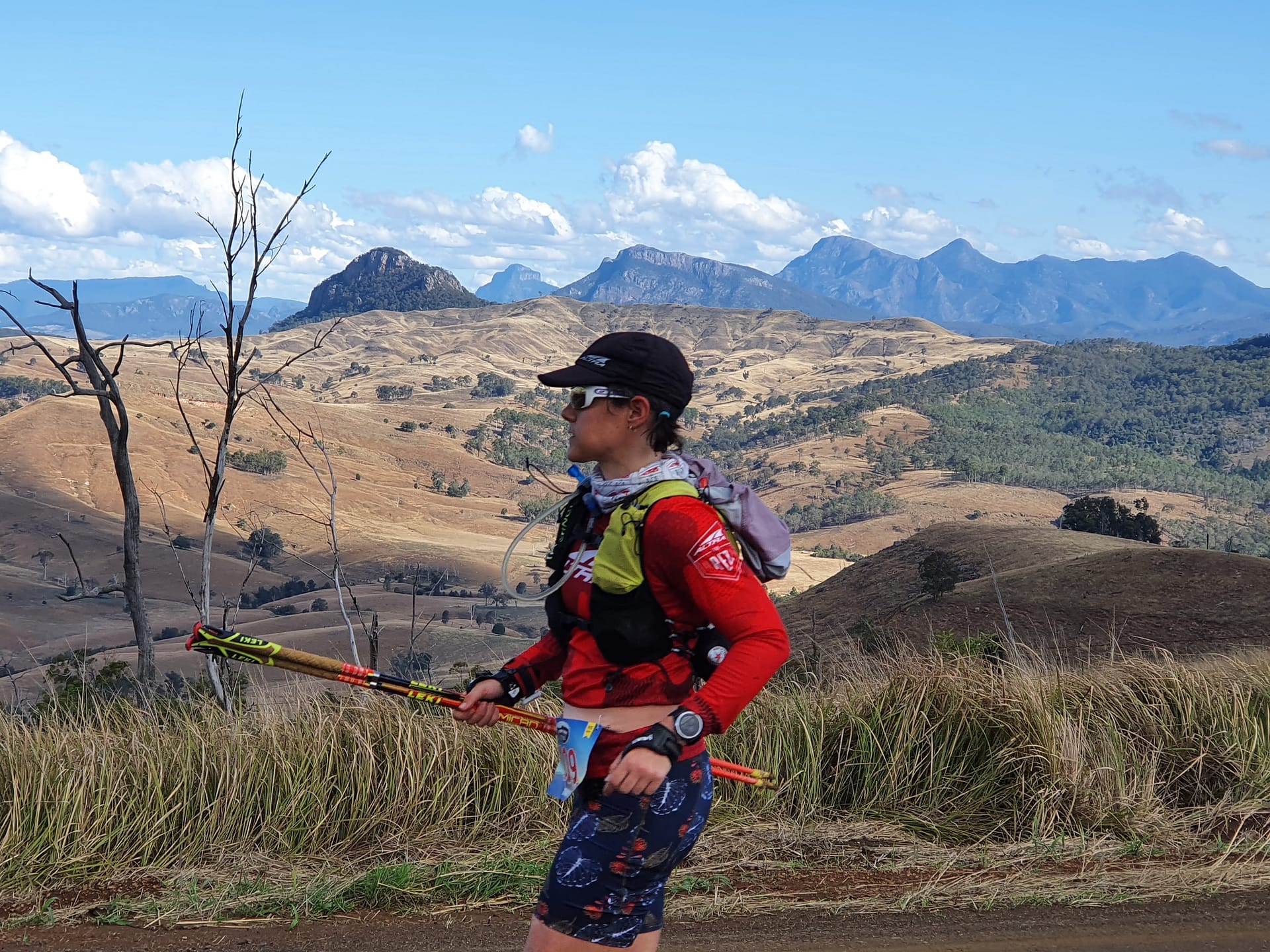
“I basically depend on my poles to keep me upright on this course,” she laughs. “When people tell me they really hate technical running, I say it’s probably not a course for you.”
The course features sustained climbs over multiple mountains rather than constant elevation gain, creating distinct challenges. “You really go up and over a mountain into the valley, and up and over a mountain into the valley,” Bell explains.
Building community
The race’s community spirit extends beyond the organising crew to fellow participants. Bell recalls helping another runner with a spare battery for her headlamp during a night section, exemplifying the supportive atmosphere that pervades the event.
“It really does have the old school trail run vibe,” she says. “I’ve seen lots of runners give each other a gel or a cramp fix if someone’s having a rough day.”
Race founders Andrew and Vicki Bonney have maintained this grassroots authenticity even as the event has grown. “We don’t do big commercial gloss – we do real,” says Race Director Andrew Bonney. “We’ve got kids handing out water at aid stations, locals cheering on cow paddocks, and whole families taking part.”
Something for everyone
The multiple distance options make the event accessible to runners at different levels, though Bell warns against underestimating any of them.
“105km on this course is enormous,” she explains. “Every 100 metres of vertical gain is like doing an extra kilometre of running on a flat course. So it’s 105km but it runs like 140km.”
However, generous cut-off times and the focus on scenic highlights for shorter distances mean newcomers can still have an exceptional experience.
“The thing that gets people to the finish line is loving what they’re doing,” Bell reflects. “If it’s a beautiful course that inspires you, you will get to the finish line because you want to see the next bit.”
Advice for newcomers
With shorter race options of 10km, 25km, 42km and 65km, the Scenic Rim Ultra offers an ideal entry point for newcomers or those making the leap from road running to the trails. Each distance is thoughtfully designed to showcase the region’s rugged beauty while easing runners into the unique demands of trail terrain.
For those considering their first Scenic Rim Ultra, Bell’s advice is simple: “Just do it. Don’t worry about what it’s going to look like. You will be well looked after on the day.”
She emphasises approaching trail running with the right mindset: “Come to it with a sense of humility and curiosity. It’s harder than road running, but it’s a lot more fun. You will go slower, you will probably have to walk hills. But if you come to it with a sense of adventure, you realise it’s just more fun.”
The full circle
As Bell prepares to return as a volunteer, she reflects on what makes this event special enough to draw her back year after year, whether as competitor or crew.
“One of the nice things about volunteering is that you’ve got time to chat to people and see how they’re going, and really soak up the vibe without feeling like I’m trying to push to the finish line,” she says.
It’s that combination of world-class challenge and grassroots community that continues to build the Scenic Rim Ultra’s reputation, one spectacular kilometre at a time.
The 2025 Scenic Rim Ultra takes place on Saturday 9 August, starting from Lilybrook Recreation Area at Wyaralong Dam. Registration and event details are available through On the Edge Events.

