


More fuel for regional Australians
The Hon. Chris Bowen, Minister for Climate Change and Energy, Member for McMahon, Media Release, 13 March 2026
The Albanese Government will help to address fuel supply chain disruption by releasing up to 20 per cent of the baseline Minimum Stockholding Obligation for petrol and diesel.
This will allow the release of up to 762 million litres of petrol and diesel from Australia’s domestic reserves, where these can be targeted towards localised market disruption. This will take time to move through Australia’s long and complex supply chain from where fuel is held to the regional areas where it’s needed.
We continue to see expected ships arrive in our ports. However, a huge spike in demand has led to local shortages in many parts of regional Australia, and imports will come under further pressure should the conflict in the Middle East continue.
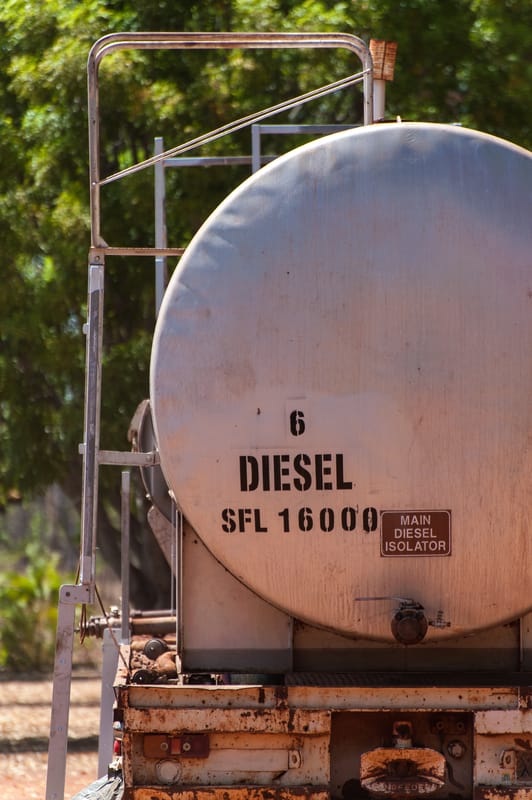
There is no need to stockpile or hoard fuel – take what you usually need so that no one has to go without.
The Government will allow fuel companies to hold less in storage and get more into pumps in our regional areas struggling with fuel shortages. These are the stocks of fuel held in Australia, which must be maintained each week by bulk importers and refineries.
As Australians’ fuel consumption has not changed, this will help relieve pressure on distribution chains disrupted by elevated demand.
To avoid further market disruption, companies will only be allowed to relax their storage obligations if:
- They are taking steps to prioritise supply to regional customers, with a focus for supply to regional, agricultural and maritime customers experiencing supply shortages;
- They are taking steps to allocate reasonable additional supply to bulk customers such as independent regional distributors;
- They are providing volumes needed to help meet usual demand, not to be expected to provide uncontracted distributors or customers seeking to profiteer from global price spikes, panic purchasing or stockpiling with above normal quantities of fuel.
The Government will work with MSO companies over coming days and seek commitments from those who can help address localised pressures.
The Government has notified states and territories of these changes and will continue to work co-operatively with the states and territories through the National Oil Supplies Emergency Committee.
Relaxing the MSO will also serve as a contribution to the International Energy Agency’s global collective action. This temporary reduction in the MSO could be equivalent to up to 5 million barrels.
It is clear, there will be supply impacts if this war continues – and the world is acting to mitigate those impacts. We will always act in Australia’s best interests.
Securing more fuel for Australia’s regions: Bowen
The Hon. Chris Bowen, Minister for Climate Change and Energy, Member for McMahon, Media Release, 12 March 2026
The Government’s focus is ensuring our fuel gets to where it needs to go.
In order to assist with getting more supply, and secure downwards pressure on prices, I am temporarily amending Australia’s fuel quality standards to allow higher sulfur levels for the next 60 days.
This will allow around 100 million litres a month of new petrol supply that would otherwise have been exported to be blended instead into Australian domestic supply.
In return, Ampol Australia has committed to ensure this redirected supply will be prioritised for regions of shortage and for the wholesale spot market that supports independent distributors and harvesters.
While Australian fuel consumption has not changed, this will help relieve pressure on distribution chains disrupted by elevated demand.
The Government has been unequivocal – this additional supply must help the people who need it, including farmers, fishers and regional communities.
I can also confirm that the National Coordination Mechanism will continue to convene to respond to emerging fuel supply chain issues.
By bringing together all levels of Government, the National Coordination Mechanism will work together on supply chain issues, bottlenecks and help facilitate action across Australia.
This builds on a suite of measures we have already taken to secure supply and put downwards pressure on fuel prices. We will continue to take further actions as necessary.
Overnight, the International Energy Agency, of which Australia has been a member country since 1979, agreed to a voluntary collective action to address disruptions in oil markets stemming from the war in the Middle East.
This means member countries are encouraged to release fuel in a coordinated way – which helps to calm the global oil market.
Australia, like all IEA member countries, has endorsed a global collective action. Global collective action to relieve pressure and will support our work at home.
Australia is finalising its contribution, which would then be released directly to the Australian market.
This is a voluntary action – what contribution Australia makes will be decided in our national interest.
We continue to see expected ships arrive in our ports, and we continue to act to relieve the distribution pressure we are seeing in our regions.
It is clear, there will be supply impacts if this war continues – this is the world acting to mitigate those impacts. We will always act in Australia’s best interests.

