


Charles Sturt University (CSU), Media Release, 5 August 2025
A Charles Sturt University researcher has helped develop a groundbreaking new method to test water for a dangerous parasite.
The research, titled ‘Avoiding commercial kit-based DNA isolation and purification steps: a rapid method for Cryptosporidium oocyst detection’, has discovered a faster, cheaper and accurate means of testing for cryptosporidium.
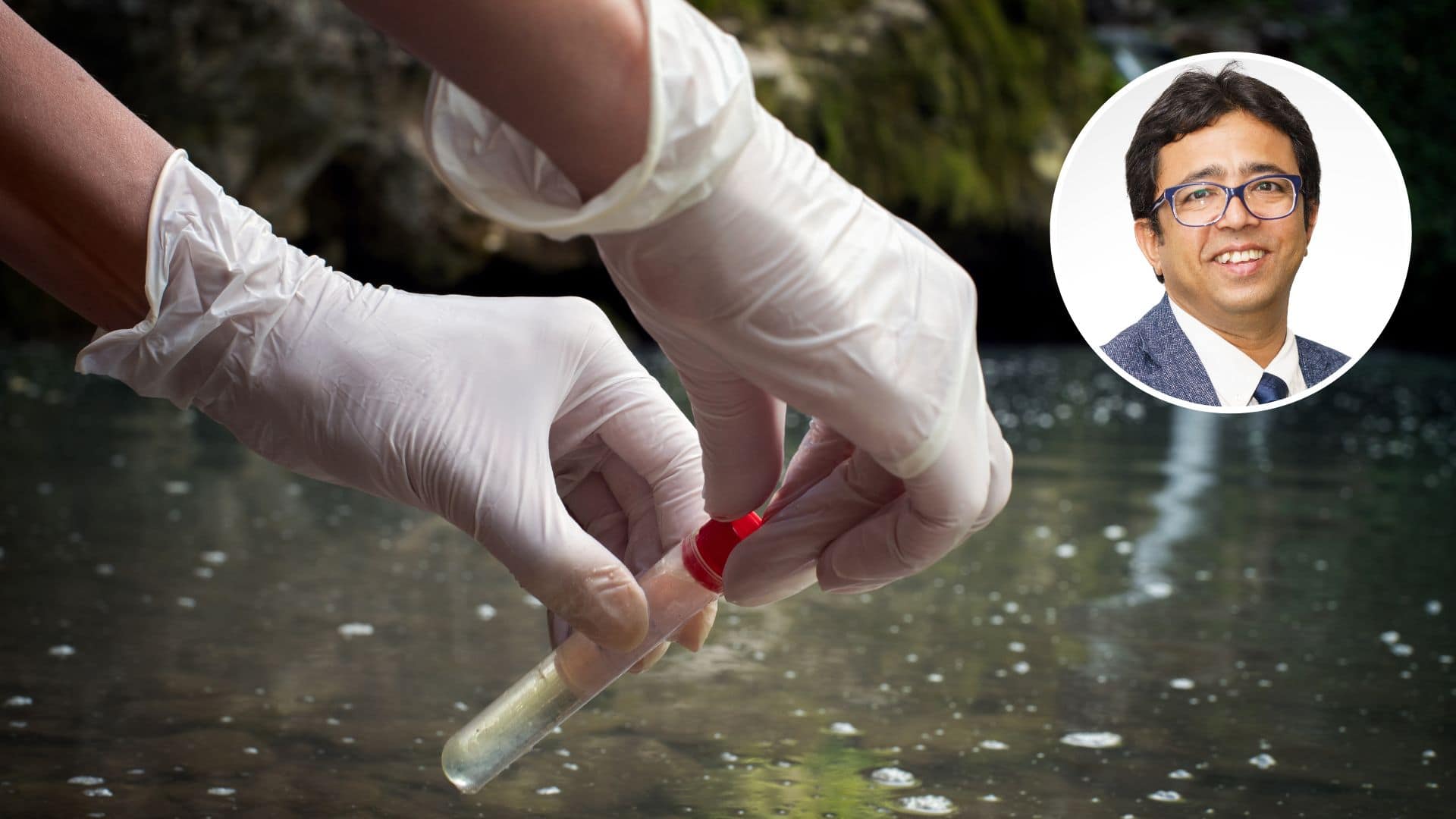
Distinguished Professor in Nanotechnology in the Charles Sturt Rural Health Research Institute Muhammad Shiddiky said Cryptosporidium is one of the most common and dangerous waterborne parasites in the world.
“Transmitted via the faecal-oral route through contaminated water or food, it is a leading cause of diarrhoea-related mortality and long-term health impacts such as malnutrition and impaired cognitive development,” Professor Shiddiky said.
“According to the Global Burden of Disease 2019 study, cryptosporidiosis resulted in over 133,000 deaths and 8.2 million disability-adjusted life years globally in children under five.
“Despite this impact, current detection methods are slow, expensive and often unavailable in areas that need them most, so this research will help to make high-quality water testing more accessible, especially in low-resource or remote areas.”
The new method avoids expensive DNA kits and complicated lab steps, making it a powerful alternative to the current gold-standard method which requires expert handling, specialised lab equipment and time-consuming sample processing.
It uses magnetic particles to isolate the parasite from water, then a simple heat-based process to break open the parasite.
A technique called loop-mediated isothermal amplification (LAMP) is also used to detect the parasite’s DNA and can detect as few as five to 10 parasite particles in just 10 millilitres of water.
“It can deliver results in less than 40 minutes and even works in dirty water with mud or other contaminants,” Professor Shiddiky said.
The system is also modular, meaning it can be adjusted to detect other harmful microbes like giardia, salmonella or E. coli by swapping out antibodies and DNA primers.
“This flexibility makes it ideal for broader environmental monitoring and future public health emergencies simply by changing a couple of components without redesigning the whole process,” Professor Shiddiky said.
“This innovation brings us much closer to portable, field-ready water testing that can be used in rural communities, emergency situations or during outbreaks.”
The project was carried out over several years and has now reached a point where it’s ready for real-world applications.
Professor Shiddiky initiated the research during his time at Griffith University, where the experimental work was undertaken by PhD candidate Rabbee Mahmudunnabi.
After Professor Shiddiky’s departure from Griffith University, Associate Professor Helen Stratton continued supervising the project through to completion.

