

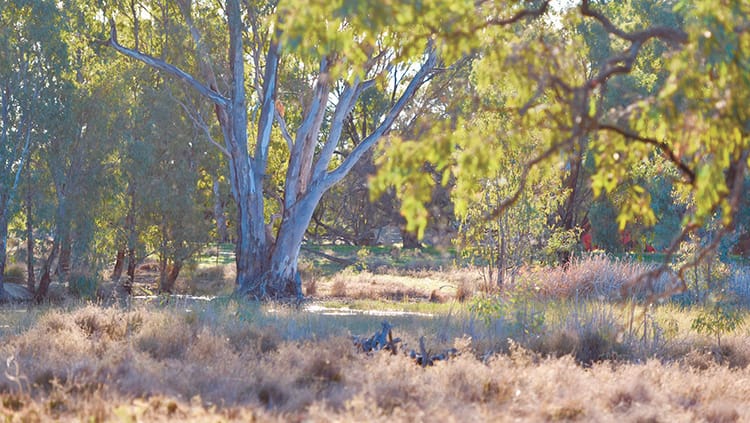
In a bid to garner a better understanding of the important role irrigation plays in supporting biodiversity on farm, food producers from Southern Riverina Irrigators (SRI) and the Cohuna and District Landcare group met with MDBA regional engagement officer Sam Campi.
The group were joined by Jane White and Maggie McDonald from the Murray Darling Wetland Working Group (MDWWG) and toured five wetlands.
The wetlands are all located across a mixture of working farms including dairy, livestock and cropping but only exist because these farmers are committed to environmental outcomes, alongside staple food production.
They are watered using an environmental allocation delivered by the MDWWG, again only made possible because of farmers and a functioning irrigation system.
The wetlands are home to a wide variety of different plant species, birds, frogs, insects and reptiles.
Cohuna dairy farmer Jodie Hay has established two separate wetlands on her property over the last couple of years – one of the sites has the highest bird diversity of all the wetlands in the MDWWG monitor.
“It was a great day exploring some of our regions hidden treasurers, sharing stories and plans with other passionate land owners.
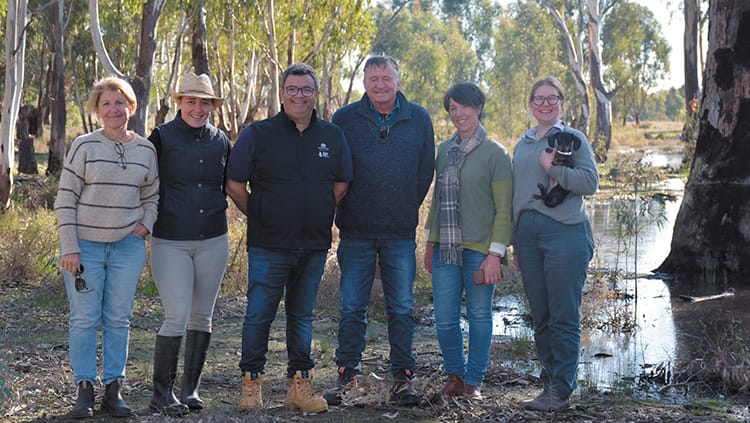
“It was awesome to have the opportunity to showcase these on farm wetlands with Sam,” Jodie said.
SRI Chair Peter McDonald and CEO Sophie Baldwin helped organise the tour which included visits to Gunbower, Cohuna, Barham and Thule.
“SRI has been working hard to get the MDBA to acknowledge the valuable role farmers play in not just producing food to feed the nation, but also supporting biodiversity and environmental outcomes on farm.
“As more and more water is bought back under the basin plan via buybacks, irrigation across our region is threatened which ultimately threatens the environment and the viability of our communities,” Peter said.
SRI have long been advocating for changes to the way the basin is managed especially when it comes to the role irrigation plays in the fabric of our community socially and economically.
“It is important we work alongside organisations like the MDBA to continue to educate them about the importance of our region.
“Our farmers are wonderful custodians of the land and a tour like this really showcases what they can achieve when working alongside a group like the MDWWG,” Sophie said.
For 30 years the MDWWG have added value to wetlands throughout the Murray Darling Basin, improving management and working with community, science, business and government.
They manage water for the Commonwealth Environmental Water Holder along with water for the Environmental Water Trust, making them the only non-government environmental water professionals working across the basin.
This article appeared in The Koondrook and Barham Bridge Newspaper, 10 July 2025.

