

Zero Net Emissions Agriculture Cooperative Research Centre (ZNE-Ag CRC), Media Release, 31 March 2025
Australian farmers are set to benefit from groundbreaking technologies that will enable cost effective methane measurement in livestock.
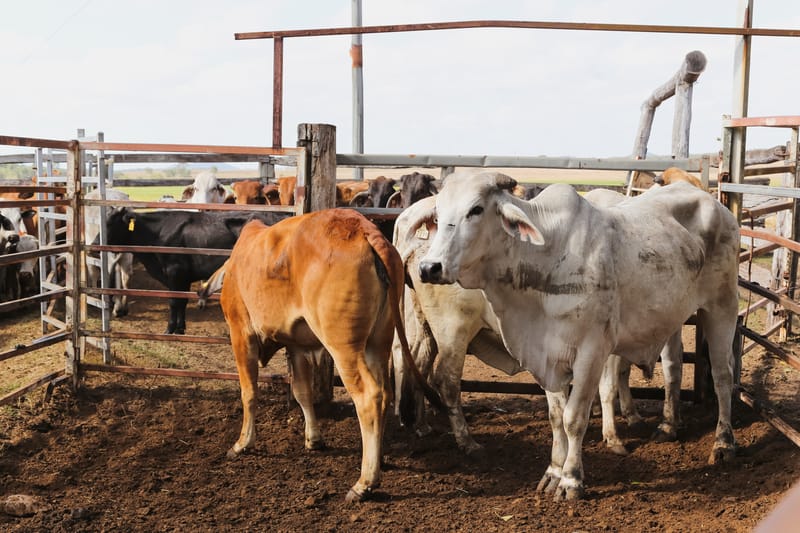
Zero Net Emissions Agriculture Cooperative Research Centre (ZNE-Ag CRC) today launched the first project in its research portfolio. Just nine months since its establishment, the CRC announced an investment of almost $1.6 million over three and a half years to develop and validate low-cost methane measurement tools.
ZNE-Ag CRC Chief Executive Officer, Richard Heath, said the CRC is prioritising industry identified issues by addressing agriculture’s biggest emissions challenge, methane from livestock.
“Emissions from livestock, primarily cattle and sheep, account for about 77 per cent of total greenhouse gas emissions from the agriculture sector. Nitrous Oxide from crop residue burning and fertiliser use accounts for about 19 per cent, and the remaining emissions are Carbon Dioxide from lime and urea use.
“Over the next 10 years, we will focus on the research and development of innovative emissions reduction technologies, specific to Australia farming practices, with a view to giving farmers tested, cost-effective tools to lower emissions while maintaining sustainable, profitable businesses.” Mr Heath said.
Research Director, Professor Ben Hayes, said current tools for measuring methane are typically expensive and challenging to deploy at scale.
“Development and validation of new methane measurement techniques and proxies for methane emissions for livestock, which are cheaper to deploy and are more widely scalable, will substantially expand and accelerate research, and importantly, will be more suited for commercial applications.” Professor Hayes said.
The CRC’s first research project involves two parts: developing and evaluating milk mid-infrared (MIR) spectroscopy to predict methane emissions from dairy cattle and developing and validating an affordable methane measuring device using Wavelength Modulation Spectroscopy (WMS), for accurate in-paddock and in-milk shed methane measurement.
“The use of these technologies in farming systems is at an early stage of development and it’s vital that we test and validate across multiple diverse environments and different feeding systems.” Professor Hayes said.
The project is a collaborative effort between CRC partners, Agriculture Victoria Research, Macquarie University, Ternes Scientific, the University of New England and the University of Western Australia.
Dairy Australia Managing Director, David Nation said the project is a fantastic step towards having reliable, low-cost measurement of methane in-situ.
“We all know that to manage it, you’ve got to measure it! Fantastic to see ZNE-Ag CRC working on this in Australia. Industry research needs a low-cost methane measurement to speed up developing Australian methane breeding values.” Mr Nation said.
ZNE-Ag CRC is funded by the Australian Government Department of Industry, Science, Energy and Resources through the Cooperative Research Centers Program and the contribution of Partners.