


The Hon. Jason Clare, Minister for Education, The Hon. Anthony Chisholm, Assistant Minister for Education and Regional Development, Joint Media Release, 3 February 2025
The Albanese Labor Government today announced the locations of 10 new Regional University Study Hubs across the country, bringing university closer to students living in the regions.
This comes as new data shows a 32 per cent increase in the past year of students using the existing 43 Study Hubs across the country.
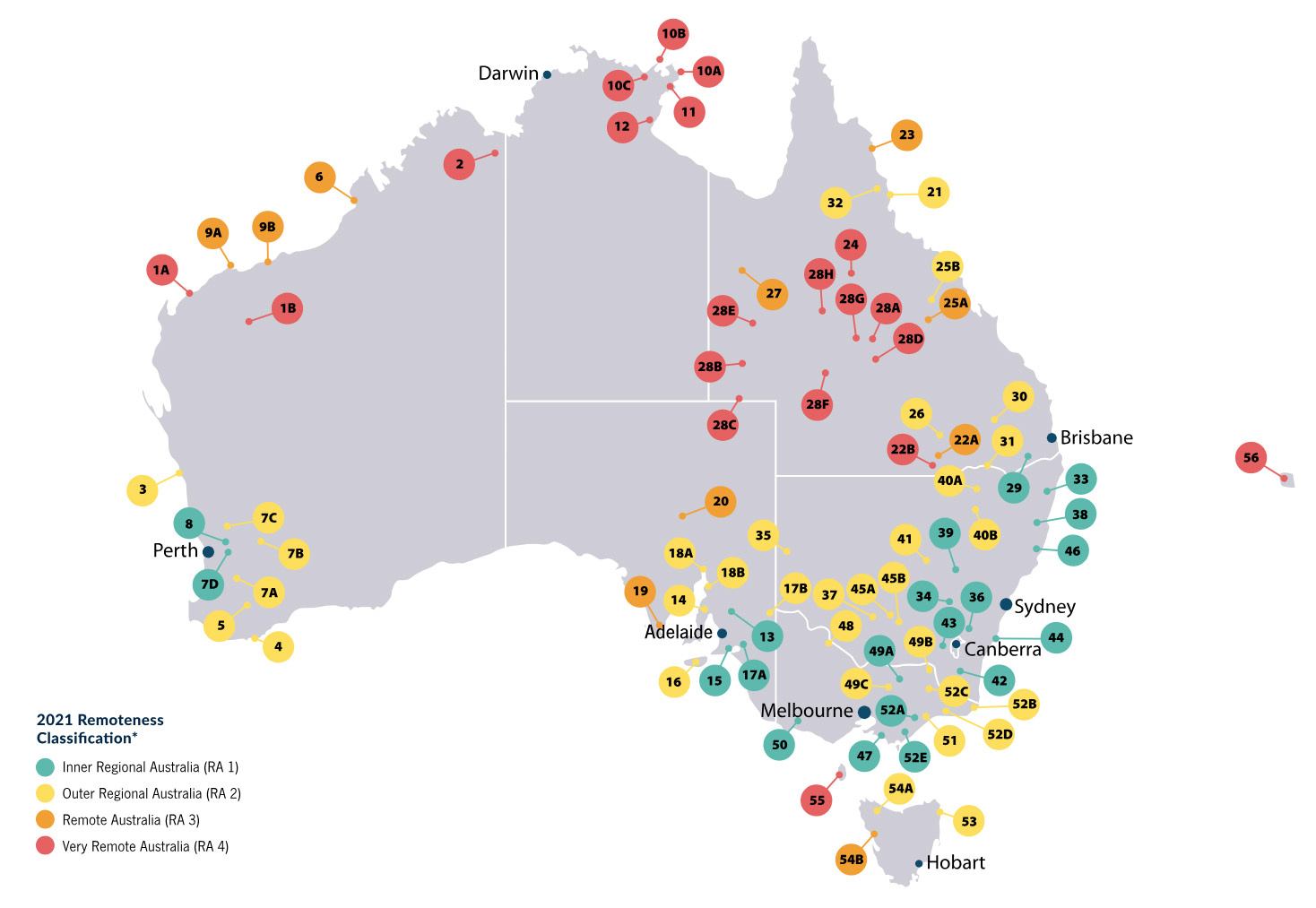
The new 10 new Regional University Study Hubs are:
- Clermont and Moranbah, Qld
- Hughenden, Qld
- Hay, NSW
- Tumut, NSW
- Northam, WA
- Kununurra, WA
- Kangaroo Island, SA
- Hamilton, Vic
- St Helens, Tas
- Burnt Pine, Norfolk Island.
The 10 new Hubs are expected to be operational from mid-2025.
Once these open, there will be 56 Regional University Study Hubs located across the country.
43 of these Hubs are open and another 3 expected to open by Semester 1, 2025. There are also 10 Suburban University Study Hubs that are expected to be operational by mid-2025.
Study Hubs provide student support and campus-style facilities for students who are doing a university degree without having to leave their community.
The evidence shows that where they are, university participation increases.
The current 43 Hubs support over 5,200 students, with the most popular courses among students at Regional University Study Hubs are in areas of skills need such as health (34 per cent) and education (17 per cent).
These 10 new Hubs are part of the Albanese Government’s $66.9 million investment to double the number of University Study Hubs across Australia.
This announcement builds on the first round of new Regional University Study Hubs announced last year, which are located in:
- East Arnhem Land, Northern Territory
- Victor Harbor, South Australia
- Warwick, Queensland
- Chinchilla, Queensland
- Innisfail, Queensland
- King Island, Tasmania
- Katanning, Western Australia
- The Pilbara (Tom Price and Onslow), Western Australia
- Central Western Queensland (Longreach, Barcaldine, Blackall, Winton, Boulia, Bedourie, Birdsville and Jundah)
- East Gippsland (Mallacoota, Orbost, Omeo, Heyfield and Yarram), Victoria
The Government also provided additional funding to two existing Regional University Study Hubs located in:
- Cowra, New South Wales
- Mudgee, New South Wales
The new University Study Hubs are part of the Government’s response to the Universities Accord.
For more information: Regional University Study Hubs – Department of Education, Australian Government.
Quotes attributable to Minister for Education Jason Clare:
“Today, almost one in two young people in their 20s and their 30s have a university degree. But not everywhere. Not in the outer suburbs and not in regional Australia.
“That’s why we are doubling the number of University Study Hubs, to bring university closer to them.
“We know they work. The evidence is they increase the number of people going to uni degree.
“Bringing university closer to where you live will encourage more people who otherwise might decide not to go to university at all to give it a crack.”
Quotes attributable to Assistant Minister for Education and Regional Development Anthony Chisholm:
“Each time we open a new hub in a regional, rural or remote community, we’re removing an educational barrier that can stop people from getting a tertiary qualification.
“These 10 new locations will mean more young people in the regions have the opportunity to stay in their communities and near their support networks while studying a tertiary qualification.”
ARR.News asked some further questions about the Regional University Study Hubs to which the department responded
Questions:
- How is the internet connection and power at each of these hubs guaranteed? (a student needs totally reliable internet and power to be able to study effectively)
- Who is running the hubs?
- Are there more specific figures on numbers of students that use each of the hubs?
- Do you have figures on students that have used the hubs who have now graduated and are working in their areas?
- Do international students use the hubs?
- Do you have an indication of the numbers of students expected at the new hubs?
- Is there any supervision at the hubs? Anything to ensure attending students are kept safe? (Noting they may be there late at night or all night on occasion)
- How are potential students in the regions made aware of hubs and how they might help their studies?
- Are there online groups where potential hub students might find out more from students currently using the hubs?
The department responded:
Regional University Study Hubs provide support and study facilities for students who study online, including video conferencing, high-speed internet, and academic skills, administrative and wellbeing support.
Internet access is a key feature of the program, and one which is particularly valued by existing Hub students.
The Conditions of Grant require Hubs to “Install and maintain computers, WI-FI and network equipment to ensure suitable, ongoing and free internet access”.
In some locations, including some of the newly funded Hubs, households do not have reliable internet access or any internet access at all, making the internet access provided by Hubs crucial to enabling access to tertiary education for these communities.
The Hubs are operated by community-based organisations and the Commonwealth provides funding to these organisations through Conditions of Grant agreements. All organisations must be a body corporate in order to receive the grant.
In many cases the organisation that operates the hub has been formed for that sole purpose, usually by the local community (often led by the local council), with a local governing board made up of members with relevant education and business expertise. In some cases, the organisation is pre-existing with a complimentary mission, such as Regional Development Australia, with local governance (governing board or steering committee). This is in keeping with the place based, community driven nature of the program.
Organisations that have applied or will operate the recently announced Hubs are listed in the table below:
| Location | State | Organisation |
| Moranbah, Clermont | QLD | Isaac Regional Council |
| Kingscote | SA | Rural City of Murray Bridge |
| Hughenden | QLD | Flinders Shire Council |
| Hay | NSW | Hay Shire Council (on behalf of Hay CUC Committee) |
| Northam | WA | Regional Development Australia Wheatbelt |
| St Helens | TAS | Break O’Day Council |
| Kununurra | WA | Pilbara Kimberley University Centres |
| Hamilton | VIC | Country University Centre Southern Grampians |
| Tumut | NSW | Country University Centre Snowy Valleys |
| Burnt Pine | Other | Regional Development Australia Mid North Coast |
Regional University Study Hubs are not education providers themselves, but through their support and facilities, local students can study online at any Australian university or tertiary education institution.
In supporting local students, many Hubs support placement students (undertaking internships) and may support international students, depending on the student population of their area.
The program works closely with local communities, which lead the design, development and operation of each Hub to ensure it meets the needs of their local region.
As part of the application process, prospective Study Hub providers are required to show how they meet a demonstrated gap in support for higher education in their area.
Hubs are responsible for their facilities and operations, including ensuring the provision of reliable and high-speed internet access, and for determining staffed hours.
Hubs typically have a Hub Manager and Student Support Officer and, where after-hours access is offered, Hubs must have specific policies and procedures to allow for this and to support student safety.
Hubs undertake marketing activities tailored to their communities, which may include social media and participation at local events. Hubs are also able to generate general awareness through their local boards and advisory committees, and partnerships with local schools and industry.
Once these 10 new Hubs open, there will be 56 Regional University Study Hubs located across the country. 43 Regional University Study Hubs are currently open and another 3 are expected to open in Semester 1, 2025. There are also 10 Suburban University Study Hubs that are expected to be operational by mid-2025.
The current Hubs supported over 5,200 students in 2024, which is a 32 per cent increase in the past year. The most popular courses among students at Regional University Study Hubs are in areas of skills need such as health (34 per cent) and education (17 per cent).
The 10 new Hubs expect to be supporting over 850 students by 2027, with registrations often exceeding communities’ expectations. The number of students at each Hub will vary based on the local community size and operating model.
Student testimonials are available at https://www.education.gov.au/regional-university-study-hubs/student-testimonials.

