

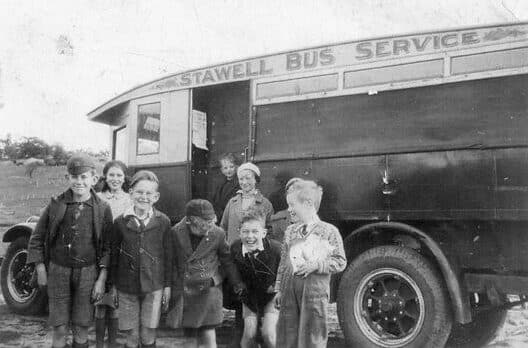
For over a century, the government of Western Australia has been tasked with ensuring rural communities have access to essential services—a commitment that has held the Wheatbelt together through generations. From one-room schoolhouses spaced every 10 to 15 miles to the first country school bus run in Narrogin in 1924, which made education accessible even in the most remote areas, these communities were promised a fair go.
But now, that promise depends on how hard the local community is prepared to fight to keep their school bus running.
Take the recent battle over the Yuna bus run. A single bus route in a small community might seem trivial to the Cook Labor government, but for the families who depend on it, it’s far more than just transport. It’s a lifeline that keeps communities viable, allowing families to live and work on the land while ensuring their kids can attend school without spending hours commuting each day.
The implied threat behind removing this service is clear: move closer to the next town, fight tooth and nail, or fend for yourself. The Yuna community fought and won, for now. But how long will that victory last? With the state election approaching, the government may have been spooked into action this time. Next time, the outcome could be different.
The government’s justification? Cost-cutting and “efficiency.” According to the Public Transport Authority (PTA), low ridership justifies the cancellation of any rural school bus, no matter how difficult it makes life for country kids. But where does this logic stop? Will they apply the same yardstick to the 141 remote Aboriginal communities, many of which have no economic base? Or are there different rules for rural WA and remote WA?
This decision underscores the growing divide in our state: city residents have it all, the Wheatbelt is told to make do with less, and the most remote communities remain untouchable. This isn’t the first time rural areas have faced such disregard. Remember the attempted closure of Moora Residential College during McGowan’s term and Moore Hospital under Gallop’s era? Both times, community backlash forced the release of $8.7 million and $6 million, respectively, despite Treasury’s claims of unsustainability.
Those battles were won, but the lesson wasn’t learned. State Labor still seems willing to risk the ire of regional communities – at least until election time looms.
The PTA’s inability to see that rural services can’t be measured by the same standards as urban ones is astonishing. Rural kids deserve the same access to education as their city peers. Yet, this government is comfortable subjecting six-year-olds in the country to bus rides exceeding 90 minutes each way, blatantly flouting its own Student Transport Assistance guidelines. Would such a situation fly in Perth’s suburbs? Not a chance.
Meanwhile, billions flow into the city. The government finds it perfectly acceptable to funnel $11.5 billion, plus an extra billion annually for running costs, into Metronet projects to secure votes on Perth’s urban fringe.
The real concern is the precedent this sets for the future. Cutting the Yuna bus run isn’t just limiting access to education—it’s an open invitation for foreign investors and mining companies eyeing farmland for carbon farming projects. With state support dwindling, family farms could be replaced by transient workforces with no stake in the local community. These workers won’t be raising kids here or sending them to local schools, fuelling a cycle of depopulation that will hollow out the Wheatbelt.
These families aren’t asking for grand infrastructure projects like Bunbury and Albany’s ring roads. But they’ve had to fight tooth and nail for a basic right—a service that costs tens of thousands, not millions or billions. They just want the same access to education and essential services that city folk get without question.
Cut one bus route, and others will follow, leaving farming families with no choice but to homeschool or send young kids away to boarding school when they should be growing up at home. It’s a green light for corporate farming to swoop in and replant farmland with bush to meet the Albanese’s carbon targets. The Greens and Canberra who could not care less around regional WA will be all smiles.
And where was the Minister for Agriculture when this fight started? Silence from the person who should have stepped up in cabinet to protect rural families. Letting this issue fester until the Premier likely had to intervene is not a good look, in fact if the Premier is the one who stepped in, kudos to him, he’s got a growing track record as being the go to person, when his Ministers throw the bush under the bus.