

Trigger warning: this article features content about suicide
Rachel Hagan, Yorke Peninsula Country Times
Prostate cancer is the most commonly diagnosed cancer in Australia, with more than 10 men dying from the disease everyday — and those living in the Outback, Yorke and Mid-North face the highest rates of death in the state.
Treatment for prostate cancer is enough of a load for a person to manage, but those diagnosed must also deal with the mental effects which can be isolating and overwhelming.
Despite the prevalence of prostate cancer, more than 72 per cent of men affected will not seek help for the distress it causes, and 70 per cent of men diagnosed face an increased risk of suicide compared to the general population.
Cancer Council researchers found survivors of prostate cancer who were single, divorced, widowed or separated, were over four times more likely to take their own life than a man who had a partner.
With improved detection and diagnosis, the number of men surviving the disease is thankfully increasing, however, this means the psychosocial impact is expected to affect more people as the population grows and ages.
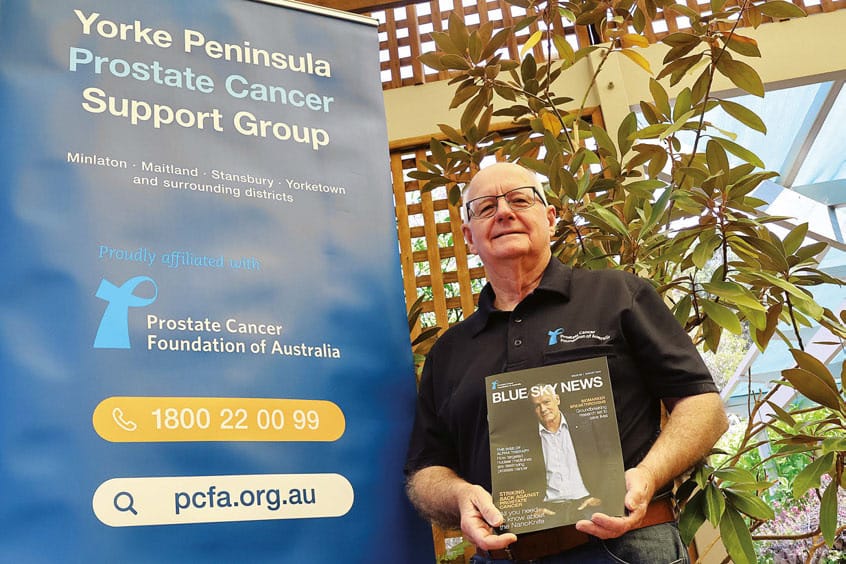
Yorke Peninsula Prostate Cancer Support Group leader Robert Kidd knows first-hand how secretive some men can be about diagnosis, after his own father kept his troubles with the disease to himself.
“My father never told me directly, but my two older sisters sort of indicated to me that perhaps when my dad was in his 80s he was having some prostate issues,” Mr Kidd said.
“He vaguely mentioned something to me.”
Risk of prostate cancer doubles if a close family member has been diagnosed, and Mr Kidd wanted to be completely open and honest with his own son.
“He’s testing every year from age 40 because he’s aware that perhaps he needs to be checked out,” he said.
Just before Mr Kidd was diagnosed with prostate cancer in 2003, he asked for a prostate-specific antigen test and was faced with reluctance from his doctor because he did not have symp-toms and he was only 58 years old.
Others in the same position may not have had the ability to advocate for themselves, but Mr Kidd persisted and got his PSA.
“The phone rang three days later, and he (the doctor) said ‘Robert can you come and see me’,” he said.
“I think the feeling amongst GPs and the general area of health now is that they’re encouraging men to have this PSA test, so attitudes are changing a bit.”
Mr Kidd is now free from the cancer, but he still coordinates the Yorke Peninsula Prostate Cancer Support Group, which has about 20 members from across the YP who attend each session.
He said after being given the all-clear, survivors still needed to attend regular check-ups which could cause anxiety and distress.
“I have just enjoyed the opportunity to mix and talk with people who have had the same condition that I had, and we’ve all got different stories,” he said.
“There are different stages and levels of the cancer, so it is just good to speak to other members of the group.”
“I think the main impact is they (members) get information and just general support — the blokes just need a little bit of support and that’s the great value of these groups.”
Mr Kidd said anyone was welcome to attend the group’s next meeting, even if they did not have a diagnosis and just wanted to find out more.
The next meeting of the YP Prostate Cancer Support Group will be held at 7.30pm on Monday, October 14, in the Minlaton Community Health meeting room.
The Copper Coast Prostate Cancer Support Group meets at 7.30pm on the third Monday of every second month, at Kadina Bowling Club.
If you need someone to talk to, support is available at Beyond Blue on 1300 22 4636 and Lifeline on 13 11 14.
This article appeared in Yorke Peninsula Country Times, 10 September 2024.

