

Senator The Hon. Murray Watt, Minister for the Environment and Water; The Hon. Julie Collins, Minister for Agriculture, Fisheries and Forestry; The Hon. Gavin Pearce, Tasmanian Minister for Primary Industries and Water; The Hon. Jess Teesdale, Federal Member for Bass, Joint Media Release, 28 May 2026
A remote island off the coast of Tasmania has been declared free of feral cats after two years with no sign of the invasive species.
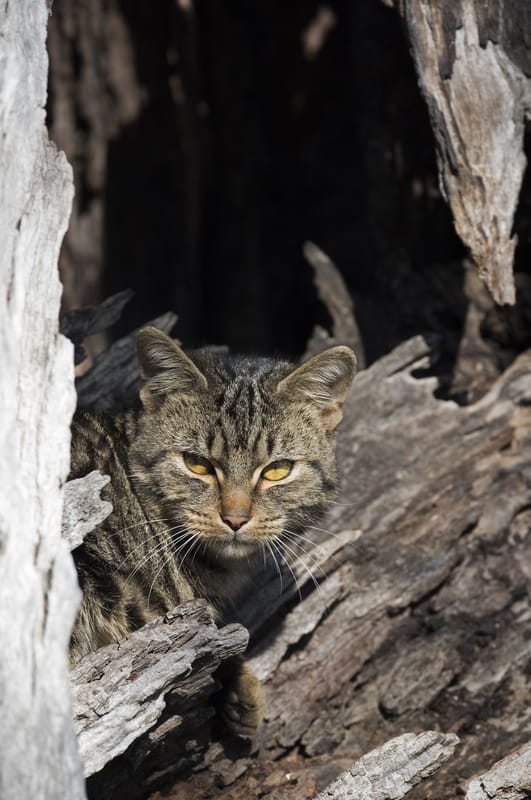
Little Dog Island, an 83-hectare outer island of the Furneaux Group in Bass Strait, has been secured as a safe haven for wildlife including the estimated 500,000 pairs of short-tailed shearwaters that nest on the island between September and April each year.
Feral cat control took place during the winters of 2022 and 2023 and monitoring since then has involved motion sensing cameras, scent detection dogs, spotlighting, thermal drone imagery at night and field staff searches to determine if eradication was achieved.
After many years of being impacted by feral cat predation, little penguins have been sighted returning to the island. This is another example of how our native wildlife can recover when feral cats are removed from our environment.
Feral cats in Australia kill over 1.5 billion native mammals, birds, reptiles and frogs, and 1.1 billion invertebrates each year. They have already contributed to the extinction of more than 20 Australian mammal species and continue to prey on more than 200 nationally threatened species, and many other native species.
The Australian Government is leading efforts nationally to strategically address the devastating impacts of feral cats on our wildlife, guided by a national threat abatement plan and the Threatened Species Action Plan.
This includes investments of more than $100 million in projects right around the country that are helping to reduce the impacts of feral cats and other key threats.
Quotes attributable to Minister for the Environment and Water, Murray Watt:
“The success of this project is a great example of the positive outcomes we’re seeing from the Albanese Government’s commitment to tackle threats, like feral cats, that threaten the survival of our unique plants and animals.
“We’re investing more than $100 million in over 70 projects across the nation that involve activities to better manage feral cats and we’ll continue to target them to ensure the long-term survival of our native species.”
Quotes attributable to Minister for Agriculture, Fisheries and Forestry, Julie Collins:
“This eradication is just one example of how the Albanese Labor Government is collaborating with state governments and other partners to combat pest animals.
“A coordinated approach like this to feral animal management maximises control efforts, increases information sharing and drives down negative impacts on our farmers and producers and the environment.”
Quotes attributable to Tasmanian Minister for Primary Industries and Water, Gavin Pearce:
“Offshore islands are a critical habitat for our wildlife, and removing invasive predators gives wildlife the chance to recover and thrive.
“We’ve seen the impacts of feral cats on our agricultural and natural environments, and I’m pleased to see their eradication from Little Dog Island.
“Our Government will continue to work with all levels of Government to take action on the issues Tasmanians care about.”
Quotes attributable to Jess Teesdale MP, Federal Member for Bass:
“This is a fantastic environmental outcome for Tasmania and for the unique wildlife that calls the Furneaux Group home.
“Seeing little penguins return to Little Dog Island shows just how powerful conservation efforts can be when governments and local communities work together.
“Protecting Tasmania’s incredible natural environment is something we care deeply about, and projects like this help ensure these important habitats can thrive for generations to come.”