As the referendum draws closer the tensions are rising. With a constitutional change that many believe will undermine the one person, one vote system, it now seems the very notion of one person one vote is in question. On X (formerly Twitter) a question was posed to the Australian Electoral Commission (AEC).
@tickymcgrath wrote: “I voted today. Was asked if I’d voted already. What’s to stop someone from voting at numerous venues?”
@AustElectoralCom replied: “If someone votes at two different polling places within their electorate, and places their formal vote in the ballot box at each polling place, their vote is counted.”
The AEC added: “We cannot remove the vote from the count because, due to the secrecy of the ballot, we have no way of knowing which ballot paper belongs to which person. However, the number of double votes received is incredibly low, and usually related to mental health or age.”
The interaction was compounded with accounts of people receiving multiple mail ballots to their residential address.
A further flurry of activity was created when Meryl Swanson, Federal Labor Member for Paterson published a tweet containing the hashtag #voteoften.
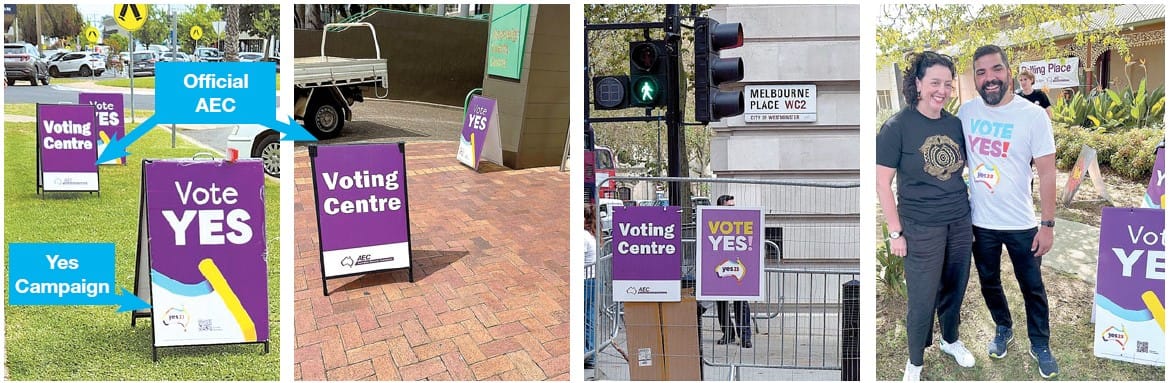
The AEC has had a busy week with complaints about the Yes campaign using the same shade of purple and appearance on their promotional material at polling booths. In the 2019 federal election, the Court of Disputed Returns examined the use of campaign signage in the divisions of Chisholm and Kooyong in relation to the use of the same shade of purple. According to the AEC factsheet on the matter, The Court found that the signs were likely to mislead or deceive a voter in relation to the casting of a vote. The AEC went on to state The AEC would strongly urge anyone planning electoral communication activities at the next federal election to not use the colour purple or any other branding elements that could be perceived to imitate the AEC in any way.
When it came to the recent complaint the AEC stated To be absolutely clear – the signs were erected by the Yes23 campaign, not the AEC. The signs featured the legislatively required authorisation statement. However, the signage prominently used white writing against a background that is a similar shade of purple to the AEC’s longstanding branding and were erected outside at least one early voting centre, in close proximity to the AEC’s ‘voting centre’ signage.
This combination of using purple and white colours in proximity to AEC signage could mislead a voter about the source of the signage, and by extension, the source of the message on the signage. Accordingly, when we were alerted to this signage the AEC requested the Yes23 campaign to rectify the situation by ensuring their signs are not placed in the proximity of AEC voting centre signs. The Yes23 campaign has agreed to comply with this request.
Despite the AEC running a recent legal challenge which ended up in the High Court against an election candidate over font size, it seems imitation of their signs is fair game. While the AEC has been clear over a number of years in communicating our preference that campaigners do not use the combination of colours purple and white in such a way that could be misleading, the AEC does not have any legal authority to prevent people from using particular colours.
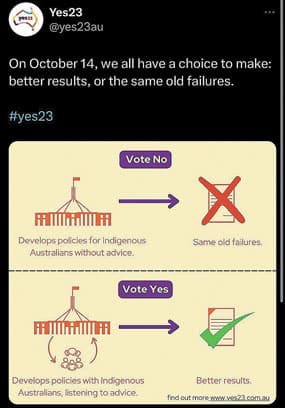
The Yes Campaign also deleted a tweet which contained a ticked and crossed ballot. While voters are instructed to use either a YES or a NO, the tick and cross has fuelled debates as a tick will be considered a valid ‘yes’ vote, but a cross will be considered an invalid vote and not counted.
This article appeared in The Koondrook and Barham Bridge Newspaper, 5 October 2023.