


Australian Rural & Regional News asked a few further questions of Energy Estate’s Chief Project Officer, Simon Currie, answered below the announcement.
Energy Estate (EE), Media Release, 23 March 2026
Energy Estate (EE) and Queensland Cane Agriculture and Renewables (QCAR) have formalised a strategic affiliation to advance the BioNQ Project in North Queensland, positioning sugarcane as a critical solution to Australia’s fuel security challenge while delivering long-term regional economic benefits.
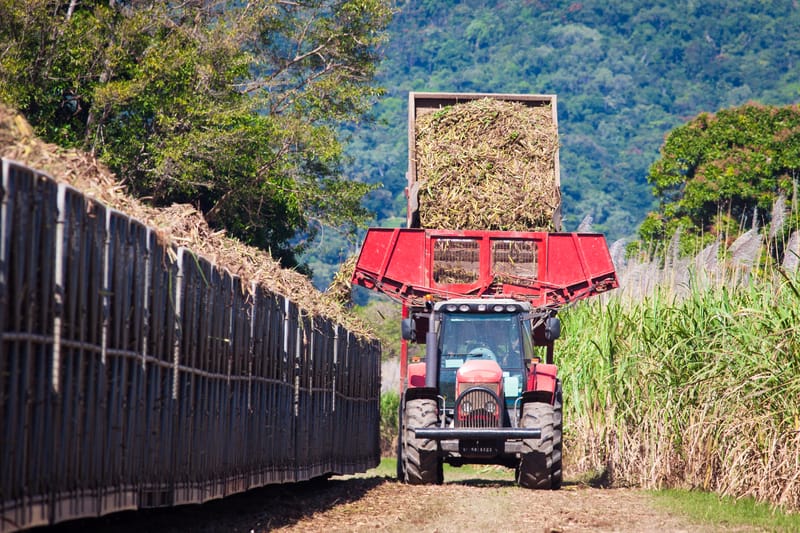
The escalating conflict in the Middle East has exposed the fragility of Australia’s fuel supply chains, driving an immediate need for sovereign energy solutions. This reinforces a critical message: In an energy crisis, sugar saves. By accelerating the prospects of the BioNQ Project to convert sugarcane into low-carbon fuels, Energy Estate and QCAR are not just diversifying agricultural value, but building the domestic production capacity required to shield Australia from global oil shocks and reduce our dangerous reliance on imported fuels.
Leveraging existing regional and port infrastructure, the BioNQ Project is designed to harness currently untapped agricultural resources and unlock additional feedstock to support Australia’s transition to secure, locally produced fuels. The BioNQ Project will supply critical fuel to aviation, agriculture and shipping sectors while delivering regional economic security through jobs and supply chain development.
Simon Currie, Chief Projects Officer at Energy Estate, said this affiliation reflected the shared ambition of both organisations to deliver nationally significant outcomes from regional Queensland.
“By working together, we can unlock additional feedstocks, invest in enabling infrastructure, and ensure Queensland’s agricultural industries play a leading role in Australia’s energy future – in real terms enhancing energy security for Australia and helping drive regional economic development.”
This announcement builds on Energy Estate’s long-standing presence in regional Queensland and its work with industry, communities and government since 2019. The BioNQ Project represents a continuation of Energy Estate’s regional strategy – focused on enabling infrastructure, collaboration and scalable bio-energy solutions – that deliver practical outcomes.
QCAR Chairman Russell Hall said QCAR and Energy Estate working together would advance the opportunities for sugarcane to play a central role in addressing local, state and federal priorities, including fuel security, regional development and emissions reduction.
“This gives North Queensland sugarcane farmers the chance to be active participants in Australia’s energy security. For decades our feedstocks have been exported for processing offshore; we are now creating that value here to strengthen our regional communities. In a volatile world, domestic production isn’t just an option – it’s how countries survive and thrive,” Mr Hall said.
Energy Estate and QCAR, representing its member-base, said this collaboration aligned with the Queensland Government’s Primary Industries Prosper 2050 strategy, which called for co-designed, long-term investment to extract greater value from the state’s agricultural base, including bio-energy and advanced processing. It also supports Federal priorities focused on fuel security, clean energy transition and the development of sovereign energy capability.
Through the BioNQ Project, Energy Estate and QCAR are highlighting and progressing the critical call to urgently unlock additional feedstock, invest in regional infrastructure and ensure North Queensland plays a central role in delivering Australia’s future fuel needs – demonstrating how sugarcane can help safeguard both regional communities and the nation’s energy security.
About the BioNQ Project
The BioNQ Project will be located at Abbot Point in North Queensland, leveraging the region’s existing port infrastructure, agricultural base, and renewable energy resources. The facility will produce Sustainable Aviation Fuel (SAF), renewable diesel, and green methanol using proven conversion technologies and locally sourced feedstocks including sugarcane, sorghum, and agricultural residues.
About Energy Estate
Energy Estate develops energy and infrastructure projects in Australia, New Zealand and globally with a focus on regional economic development and hubs.
Energy Estate is also actively developing large-scale bio-energy and e-fuels projects, focused on converting renewable and agricultural feedstocks into low-carbon liquid fuels to support decarbonisation of hard-to-abate sectors. This work complements its broader portfolio across renewable generation and industrial energy infrastructure, positioning biofuels as a key pillar of Australia’s energy transition and fuel security strategy.
About Queensland Cane Agriculture and Renewables (QCAR)
From regional paddocks to parliament QCAR strives to empower sugarcane farmers along the eastern coast of Queensland and into northern NSW to thrive in an evolving global market. By bridging the gap between traditional agriculture and the booming renewables sector, QCAR isn’t just advocating for its farmers – it’s positioning them as the backbone of a more resilient, self-sufficient and sustainable Australia.
Questions from Australian Rural & Regional News for
Simon Currie, Chief Project Officer, Energy Estate
ARR.News: Where is the sugarcane currently sourced and anticipated to be sourced from in the future?
Simon Currie: Energy Estate is committed to the growth of the bioenergy sector in Queensland which is line with State Government policy. The Burdekin and wider North Queensland region already play a key role in the Australian sugarcane industry. A key feature of the BioNQ project is a commitment to working with the sugarcane industry to support the infrastructure required to unlock major new production areas such as between Home Hill and Bowen.
ARR.News: Is there anything in this for Mossman canefarmers?
Simon Currie: Our vision is the development of a bioenergy industry which spans North Queensland with the BioNQ project at Abbot Point being the first project in Queensland. The Mossman cane farming region can benefit from the growth of the bioenergy industry in Queensland. Any plant in the Mossman region would need to be right-sized to fit with the available feedstocks.
ARR.News: What price might canefarmers expect for sales to Energy Estate and QCAR?
Simon Currie: The growth of the bioenergy industry in Queensland will diversify the revenue sources for farmers away from reliance from the cyclical nature of commodities markets – just like we have seen in other bioenergy hubs globally like the corn growing regions of the US Mid-West.

