

Give a gift that saves lives, says Naracoorte father and cancer survivor
This Christmas, Naracoorte father and leukemia survivor Remo Herron has one heartfelt wish: that people give a gift that truly matters — a gift that helps save lives and keeps families together when everything feels like it’s falling apart.
Remo knows better than most what it means to face death, to fear losing your children, your home, and your future all at once. He knows the crushing weight of hearing you have six months to live — and the indescribable relief when someone steps in to help you hold your family together.
This festive season, Remo is pleading with the community to support the organisations that gave him that lifeline and continue to help families just like his across regional South Australia.
Remo said the Leukemia Foundation and the Cancer Prevention and Support Association (CPS) SA gave him hope, a place to stay, brought his family together — and asked for nothing in return.
“That support saved me,” he said. “It kept my kids with me. It gave me a chance to fight,” the 37-year-old told [The Naracoorte News].
A terrifying diagnosis
Remo’s journey began in 2023 when he was rushed to hospital for a blood infusion and later claimed he was misdiagnosed with Ross River virus. Six months later, everything changed in an instant.
“I went to the doctor for antibiotics, and while paying at the counter the doctor rushed out and told me, ‘You need to go straight to emergency now.’ I had no idea what was going on,” he said.
Before he even saw a doctor, Remo found himself hooked up to machines and blood bags. A nurse delivered the news that shattered his world. He had leukemia. After further tests, specialists told him he was a “dead man walking.”
His blood count was dangerously low — around 10 20 when a healthy range sits near 170.
“I just felt normal, maybe a little tired. I’d been working 12-hour shifts, four on and four off, so I didn’t know what I was meant to be feeling,” he said.
Remo said the doctors warned he had only six months to live.
He was given a 50/50 chance of seeing 2025 and told he would not see 2026 without urgent treatment.
He said a bone marrow transplant became his only option.
“I gave up my last six months to try to live longer, even though the transplant was just as risky,” he said.
Remo spent almost six months in hospital before a donor was found. Against expectations, his recovery stunned his medical team.
“Doctors were impressed. I was pretty much expected to die — that’s how bad I was. They told me I had a 20 per cent chance of living. But I’m still here. I cashed in my six months and gained four years. Anything past four is a bonus,” he laughed.
Dark days, no income, no answers, nowhere to go
Before the transplant, Remo had to prepare for the worst — writing a will, organising care plans, and trying to ensure his children would be looked after.
“When they told me I’d need to stay close to the hospital for six months after release, my heart sank,” he said.
“I had no income, a mortgage, kids to support, and bills to pay. I’m not someone who asks for handouts.”
His friend, Dylan Mcmurtrie convinced him to start a GoFundMe. His workplace ran a raffle, with the owner matching every dollar with two more. The local pub put out a tin. Remo said the community support moved him to tears.
“It helped me pay the bills and support my kids,” he said.
But accommodation — the most urgent need — had not been arranged.
A social worker only began the process weeks before his discharge, leaving him terrified he would have no home to go to during treatment.
“I had so much going on that I ended up in the ICU. Chest pain, emotionally broken. It was a lot.”
Making things worse, the tenants he had taken in while renovating his home damaged the property, costing thousands to repair.
“With everything happening, being told daily I was going to die… I accepted it for a while. It was very dark.”
A lifeline from people he had never met
What saved him, he says, were the Leukemia Foundation and the Cancer Prevention and Support Association (CPS).
“They were lifesavers,” Remo said.
With all their houses full, the organisations went above and beyond — renting an apartment for him and his children, furnishing it completely, and ensuring they had everything they needed for daily life.
“They even got gifts for the kids. I wasn’t expecting anything like that. Having a home environment helped my recovery.
“It meant the world to me.”
For regional families facing cancer, he said, these services were the difference between healing together — or falling apart.
“There are so many people like me who don’t know help like this exists.”
Giving back — and finding hope again
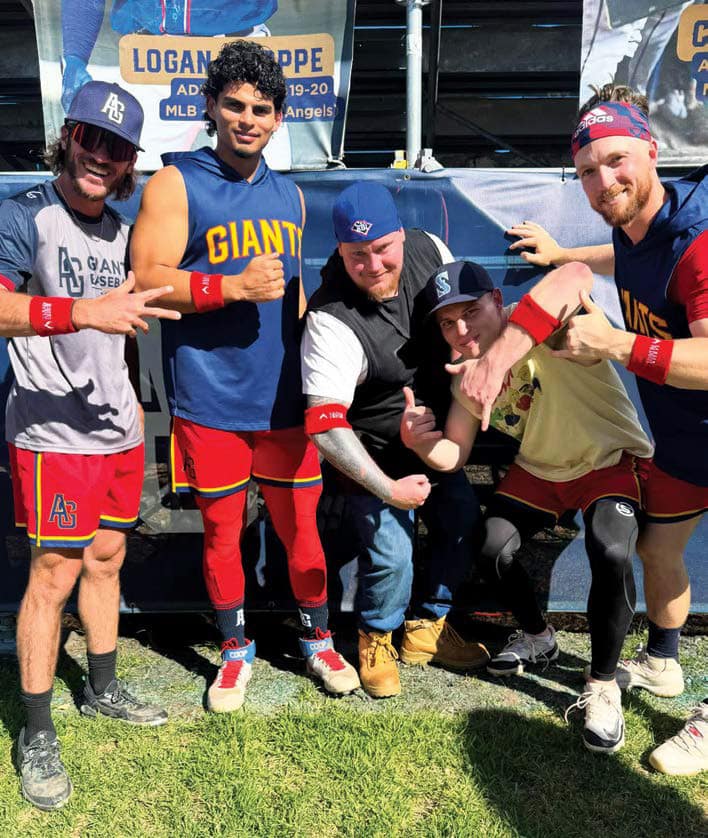
When CPS asked Remo to help with a fundraising partnership with the Adelaide Giants baseball team, he instantly said yes.
“It wasn’t just because I’m a baseball fan. Leukemia can come back any time. I know the pain, the hardship. If I can help someone else, I’m there.”
He was invited to a Giants game recently, sharing his story with players who had their own experiences with cancer.
“They were awesome. All the players wore our wristbands. My son Foxx and I even threw the first pitch together. It was special.”
Mental and emotional healing
Remo said surviving cancer was one battle — living with its aftermath was another.
“I was talking in my sleep, throwing my hands around, and punching in my sleep,” he said.
“Some days I’m drained. I forget things. I don’t feel like me anymore.
“Being locked in a hospital room for so long changes you. You can’t work. You lose your hobbies. It plays on your mind.”
Remo’s message this Christmas:
help keep families together
With Christmas around the corner, Remo is urging the community to support the organisations that gave him the chance to live and to remain a father through the darkest days of his life.
“People donate toys and food, which is great — but donating to the groups that keep families together during cancer treatment changes lives,” he said.
“The whole point is helping families stay together. Nothing is better than that.”
He has encouraged other regional families facing similar struggles to reach out.
“Don’t struggle alone. These groups exist to help. A real home environment makes recovery so much easier.”
This article appeared in The Naracoorte News, 17 December 2025.

