


Matt Canavan’s story isn’t that of a career politician—it’s the story of a man who built his arguments on economic rationalism before he ever picked up a microphone. Born in Southport, Queensland in 1980, he studied economics at the University of Queensland, graduating with first-class honours. He went on to work at the Productivity Commission, where he learned how to dissect government policy, separating fact from fantasy. Those years taught him the hard truth about bureaucracy: the bureaucrats can be just as bad as politicians when it comes to pushing bad policy.
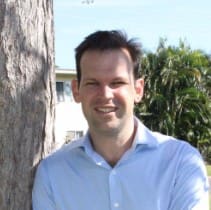
He later joined the Office of Northern Australia and then the coal industry, sharpening his understanding of regional development, energy markets, and the link between cheap power and food security. When he entered the Senate in 2014, he wasn’t chasing prestige—he was bringing policy literacy to a chamber that too often confuses slogans for strategy. His background in economics makes him one of the few in Canberra who can translate climate targets, budget lines, and trade figures into what they actually mean for a farmer’s bottom line.
In a Parliament increasingly overrun by climate zealots, inner-city ideologues, and bureaucrats who think beef grows in a lab and diesel is a sin, Canavan stands as one of the few who still speaks fluent agriculture. The Queensland Senator has made a career out of challenging the fashionable green orthodoxy that says farmers must sacrifice productivity on the altar of “net zero.” He calls it what it is—economic vandalism disguised as virtue—and he’s not afraid to take on both sides of politics to defend Australia’s food sovereignty.
His exposé at the recent Senate Estimates, which had the Department of Agriculture’s executives sweating in their seats, deserves wide circulation.
[8 October 2025: https://www.aph.gov.au/Parliamentary_Business/Senate_estimates/rrat/2025-26_Supplementary_Budget_estimates]
Canavan’s interrogation began with a simple question:
Canavan: “There’s lots of talk about the need to increase reforestation—effectively, the conversion of agricultural land to forests. But, as far as I can tell, there is not a single figure for how much agricultural land has to be turned into forests. Do we have that number?”
Department official: “We don’t.”
Canavan: “Why don’t you have the number? Wouldn’t that be quite important to know?”
Canavan’s retort cut through the fog of jargon:
Canavan: “It seems to me that you’re just trying to hide the detail from Australian farmers… You’re happy to market the benefits of reforestation as a carbon sink, but you won’t tell farmers the cost — how much land will be lost. That’s not transparency; that’s spin.”
Five million hectares. That’s the back-of-the-envelope number Canavan forced out of reluctant bureaucrats—roughly the size of Tasmania. It wasn’t their figure; it was his, based on their own data: 107 million tonnes of carbon offsets at a maximum sequestration of 21 tonnes per hectare. Even using their most optimistic numbers, the government will need to plant forests across at least five million hectares of currently productive land.
Canavan: “Even at the absolute maximum rate of sequestration, you’d still need around five million hectares—an area almost the size of Tasmania. That’s an unbelievable change to our landscape in one generation.”
Unbelievable indeed. When the people charged with safeguarding Australia’s food system can’t tell you how much of it they plan to turn into trees, you’re no longer dealing with science—you’re dealing with faith.
Canavan: “This is a major concern in rural Australia. It reduces output in country towns, reduces employment, and ultimately the viability of towns is at risk. The department responsible for looking at these things can’t even give basic answers.”
The silence that followed told the story better than any editorial could. Not one official could say how much farmland will vanish. Not one could explain where it will come from. Not one had modelled the impact on food production.
To drive home the absurdity, Canavan laid out what he called the “Tasmania Test.” If the government’s own chart shows 107 million tonnes of sequestration, and if best-case reforestation captures 21 tonnes per hectare, then five million hectares will be needed—and likely more.
Canavan: “We would need five million hectares of land to reach the 107 million figure. Even if I’m being generous, it’s probably more like 10 million hectares. Tasmania is 6.8 million. That’s an unbelievable change to the Australian landscape in just a generation.”
Official: “There are estimates in the Treasury report.”
Canavan: “How have they done that if they don’t know how much land is still available for agricultural production?”
Treasury apparently modelled outcomes without knowing inputs. It’s like calculating a harvest without knowing how many paddocks were planted.
The department eventually admitted that the “intensive agriculture zone”—the already-cleared and most fertile farmland of southeastern and southwestern Australia—was the likely target for reforestation. Canavan was incredulous:
Canavan: “We’re talking about five million hectares potentially covering our Murray-Darling Basin, the Lockyer Valley, the Riverland and the southwest wheat-producing areas of Western Australia. It beggars belief that we would be seeking to destroy our food security in such a way.”
The bureaucrats tried to soften the blow with talk of “shelter belts” and “riparian zones.” Canavan wasn’t fooled. As Senator McKenzie added:
McKenzie: “That’s not what’s happening on these properties. The scale is a lot more aggressive… changing dairy farms into tree farms.”
What’s being sold as “carbon farming” is really rural depopulation by stealth. Once the trees go in, the fencers, the shearers, the contractors, the truckies—all go out. You can’t eat carbon credits.
Having exposed the forestry black hole, Canavan turned to another form of land conversion—renewables.
Canavan: “Has there been any work at all done on how much agricultural land would be covered by renewable energy?”
Official: “We don’t have a specific figure.”
Canavan: “There’s no-one in government looking at the cumulative impact of wind, solar and transmission lines on agricultural land?”
Official: “No, not on a mapping basis.”
Private groups like Net Zero Australia estimate 120,000 square kilometres—half the area of Victoria—will be impacted by wind, solar, and transmission projects.
Canavan: “Half the size of Victoria doesn’t sound like a ‘very small proportion’, as your plan calls it. Has the minister ever asked how much land would be required to go to 82 per cent renewables or net zero by 2050?”
Official: “Not to my knowledge.”
Canberra is flying blind into a policy that will swallow millions of hectares of farmland—and the people paid to care about it haven’t even looked out the window.
Later, Canavan challenged the Agriculture and Land Sector Plan’s claim that farmers will face “increased time spent in drought.” Producing the CSIRO’s Primary Industries Technical Report, he pointed out that it found “uncertainty in direction of change… ranging from –50 to +75 per cent.” Translation: nobody knows.
Canavan: “How did the plan conclude there will be more time in drought when the technical report says it’s uncertain? Did anyone in the department read it?”
Official: “We have read the National Climate Risk Assessment…”
Canavan: “So no-one has read the Primary Industries Technical Report?”
No answer. Another case of “policy by executive summary”—the glossy overview read, the technical appendix ignored.
Canavan: “These things get reported in the press… and when I ask for details you can’t answer basic questions. We’re making serious policy decisions that affect people’s livelihoods, and the people making them can’t answer basic questions about what they’re doing.”
By the end of the hearing, even the department conceded they lacked baseline data on land use, productivity, or fertiliser supply. The officials responsible for the National Food Security Strategy could not say how much land would remain available for food.
Senator Colbeck: “How do you fundamentally do a food security strategy if you don’t know how much land we are going to have to work with?”
Canavan: “We’re making decisions that affect people’s jobs, livelihoods, and prosperity, and the people making those decisions can’t answer basic questions.”
Canavan’s interrogation left officials squirming not because he was rude, but because he was right. He exposed a bureaucracy that can model carbon curves out to 2050 but can’t say how many paddocks they plan to plant. He ended where he began—with the numbers: five million hectares, 107 million tonnes, and a $5 million plan without a map.
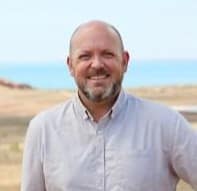
If Matt Canavan is the Senate’s zealot hunter, then Western Australia’s Senator Matthew O’Sullivan is its Maremma the Sheepdog that protects its flock. A former charity executive and education reformer from Bunbury, O’Sullivan is not a man of theatrics but of relentless persistence. While others chase headlines, he chases answers, and in last week’s Senate Estimates he exposed the chaos lurking behind the Albanese Government’s so-called transition plan for WA’s live-sheep industry.
Born and raised in Western Australia’s South West, O’Sullivan studied theology and leadership at Harvest West Bible College in Perth. Before entering politics, he spent more than a decade working in youth training and employment programs, helping at-risk young people find work. In his time he’s helped more than one lost soul get a start in a shearing team.
Elected to the Senate in 2019, O’Sullivan brought those lessons to Canberra. He isn’t a showman; he’s a systems man—methodical, courteous, and relentless in the pursuit of facts. Where most MPs don’t do the reading of anything but the headlines he has a reputation of reading the fine print, which leads to asking the hard questions followed by the awkward follow-ups, and stays until the bureaucrats run out of words.
In committee, O’Sullivan’s questioning tore open the government’s $139.8 million Sheep Industry Transition Assistance Package—a program meant to “help” Western Australia shift from live export to an as-yet-undefined glories future. His questions were forensic: How much has been spent? On what? Who got it? Why is help so slow to arrive?
The answers were as empty as the paddocks left behind. Only $30 million had been spent by October, and half of that went to the WA Government. Eleven per cent—$15 million—was quietly siphoned off for “policy and oversight,” meaning bureaucrats and consultants. O’Sullivan called it what it was: administration dressed up as assistance.
Then came the kicker—farmers would have to co-fund their own “transition grants.”
O’Sullivan: “If an impacted farmer’s livelihood has been placed at risk by the government’s policy, how is it fair that they’ll have to fork out up to $75,000 of their own money to receive some assistance?”
The department mumbled about “co-design.” The Minister parroted “consultation.”
O’Sullivan: “These producers didn’t buy into this change. It was imposed on them.”
The so-called Future Flock Strategy—a glossy plan to “reimagine” the sheep industry—had been quietly handed, without tender, to Sheep Producers Australia for $800,000. No competition, no transparency, and no inclusion of the input from WoolProducers Australia, PGA, WAFarmers, or for that matter any WA-based organisation. Apparently all wisdom when it comes to the transition exists in Canberra, no local organisations need apply. When asked who decided this, a departmental official finally admitted:
Official: “It would have been me.”
And then in came Canavan: “These guys just want to shear sheep. Why can’t we let them keep doing that? It is unbelievable… These people are hardworking people… and you can’t even identify a job they’re going to have.”
Official: “It will give them opportunities that otherwise didn’t exist.”
Canavan: “It is bullshit. It is total bullshit. That’s what it is—and that’s how it would be heard by these people.”
The chair told him to “watch the language,” but the truth didn’t need polishing. In that single outburst, the whole frustration of rural Australia found its voice. Canberra speaks in frameworks, pathways, and “stakeholder engagement.” The bush speaks in livelihoods. Between the two lies a chasm wide enough to plant five million hectares of trees.
O’Sullivan kept pressing. He uncovered a Transition Advocate on a $1.7 million contract who had met the Minister only three times in eight months and a $4 million “wellbeing fund” spent largely on slogans and painted blue trees. Each question peeled back another layer of bureaucratic absurdity.
Together, O’Sullivan and Canavan formed a rare tag team in a opposition short on courage. Canavan brought the raw bush anger; O’Sullivan brought the audit trail. Both spoke for an industry treated like an inconvenience to be managed, not a producer of food to be respected.
The live-sheep trade may be just another notch on the green left activist wish list but it won’t be the last. The Sheep industry is expected to transition to where no one knows we have to wait for the next National Sheep Strategy to tell us. Just as the farming sector is also expected to transition into forestry. Behind every “transition” lies a template: shut it down, fund a roundtable, appoint a “trusted adviser,” and hope the headlines move on before the jobs disappear.
The shearers don’t need “business model innovation.” They need sheep. The farmers don’t need “co-design workshops.” They need markets. And Western Australia doesn’t need a “transition package.” It needs a government that knows the difference between a policy announcement and a livelihood.
Until that day, the only people doing the real work of accountability are the two Matts—O’Sullivan, the watchdog; Canavan, the zealot hunter—reminding Canberra that you can’t retrain a shearer to shear nothing.

