


Forestry Australia, Media Release, 7 September 2025
Forestry Australia, the nation’s leading body representing forest scientists, managers and growers, expresses its dismay at the New South Wales State Government’s decision to create a Great Koala National Park without a clear, science-led plan to deliver measurable outcomes and avoid negative flow on consequences.
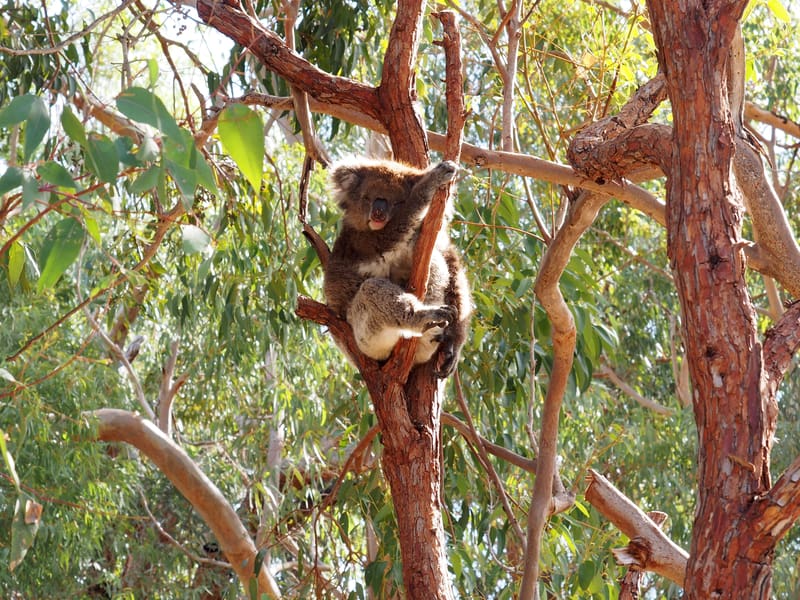
“The Great Koala National Park makes a headline, not a science-led plan. By sidelining the complementary role of actively managed state forests, the Government has missed the chance to maximise outcomes for koalas and communities,” said Dr Michelle Freeman, President of Forestry Australia.
Dr Freeman said simply declaring a national park does not guarantee biodiversity conservation or the long-term survival of koalas.
“Science-based, adaptive forest management across all tenures is essential to maintaining healthy forests, adapting to climate change, and conserving biodiversity,” Dr Freeman said.
“The State Government’s decision risks repeating past mistakes where a shift away from active and adaptive management has led to declines in native species, including koalas.”
“Recent research highlights that koala populations in NSW state forests remain high and stable, thanks to thoughtful regulated management”
“In contrast, examples like Booderee National Park, where potoroos and bandicoots became locally extinct, and the Pilliga Forest, where koala numbers declined after conversion to conservation reserves, demonstrate that passive management can fail wildlife and ecosystems.
“These lessons must inform the management of the Great Koala National Park if it is to succeed.”
Dr Freeman added that well-managed state forests already deliver multiple public benefits additional to those possible in national parks, including ecotourism, diverse recreation, timber and non-timber products, while maintaining biodiversity and access for all.
“This decision, will have far-reaching cultural, social and economic consequences with no guarantees for biodiversity.”
Forestry Australia calls on the NSW Government to:
- Commit long-term, fit-for-purpose funding for the park’s active management.
- Set measurable, time-bound targets for koala populations and forest health, with transparent reporting.
- Adopt an adaptive management plan (fire, predators, weeds and habitat complexity) across all tenures.
- Co-design governance with Traditional Owners and forest scientists.
- Recognise and retain the complementary role of well-managed state forests alongside protected areas.
“Forestry Australia stands ready to work with the NSW Government to deliver genuine conservation outcomes that do not sacrifice the broader benefits of active forest management,” Dr Freeman said.
About Forestry Australia
Forestry Australia is an independent, not-for-profit professional association of more than 1,100 forest scientists, managers and growers who work in native forests, plantations and provision of environmental services. Its members are committed to the principles of sustainable forest management and applying these principles to generate environmental, social and economic outcomes in all types of forests and land tenures.
Related stories: Great Koala National Park; koala; Open for Debate – Koalas.


Koalas didn’t “decline” because forest was transferred to national park. Unnaturally high numbers crashed because of the Millennium Drought. Surveys in 2013-2014 found that koalas were gone from 79% of sites where they had previously been found and activity at the remaining 21% was only 13% of previous activity.
I don’t think Forestry Australia can provide much useful advice on the management of the new Koala Park.