

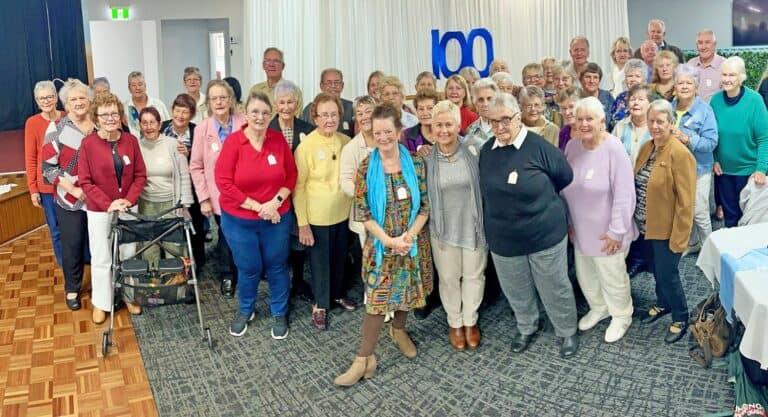
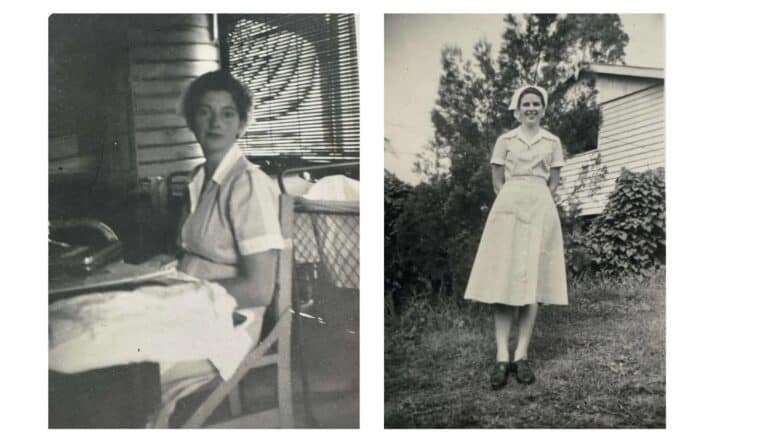
Dorothy McQueen and Noelene Fuller were 17 year old nurses when they worked at the maternity hospital on Campbell Road, Kyogle in 1959.
“I couldn’t count how many babies I’ve delivered,” Ms Fuller said.
The two women recalled how they had to wear white hats and stockings when working.
“Today means everything.”
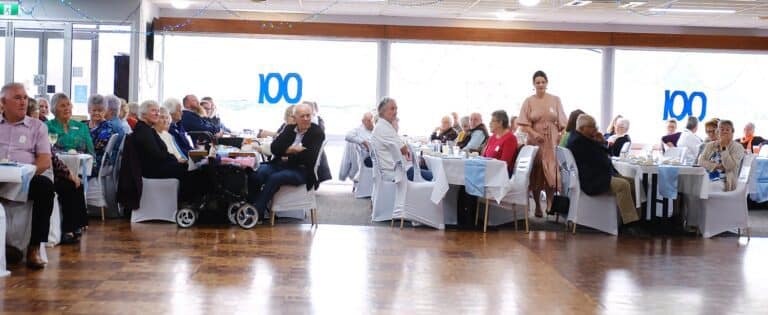
Ms Fuller was speaking about the 100th birthday of Kyogle Hospital celebration with a lunch for 150 people at Kyogle Bowling Club on Saturday, June 28.
In the crowd, there were nurses, auxiliary members, Kyogle councillors and staff and special guest, former state MP Thomas George.
Tom Fitzgerald acknowledged the original steering committee that fought to save the regional hospital – himself, Mr George, Joe Llewellen and Mary Garrad.
Mr Fitzgerald told the audience about the humble beginnings of a health service in Kyogle.
The town was established in 1901 and in 1905, Dr Greer established the Cottage Hospital above a three-bed unit at 33 Kyogle Road.
Way back in 1912 a movement had begun to have a larger public hospital in Kyogle because of a growing population. A committee was formed and fundraising began as negotiations with the State Government began.
“Little did people know how long it would take to ‘win the day’,” Mr Fitzgerald said.
After 13 years, on May 25, 1925, the Kyogle Memorial Hospital on Summerland Way opened at a cost of £7,800 (equivalent to $15,600 at that time).
Kyogle Community raised £6,000 and the State Government contributed £1800.
The first matron at the hospital was Norah McKid. She was paid £145 pounds a year. She held this position for 28 years, retiring in 1952.
A hospital board was formed, made up of the chief executive and the matron plus a small group of citizens from the town and district.
The McKid private section was built with four private beds and four two-bed intermediate wards. The building was named in Matron McKid’s honour.
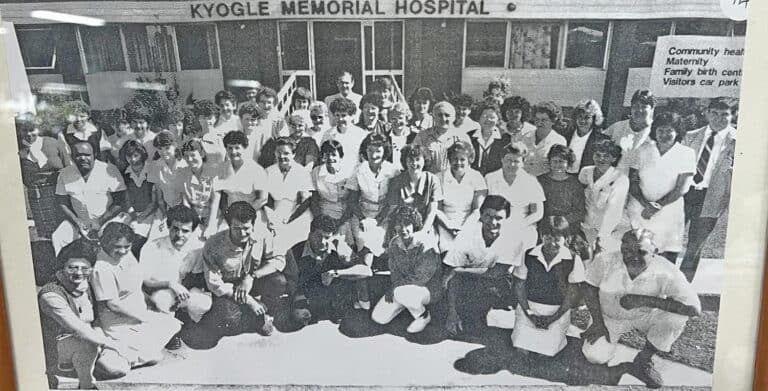
In 1950 Bridie Gregory worked at the Campbell Road Maternity Hospital and later at the Kyogle Memorial Hospital, where she worked as matron from 1968 retiring in 1987 after 37 years of service.
A new maternity ward was built on the present hospital site in 1969 and named the Gregory Unit.
Kyogle Hospital had 50–60 beds in open Nightingale wards (open plan wards), Accident and Emergency, male, female and children’s wards, an infectious ward and an operating theatre which was used daily for major and minor surgery.
Kyogle was a training hospital where many young women began their nursing careers. More than 74 trainees qualified as registered nursing sisters. Nurse training ended in 1975 and in the 1980s registered sisters were no longer required to wear veils.
“In the mid 80s things began to change. The heavy hand of bureaucracy was gradually making itself felt,” Mr Fitzgerald said.
Many of the hospital services were phased out or moved – the boiler room was closed, laundry services and meal prep were transferred to Casino, the infectious ward closed, seamstresses and gardeners were no longer employed and McKid and maternity closed.
Bed numbers were reduced and plans were afoot to demolish the McKid building and nurses’ home.
In 1993, the State Government announced a new rural health restructuring policy. This meant Kyogle Memorial Hospital would no longer be an autonomous entity but be administered by a district board. The local board was taken over by the area health service.
“This marked the end of an era, “ Mr Fitzgerald said.
MrFitzgerald acknowledged many of the long-serving doctors, including Dr Reid, Dr Lewis, Dr Perry, Dr Binnie, Dr Marten, Dr Das and Dr Doyle.
“In the early 1990s the winds of change were beginning to blow on the future of small rural hospitals,” Mr Fitzgerald said.
Only three doctors were servicing the community.
It was rumoured that Kyogle Hospital could be reduced to four A&E beds allowing for assessment and overnight stay and then be passed on to a regional hospital.
At this time, there were 14 aged patients in the geriatric ward.
“I was told these people would be moved on to Casino or Lismore,” Mr Fitzgerald said.
On December 13, 1994, a public meeting was called to make the community aware of these changes to the hospital service.
From that meeting the Kyogle Health Service Planning and Steering Committee was formed. There were ten people on the committee.
“It took ten years to finally get the MPS (Multi Purpose Services), the process once described as long and torturous,” Mr Fitzgerald said.
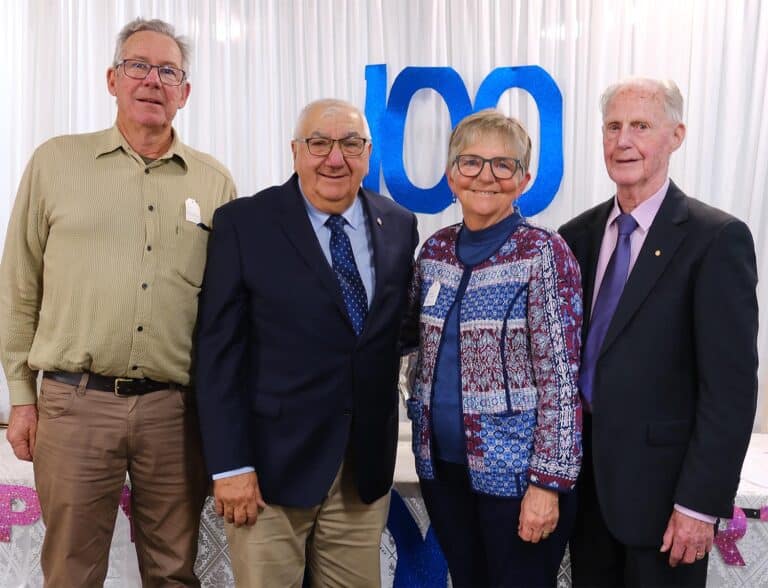
“However, we never gave up and we kept true to our three Ps – patience, persistence and politeness – and finally won the day.”
Mr Fitzgerald acknowledge four people who “stuck it out with me” – Mary Garrad, Ruth Barringham, Joe Llewellyn and Thomas George.
“I am forever grateful for the valuable support these people gave me over the ten years.”
The committee had to deal with five different Area Health chief executives and as each one came on board they would want us to go back to the beginning, he said. Stability came with the appointment of Chris Crawford as chief executive and Vahid Saberi who was director of Population and Planning.
“They were very sympathetic to our cause and gave great assistance,” Mr Fitzgerald said.
“After meeting for the first two years, we were advised that our plan was not acceptable, so with much help from Thomas George in Sydney and backlash for the government, they established a general purpose standing committee, chaired by Elizabeth Kirby to inquire re the needs of health in rural and remote areas of NSW.”
With the government reviewing rural health, Mr George said to get a submission in the mail as soon as possible.
Within five days, they were notified that Ian Sinclair from the government would visit Kyogle.
“We had a big crowd at the meeting and he said that day he would be recommending a MPS for Kyogle,” Mr Fitzgerald said.
The new facility was officially opened in November 2005, at a cost of $10.3millon, 80 years after the first hospital opened.
The community raised $216,000 to pay for extras at the new MPS.
Mr Fitzgerald’s summary of the hospital’s history shows how much the committee and community fought to have a hospital in Kyogle.
Other speakers told stories of days past at Kyogle Hospital.
The Hospital Auxiliary had members past and present at the luncheon.
Margaret Mitchell said in 1927 a group of women from Horseshoe Creek formed the auxiliary and met every month.
“We raised on average $20,000 a year,” Ms Martin said.
There are 35 active members in the Kyogle Auxiliary.
At the bowlo, everyone shared a huge birthday cake made at Dave’s Bakehouse. Lots of stories were shared.
The birthday celebration was organised by Tom Fitzgerald, Margaret Mitchell, Joan Olive, Carolyn Barnard, Noelene Duley, Anne Crichton, Elaine McIntosh and Tricia Vidler.
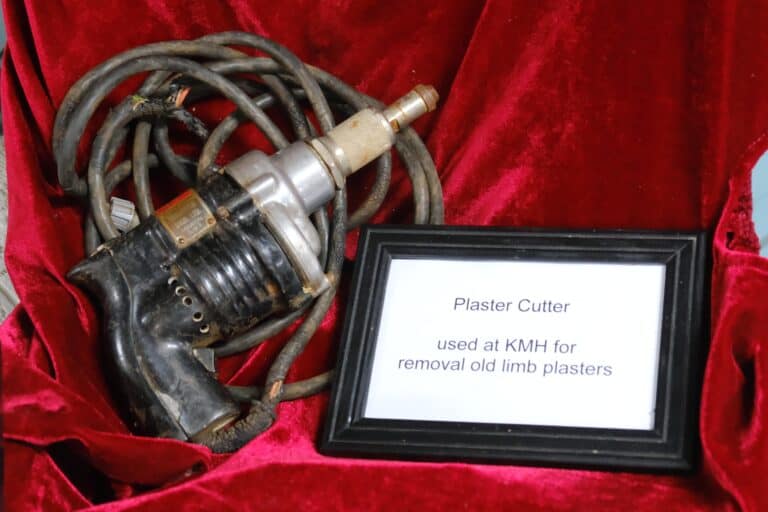
See all the pictures from the event in the issue.
This article appeared on indyNR.com on 30 June 2025.

