John Williams, Treasures of Nhill & District Facebook page, Nhill Free Press & Kaniva Times
In the pioneering years of aviation, Nhill’s first man in the air, Ivan Sinclair Young helped put the town at the forefront of flight along with Fred Mckenzie of the Nhill Free Press. (Sinclair was his mother’s maiden name)
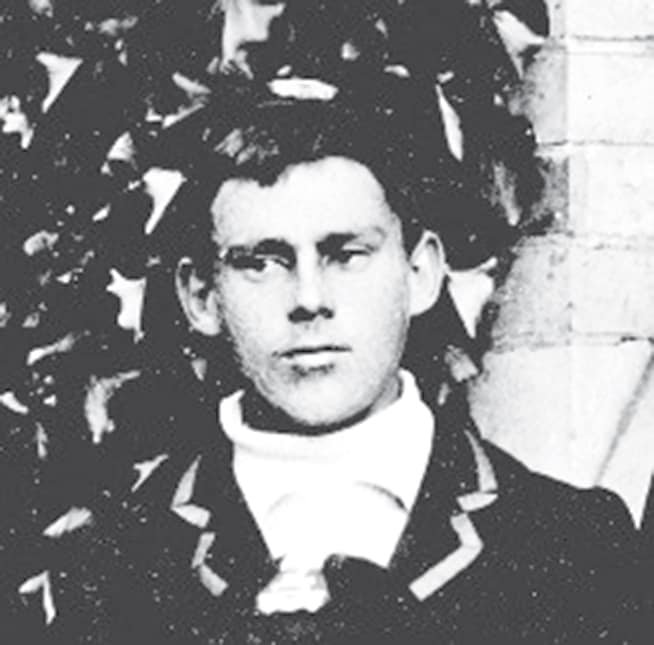
Yes, he was a “Magnificent Man in a Flying Machine.” However, he was not a glamorous pilot or ace. He was still brave, though.
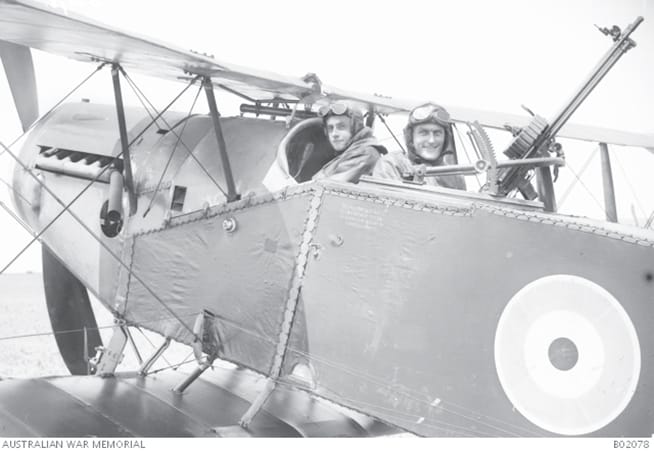
In WW1, he was an observer and machine gunner sitting behind the pilot in a reconnaissance roll while keeping an eye out for “evil Hun” fighters.
Lieutenant Young was born with a silver spoon in his mouth as the only son of Nhill pioneer John Young of the Young Brother’s stock and station agents’ partnership. (Young Brothers had branches, each run by a brother in Horsham, Hamilton and Nhill).
The young flyer was born in 1889, educated at the Nhill Elementary School and then shunted off from the family home, “Yetholm” in Nelson Street, to Geelong College as a boarder in 1905.
He then moved to Adelaide where he graduated from the Roseworthy Agricultural College achieving first class honours in surveying and dairying.
In Nhill and at college Ivan was a keen and popular sportsman displaying courage and ability in football, cricket and golf.
Flying at this time had not entered the young man’s mind, not having seen a flying machine, as Nhill was still years away from witnessing the sight of an aeroplane.
In the years leading up to the Great War, well-read Ivan – a budding collector of books, concentrated on learning the stock broking business as an auctioneer, breeding horses and sheep, cropping at Miram and near Horsham with time to join the Presbyterian Church younger set.
As an innovative grazier Ivan was the first to introduce electric sheep shearing at his Miram farm.
However this very comfortable and privileged life was about to change, and it was his choice to sacrifice the silver spoon lifestyle and career.
The war broke out in 1914 and had already taken 32 of Ivan’s school mates to the firing line and four had already been killed at Gallipoli.
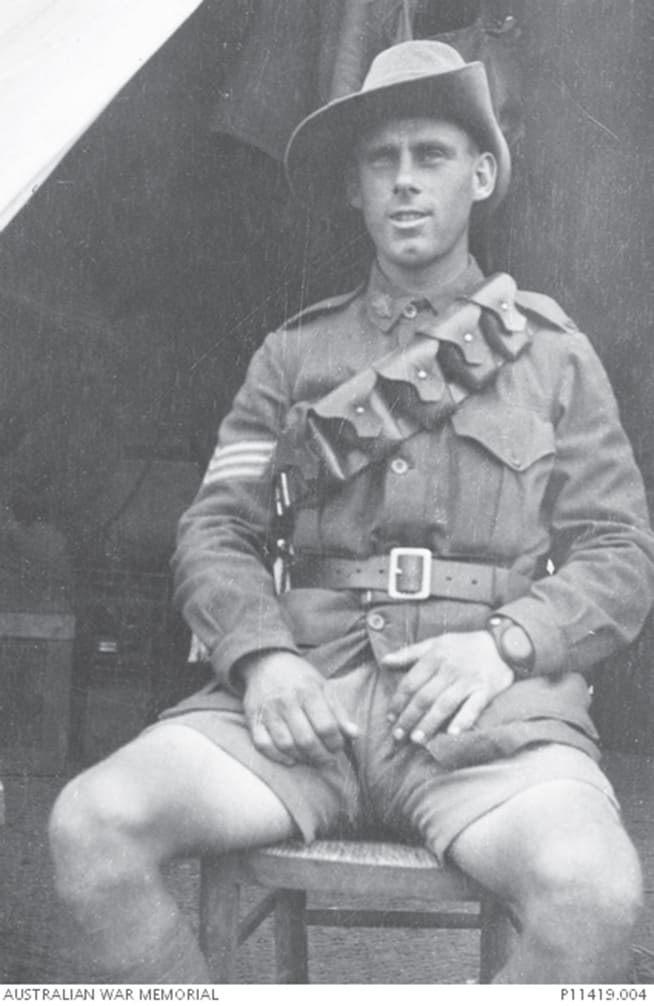
Nhill was a white Anglo Saxon British to the bootstraps, conservative; religious community and a societal expectation was that young men were expected to enlist.
Ivan was 26 when patriotic songs and speeches took hold of his emotions to join the “glorious” war effort against the “brutal Hun”.
In a “Call to the Colours” report, the Nhill Free Press said in 1915”¦.
“Local and district young men are now coming forward and offering their services for king and country in satisfactory numbers; unfortunately many Nhill and country lads have been “turned down” on account of defective teeth, but have ‘determined to remedy this fault, with the aid of the dentist, as early as possible, and will again volunteer.”
Ivan Young must have had good teeth as he was accepted into the Army with the paper saying he had set a fine example of making great sacrifices in the Empire’s call to arms.
In December 1915 at a church social and farewell occasion at the Royal Hotel in Nelson Street, decorated with patriotic flags and seasonal flowers, John Young told the gathering that right from the beginning of the war he knew his son wanted to enlist to fight German tyranny and he would not stand in his way.
His local friends said they would watch his career with the deepest interest and hoped to see him return to Nhill safe and sound.
He was wished God’s speed and given a gold fountain pen for responding to his country’s call.
Being mechanically minded, Private, and later Sergeant, Young took an active role in the early development of armoured vehicles for the Army and offered a Daimler and Mercedes chassis for development.
Both vehicles were used in the Middle East with Ivan working on their conversion to armoured cars.
His efforts are recognised in the book “Pioneers of Australian Armour” which states that Young was one of a group of enthusiasts who financed, designed and then built two armoured cars to form the 1st Armoured Car Section in 1916.
After 7 months in the desert, Ivan wrote home saying he was “sick of armoured cars” and was transferring to an aeronautics training school near Cairo, then to the School of Air Gunnery with 67 Squadron of the fledgling Australian Flying Corp. (The forerunner of the RAAF)
Having passed as a classified “observer”, he was promoted as 2nd Lieutenant on 13 June 1917 and wrote home about his experience of flying over enemy territory.
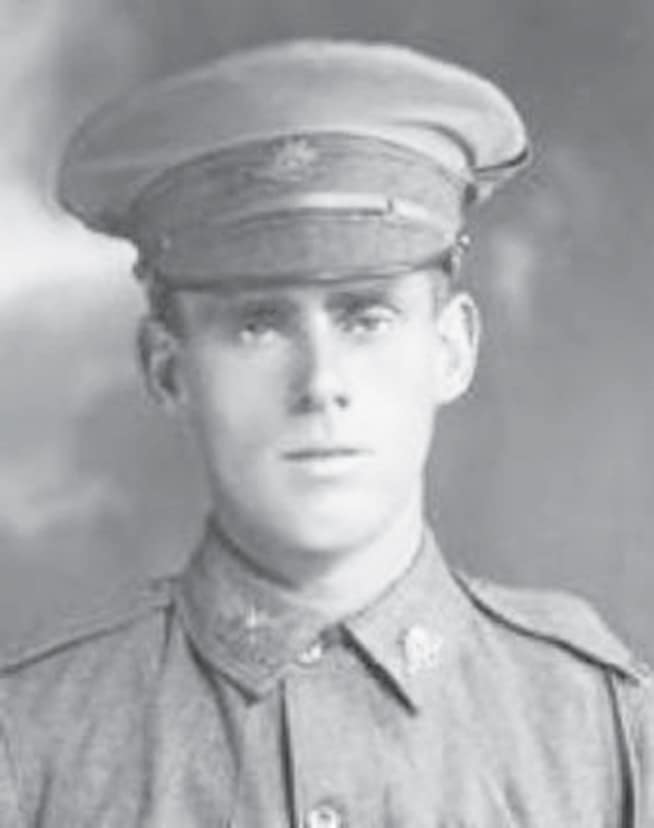
“Flying over the Holy Land and Gaza we have just about got on even terms with the Hun in the air. So far, I’ve been lucky enough to dodge any stray Huns and their “Archies.”
The latter is the thing to shake you up. When you are sailing round at 7000 or 8000 feet viewing proceedings below, with H.E. or shrapnel bursts fairly close, you hear the pieces whistle.
You are wondering all the time if they’ve chipped any part of the machine or whether it will collapse with you and it’s a d— long way down to mother earth. (Archie is anti-aircraft fire and H.E. is High Explosive)
WW1 aircraft were very primitive and frail, mainly made of timber, wire and canvas covered in highly inflammable dope, so the risk of survival if hit by enemy fire was minimal.
For Ivan air warfare was short-lived after he received word from Nhill that has father John Young had died suddenly after collapsing from a heart attack at the railway station while rushing to collect newspapers.
It was said his health had deteriorated from the time his only son decided to go to war.
Following his father’s death Ivan’s active service was suddenly deactivated. He was granted leave and returned to Australia in August 1917 to care for his family and father’s stock agency.
Now one would have thought this was a fair outcome for a young man who had volunteered to put his life on the line for King and Country, to have helped develop armoured cars in the Middle East and then gone on to fly with the Australian Flying Corp.
However he was almost “white feathered” which represents cowardice, but in Ivan’s case it was Nhill’s armchair warriors who had suggested he was allowed to dodge any further war service because of “family influence”.
And there may have been some bitterness too from those who had lost loved ones in the war.
This did not go down well with the Member for Wannon Arthur Rodgers who addressed a gathering in Nhill and said the fact that certain people had seen fit to defame Ivan Young had caused him considerable pain.
The defamatory statements that had circulated, came as a poisoned dart to this young soldier, who Rogers said was a true son of his father and Empire.
“Yes, he was approached by one of the Young Brothers principles, Thomas Young of Horsham, asking that Ivan be granted leave of absence to allow him to take up his father’s and the family’s responsibilities, Ivan being the only male member of the family — the mother being indelicate health and there being only 2 single daughters”.
Rogers submitted the proposal to the Defence Department in an official letter and he said it was then up to them to make a decision based on the merits of the application.
The MP said the slanderers of Lieutenant Young were doubtless not aware of the fact that he was on active service for 14 months and for 7 months he served against the enemy in the Libyan desert before joining the AFC.
He went on”¦
“For three months he was flying over enemy territory in Palestine where, it is stated on average 600 shells per day are fired at each airman who participates reconnoitring work.
It ill becomes anyone in this district to slander a local soldier who has daily risked his life in the defence of his country and for those who remained at home.”
With the unpleasantness of character assassination put to bed, Ivan settled back into civilian life, married Nancy Chisholm in Sydney in 1918, became Secretary of the People’s Party, ran the family business as his father would have wanted and joined Fred McKenzie in putting Nhill on the aviation map.
Ivan used his AFC connections to assist in the arrival of the first aeroplane to visit Nhill in 1919. He was the first to take a’ “joy flight” on that historic occasion. His influence also saw Ross and Keith Smith in their Vicker’s Vimy drop “airmail” over Nhill in 1920.
Many of the pioneer aviators to visit Nhill had been encouraged to drop in by Ivan, including Amy Johnson who in 1930 stayed overnight with the Youngs at their “Yetholm” family home in Nelson Street.
In 1936, at the relatively young age of 47 Ivan Young decided to quit Nhill and the stock broking business to take up grazing with his family on a property near Seymour in Victoria.
His departure from Nhill came as a surprise as he was a most liked employer, townsman and benefactor with a reputation of being honest and very generous with clients who fell on hard times during the depression.
His father had been a hard act to follow, but it appears that Ivan was just as good.
His valedictory gathering on his retirement attracted the biggest ever crowd in Nhill for a farewell, and filled the Royal picture theatre.
Ivan explained his reason for retiring and to be free from business worry”¦
“The last four to five years have been strenuous, and I’ve tried to help all my clients. Also our son has been suffering from a severe illness, his life was despaired of at one period, but are pleased be able to tell you that he is on the road to recovery.”
During the valedictory much was made of Ivan’s contribution to the building of experimental armoured cars in the middle east, but it appears little mention was made of his contribution in help Nhill become an aviation centre. Not to mention that in 1928 he provided land for Nhill’s second aerodrome at his horse training track north of Halpin Park.
In the 1930’s Ivan was the contact point in Nhill for a militia of armoured car squadrons being set up in the Wimmera.
Ivan Sinclair Young JP died in Kew in 1966 aged 77.
Footnote* The appearance of an armed guard and sentries patrolling the rotunda square in Nhill caused considerable curiosity last week. A contingent of the First Armoured Car Regiment formed a main guard and posted sentries who patrolled the square and portion of the streets. It was the first time that a guard had been posted in Nhill. The contingent practised with Lewis guns and revolvers at the rifle range. Nhill Free Press Sept. 1939
Footnote** The Young’s ancestral home was “Yetholm” in Roxburghshire, Scotland.
“Yeltholm” at 25 Nelson Street was created or rebuilt from an existing house for John Young in 1904.
Nhill Free Press August 1903
“We have inspected the plans for extensive alterations and additions to Mr John Young’s house, in Nelson Street. When completed will make this one of our most handsome private residences. Arnold and Barnes’ tender of £689 15s has been accepted for the additions and alterations”.
The Hindmarsh Heritage Assessment Study says:
“Yetholm is of historical significance because of the Young family connection and is of aesthetic significance as a substantial and well-detailed example of a Federation villa with Italianate influences. Notable details include the diamond pattern roof tiles with terracotta hip and ridge capping and cresting, brick chimneys with rendered bands and corbelling, the return verandah with terracotta ridge capping, cast iron frieze and an ornate cast iron panel to the central gablet, moulded cement render detailing to the eaves and the architraves of the doors and windows, the recessed and panelled entrance with a mat of encaustic tiles, and the elaborate render balustrades and piers to the entry stairs”.
See all the pictures in the issue.
This article appeared in the Nhill Free Press & Kaniva Times, 9 October 2024.