

One of Australia’s best beaches is making a comeback.
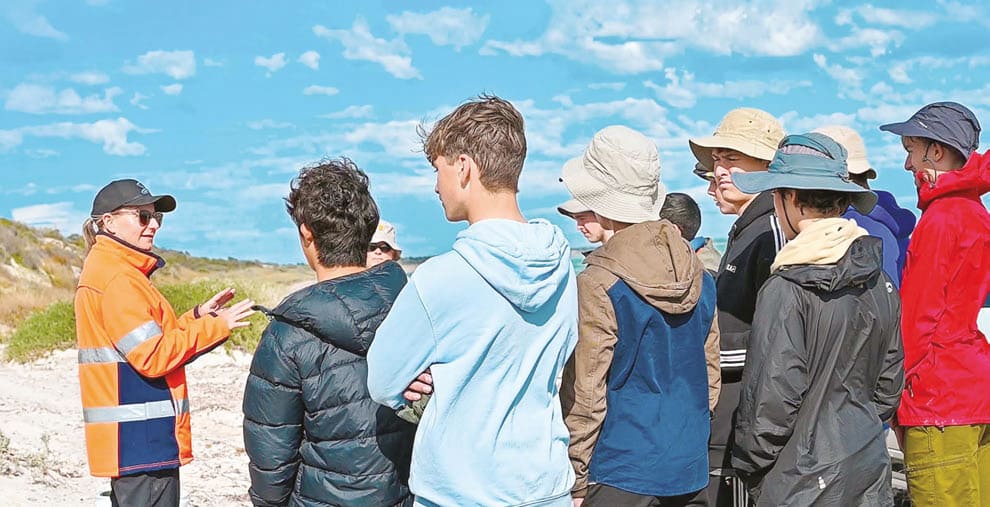
Yorke Peninsula Council has recruited some hardworking students to help get Flaherty Beach, near Point Turton, back into shape.
Tourists visiting lower YP to see the beach had a positive effect on the local economy, but its popularity also had negative effects on the coastal environment, YPC environment officer Letitia Dahl-helm said.
Every school term, year 9 students from Prince Alfred College volunteer their time to restore the landscape.
The students stay at the college’s nearby Wambana Campus for five weeks each term, and participate in community service projects, such as the dune restoration.
“Thanks to the combined efforts of our community and the dedication of PAC students, Flaherty Beach is on the path to recovery, ensuring this natural treasure can be enjoyed for generations to come,” Mrs Dahl-helm said.
The dune rehabilitation program is aimed at maintaining the natural beauty of the coast, while allowing locals and visitors to continue enjoying the landscape.
“Flaherty Beach is a coastal gem on Yorke Peninsula and has been ranked as the fourth best beach in Australia,” she said.
“Unfortunately, increased popularity and visitation, along with off-road vehicles straying from the beach, have led to severe dune degradation.
“The result has been damage to both council land and private property.”
Dunes are a natural defence against waves and bad weather, and are vital in keeping the beach in a pristine condition.
People driving through and camping inside the dunes destroys vegetation, introduces invasive weed species and poses a fire risk in certain conditions.
“The dunes protect inland areas from seawater inundation, and they are also culturally significant for the Nharangga dhura (Narungga people),” Mrs Dahl-helm said.
“Vegetation keeps the sand in place and once you lose vegetation, the wind will shift sand, creating sand drift and blowouts which are costly and difficult to rehabilitate.
“It is very important that vegetation is conserved and protected for these reasons, as sand drift can increase exponentially and place assets such as roads and agricultural land at risk.”

This article appeared in the Yorke Peninsula Country Times, 27 August 2024.

