

“Imagine shifting gear from being just pig chasers to becoming field staff in the world’s biggest wild pig research project.”
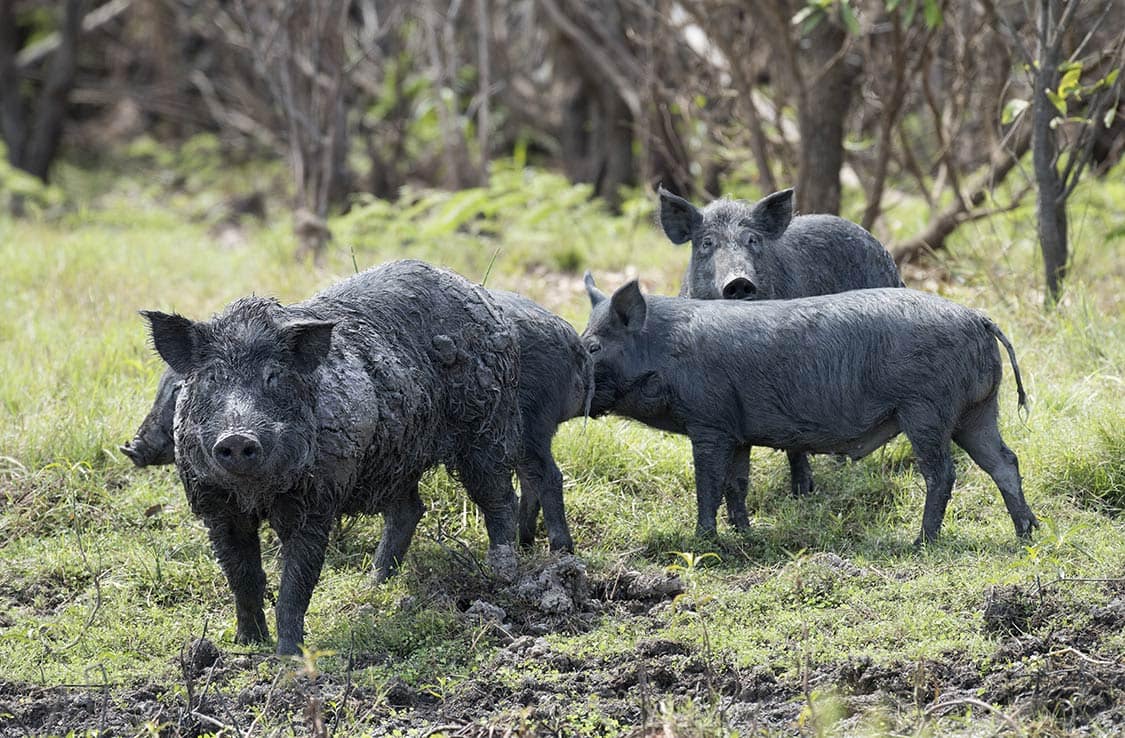
That’s the message the Australian Pig Doggers and Hunters Association (APDHA) is sending to pig hunters across Australia.
The bold plan by the national hunting group aims to collect 10,000 feral pigs’ ears as part of a study of the animals, and has the support of the Universal of Southern Queensland (USQ).
APDHA national president Ned Makim said it was an unprecedented collection effort that would be invaluable to future research.
“That number [10,000] is significant because we’d like it to be the biggest wildlife study in the world,” he said.
Hunters across Australia have been asked to snip the tips off the ears of the pigs they kill, and to notify the association that they have a sample.
Mr Makim said his group would then send them in a collection bag for the dried ear tip to be posted back.
Once the details of where and when the ear was collected are recorded by the hunters, they will pass the sample on to scientists for any research they desire.
“We think we can get 10,000 ear samples from pig hunters Australia wide,””ˆMr Makim said.
“USQ Associate Professor Ben Allen tells us he and people like him can get hundreds of bits of information from each little ear snip.
“Multiply those hundreds by say 10,000 or more and we have the opportunity to lead the world in wild pig data collection.”
The APDHA accepts members Australia wide and provides $20 million in public liability insurance, virtual membership cards that can be checked against drivers licences, regular newsletter, promotions and various discounts to its members.
Membership fees are based on a sliding scale with an annual fee of $100 for full membership and discounts for families, juniors and pensioners.
“Our aim is to have committee members in every State and Territory representing hunters in those areas and decentralising our activities to guide our decision-making and representation to be more regionally relevant,””ˆMr Makim said.
Further information about the 10,000 Ear Project is available on the APDHA website – www.apdha.org.au.

This article appeared in The Riverine Grazier, 17 July 2024.

