

Old Man Saltbush (Atriplex nummularia), a salt-loving, native shrub, that thrives on the plains but in the paddock this humble shrub is proving vital to production.
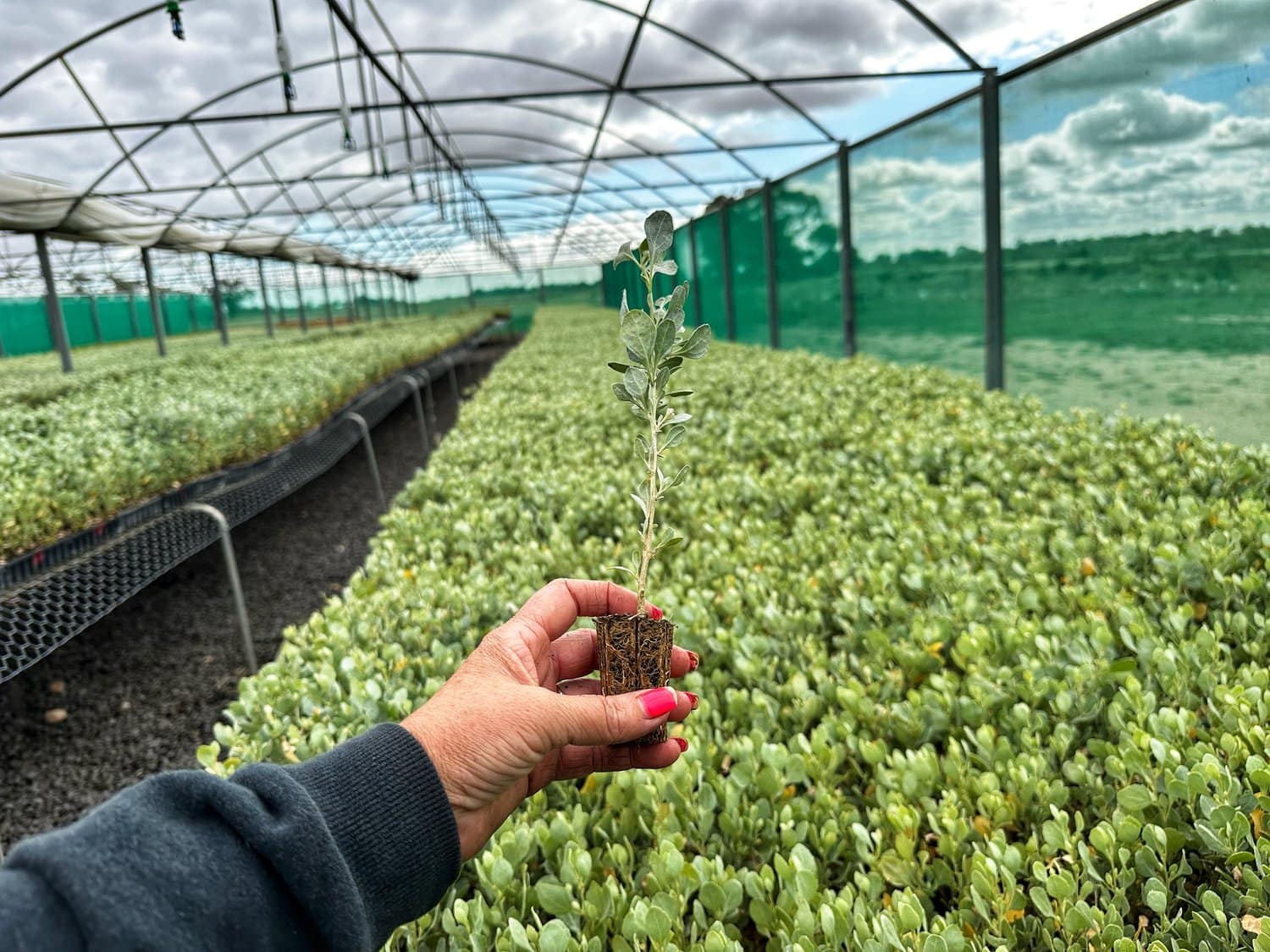
Saltbush’s drought-tolerant qualities make it the ideal fodder for sheep and cattle to graze on during feed gaps when there’s little else available.
Recognising an opportunity to improve shrub systems, CSIRO worked to select and develop a special variety for farmers to use as a supplementary feed. It’s called Anameka Saltbush.
The CSIRO research shows it is preferred by sheep, has a higher nutritional value than standard saltbushes, and can help regenerate the land. It also thrives on soils that are challenging to grow crops.
Agricultural scientist with CSIRO, Dr Hayley Norman, said sheep are surprisingly fussy eaters.
“We followed their lead by observing which plants the sheep preferred in the paddock,” Hayley said.
“We found stark differences between shrub varieties with some picked bare while others were left untouched.
“Season after season, the sheep kept going back to the same plants. Our analysis found these to have higher energy values, ticking the box for what we were looking for.”
Anameka Saltbush has 20 per cent higher energy than other plants assessed. It contains high levels of crude protein, sulphur, minerals and Vitamin E. It also offers higher feeding value and profitability when compared to standard saltbushes.
With increased palatability and an increase in abundant biomass (an average of six kilogram per plant, per year), at a more accessible level to stock it is no wonder the demand for Anameka is quickly gaining momentum.
Marcus Hooke, a merino sheep farmer in Booroorban, is hoping to capture some of these benefits.
Last winter, he is doubled the number of Anameka in his paddocks with lamb survivability a key driver.
“It’s early days but we believe the benefits of Saltbush will be long-term,” Mr Hooke said.
“For us the benefits will be two-sided in providing crucial shelter to lambs to improve their survivability out on the plains during colder months, and for feed to provide energy during dry seasons.”
Marcus is one of several hundred farmers who have adopted Anameka Saltbush across Australia.
Locally, Anameka is available from the Tulla Natives nursery in Wakool. The nursery is one of just two CSIRO partners, and are licenced to provide Anameka to the eastern states.
Tulla Natives also provide a contract planting service across the Riverina. With the capacity to plant up to 12,000 seedlings in one day, they boast an extremely cost effective and efficient way of planting larger quantities of trees, shrubs and Anameka.

This article appeared in the The Riverine Grazier, 10 July 2024.

