


By now, most of you will have heard of the raging debate between the Yes and No camps of whether the Uluru Statement from the Heart is a simple one-pager of nothing to see, nothing to fear, or whether it’s really the far more detailed 27-page manifesto that maps out the full list of grievances and demands that the Voice will pursue.
That document calls for the establishment of “the ancient jurisdictions of First Nation law” and claims that Aboriginal and Torres Strait Islanders have never ceded “our sovereignty”. They want a Voice Body that will deliver via a treaty “a pathway to recognition and sovereignty,” which will be the vehicle to achieve “self-determination, autonomy and self-governance,” along with payment of rent owed on their country.
You can see why the ABC and the Yes crowd don’t quote from it, nor from the 122 pages of supporting minutes from the regional forums that are the founding documents of the Uluru Statement.
Both documents are the last thing the Yes campaign wants floating around the media, and hence they have quietly buried them to avoid public discussion.
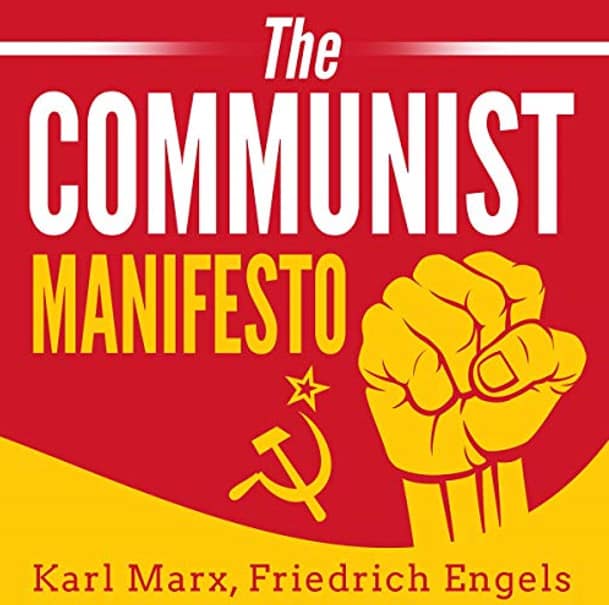
Reading them reminds me of the Communist Manifesto written by Marx and Engels back in 1848, which banged on about repression and class struggle, the exploitation of the proletariat by the ruling elite, and the need to seize power to allow a fairer sharing of the resources of the state.
Marxism’s version of closing the gap.
It seems the authors of the Uluru Manifesto are more than familiar with the Communist Manifesto, or at least they are following the same script.
The modern version was written, like the Communist Manifesto, by a small number of elites who have more in common with the class they want to overthrow than those they purport to represent.
Their formula promises to save the downtrodden, but, like Marxism, wants to do it via the redistribution of wealth and power.
They see themselves as the obvious candidates to take the reins of power, and from there, they, no doubt, will follow the path of history and commence the purge of the institutions of all those who opposed the long march and begin the confiscation of private property.
But we don’t need to look at Russia or China to see what comes next; we have seen this all before in Australia.
The failed land rights push in the 1980s and 90s, which saw over 100 pastoral properties across the nation handed over to traditional owners, was a mirror image of communism’s collective farms and, like the big communes, they failed dismally.
Then there is the flood of money from royalties into indigenous-owned corporations; their track record of wealth protection and creation is worthy of textbooks, with chapters on the failure of governance.
The other great failure we can look to is that of the Aboriginal and Torres Strait Islander Commission (ATSIC), which was given control of indigenous health and education under the Hawke Government; it was a mess of nepotism and corruption until disbanded by Prime Minister Howard in 2005.
You can imagine what’s coming if the Voice gets up and we get ATSIC II up and running and they start work on the shopping list of grievances and demands detailed in the minutes of the regional workshops (National Indigenous Australians Agency website – foi-2223-016).
The demands include a share in land taxes, tariffs, and royalties, a percentage of the GDP, a change of the Australian flag, designated seats in parliament, changing geographical names to indigenous ones, reintroducing tribal law, control over health and education, the list goes on.
Now, the Yes campaign claims the Voice will only focus on issues linked to closing the gap, but neither the High Court will impose such limits, nor will those who get to vote for the new elite expect them to limit their remit.
Why should they? They told them from day one in the regional workshops what they expected from a voice to Canberra; anything less is the new elite not doing the bidding of those they are there to represent.
So, after they have changed the flag, moved Australia Day, and sorted the treaty and reparations, the next big demand will be for sovereignty and self-determination.
I wonder which country they will want to model themselves on; Russia and China are not shining examples; maybe something closer to home, Timor Leste, Papua New Guinea, or maybe the Solomon Islands, or do they envisage themselves being more like idealistic Switzerland minus the hard work and democracy?
Maybe they will elect to stay under the Australian sovereign regime but will ditch our judicial system of trial and justice developed over 2500 years and revert to their 60,000-year-old approach of tribal punishment with payback, mutilation, and capital punishment.
Will they embrace the traditional power structures of a male-dominated society, or will it be all equity, inclusivity, and diversity if they can just get the alpha males out of their cultural positions of dominance?
The collective amnesia of the white feminist movement towards male indigenous power structures and their treatment of women and girls does not bode well for their indigenous sisters and a safe existence under this dream of self-determination.
How have we ended up with such a disjointed debate to address indigenous disadvantage when all indications are a successful outcome for the Voice will simply entrench a new ruling elite running a failed state of corrupt, dysfunctional, bankrupt indigenous organisations?
Why do Australia’s Teal voting western suburb elites struggle to see why existing failed regional communities will never close the gap when there is no local economy to support them and too few people with the skills and integrity to manage local governance?
No amount of hand-wringing or dreamy idealism of how indigenous people used to live will overcome the fact that the only way to close the gap for the 100,000 regional and remote Australians who are locked in a world of intergenerational social welfare dependency is for them to join mainstream Australia and compete in the modern economic world.
Remote regional communities will never close the gap as they can never offer what the city has on tap, being opportunity.
There has not been one remote indigenous community anywhere in Australia that has been able to achieve the social, educational, economic, or health outcomes of the average freehold country town that has built itself upon a local base of private enterprise, be it farming, mining, or tourism.
Make all the excuses you like, but handing back more control and maintaining communities in areas where the state owns the land and there is no local economy is a formula for endless failure. It’s time for the progressive left and the Yes supporters to give up on the Marxist dream of collectivization and redistribution and instead encourage indigenous Australia to accept that the gap is based on a lack of the opportunities that come with private enterprise, individual enterprise, strong families and less government, not more.

