

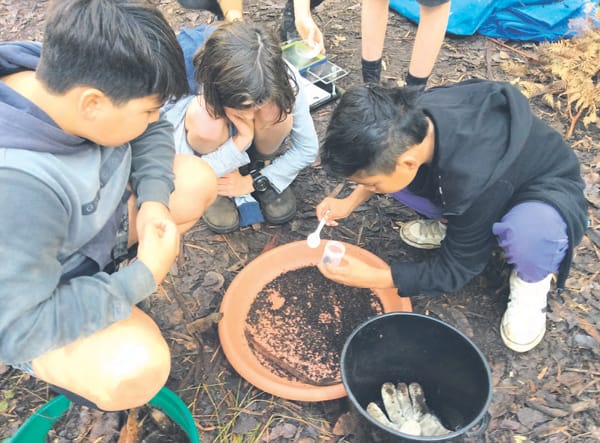
Kwoorabup Nature School students have discovered and named a new species of parasitoid wasp while taking part in the Insect Investigators Citizen Science project.
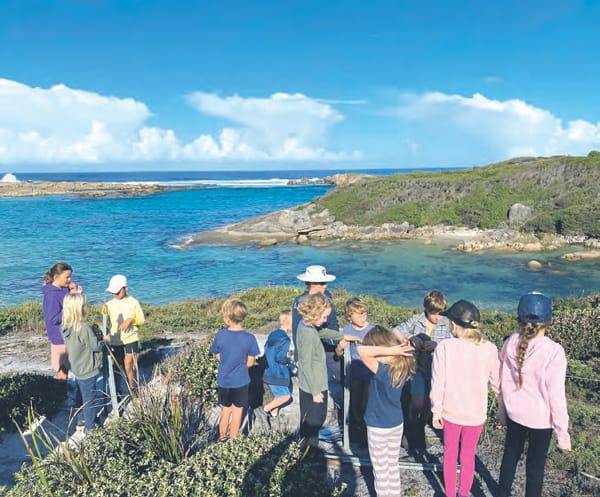
The Adelaide University run project involved 51 schools across Australia, also including Denmark Primary School.
The insect, a 1.4mm long parasitoid wasp that feeds and rears its larvae in leaf miners, was found on the Mazzoletti Trail about 500m from Greens Pool and has been confirmed as new to science.
It belongs to the Mirax genus and the children wanted to give it a Noongar language species name.
After consultation with Noongar Elder Lester Coyne, it was decided to name the wasp Mirax kaatijin, with kaatijin meaning ‘knowledge’ in Noongar.
Uncle Lester said it was particularly apt because of the dwindling insect population as humans cleared land and used chemicals to grow more crop at the expense of these tiny creatures so vital to our survival.
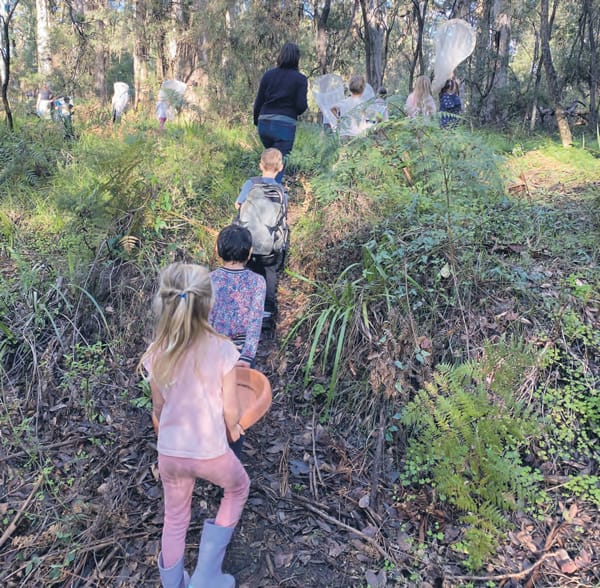
KNS spent four weeks collecting insects with a specialised ‘malaise trap’, a tent-like structure designed to trap insects, in the William Bay National Park in March last year.
The collected specimens were sent to Canada for DNA sequencing by taxonomists.
Nathan Ducker from the WA Gould League visited the school to explain the results.
He said the school had collected 119 species, of which 111 had not been previously DNA tested.
Other participants in the Investigators’ project had not caught 57 of the species.
Of these, one had been confirmed as being new to science, and the children were given the opportunity to give it a species name.
Kwoorabup Nature School principal Joanne Griffiths said such a learning opportunity in partnership with real scientists and seeing the impact of their efforts in such a tangible way was exciting for the students.
“We were also moved by the children’s interest in using a Noongar word for the name and feel privileged to have the support of Uncle Lester Coyne,” she said.
More information about the results of the project can be found at https://insectinvestigators.com.au
See all pictures in the issue.
This article appeared in the Denmark Bulletin, 29 June 2023.

